

Projection video wall decisions usually happen when the pressure is already on. Your booth space is booked. The show date is close. Sales wants a crowd. Marketing wants a clean brand presentation. Operations wants no surprises. You’re stuck deciding whether to go with projection or move to direct-view LED.
We’ve seen this decision play out on crowded expo floors, and the wrong choice usually fails in the same places. It doesn’t fail in the brochure. It fails during setup, under show lighting, and when your team is trying to talk to prospects instead of babysitting AV gear.
A projection video wall helped define large-format event visuals. It got the industry here. But for most trade show exhibitors in 2026, it’s the wrong centerpiece.
Choosing Your Booth’s Centerpiece
You’re probably looking at a floor plan right now, trying to answer one practical question. What’s going to stop people in the aisle and make your booth look like it belongs at a major show instead of getting lost in the visual clutter?
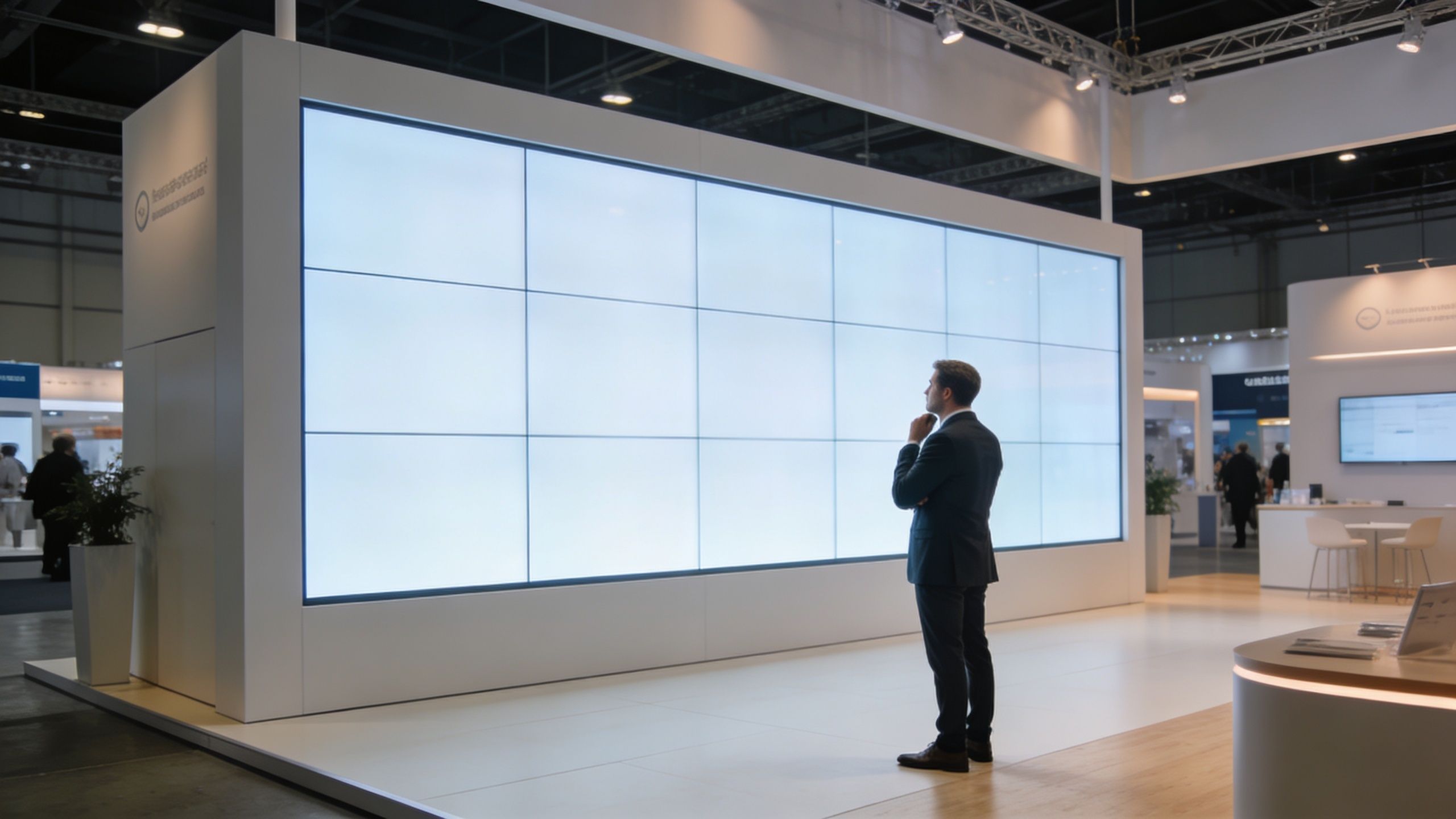
That’s where a projection video wall still enters the conversation. It has history, and that history matters. Projection video wall technology first emerged in the early 1980s, and around 1989 Pioneer’s videowall cube put a CRT projector inside an enclosure with a 41-inch diagonal rear projection screen, becoming a familiar sight at trade shows and corporate events for years, as documented in Electrosonic’s history of videowalls.
The old answer versus the current reality
Projection solved a real problem when display options were limited. Early systems let exhibitors scale visuals beyond what single monitors and projectors could do. That mattered then. It doesn’t settle the question now.
Today, the booth display isn’t just a screen. It’s the visual anchor of the whole exhibit. It has to handle motion graphics, product demos, brand video, live messaging, and the conditions of bright convention halls. It also has to fit your booth without turning installation into a geometry exercise.
Here’s the blunt advice. If you want the display to be the centerpiece, not a technical compromise, judge it by show-floor performance, not nostalgia.
| Factor | Projection video wall | Direct-view LED wall |
|---|---|---|
| Image in bright halls | Vulnerable to ambient light washout | Strong visibility in typical expo lighting |
| Booth integration | Needs screen planning and projection geometry | Can become part of walls, columns, or arches |
| Setup stress | Alignment and placement are sensitive | Modular systems are easier to deploy |
| Support risk | More points of failure during operation | Better suited to fast serviceability |
| Best fit | Controlled environments with room to engineer around it | Trade shows where speed, impact, and reliability matter |
Projection belongs in environments you can fully control. Trade shows aren’t one of them.
If your team needs a display that looks sharp, goes in fast, and doesn’t create new problems on show day, LED is the smarter call.
Comparing Projection Video Wall Technology and Image Quality
A projection video wall throws light onto a surface. An LED wall creates the image at the pixel level. That difference sounds technical, but the practical result is simple. One fights the room. The other overpowers it.
Trade shows are not kind to projected images. Overhead hall lighting, reflective flooring, neighboring exhibits, and open aisles all work against projection. You can manage some of that in a ballroom. You usually can’t manage it on an expo floor.
What the numbers actually tell you
According to AVIXA’s video wall overview, LED video walls can achieve pixel pitches as fine as 0.6–1.5mm and deliver contrast ratios of 1,000,000:1, while projection systems are around 8,000:1. That gap is why LED holds up far better in high-brightness trade show conditions.
That same difference shows up in close viewing. Booth visitors don’t stand at the back of a theater. They walk by at short distance, glance sideways, stop briefly, and decide in seconds whether your content is worth their time.
Why pixel pitch matters more than most exhibitors realize
Pixel pitch determines how tight and sharp the image looks up close. Smaller pitch means higher resolution at practical trade show viewing distances.
Our practical view: if your wall will be seen from a few feet away, finer pitch wins. Our standard 1.9mm pitch gives a sharper result than the 2.5mm pitch many competitors rely on.
That difference matters for product renders, UI demos, text overlays, and any brand content with detail. If you’re showing a software platform, medical device animation, engineering schematic, or packaging close-up, mushy visuals weaken the presentation immediately.
For exhibitors comparing panel options, review the actual LED wall panel configurations and ask one direct question: how close will attendees be when they first see the content?
Seams, blending, and why projection still looks fragile
Multi-projector systems can work, but they demand careful blending and calibration. If alignment drifts or the surface isn’t ideal, the image looks compromised. You’ll notice it in edge transitions, brightness inconsistencies, or geometry that feels slightly off.
LED doesn’t fight those same battles in the same way. A well-built modular wall gives you a cleaner canvas for motion content and typography. That’s what exhibitors need. Not a heroic setup effort. Just a wall that looks right from the moment the hall opens.
Performance in Real-World Trade Show Conditions
The show floor is where projection video wall plans usually get humbled. Specs look fine in isolation. Then the hall lights come up, the neighboring booth runs bright content, the aisle fills, and your image starts losing the fight for attention.
Bright halls punish a projection video wall
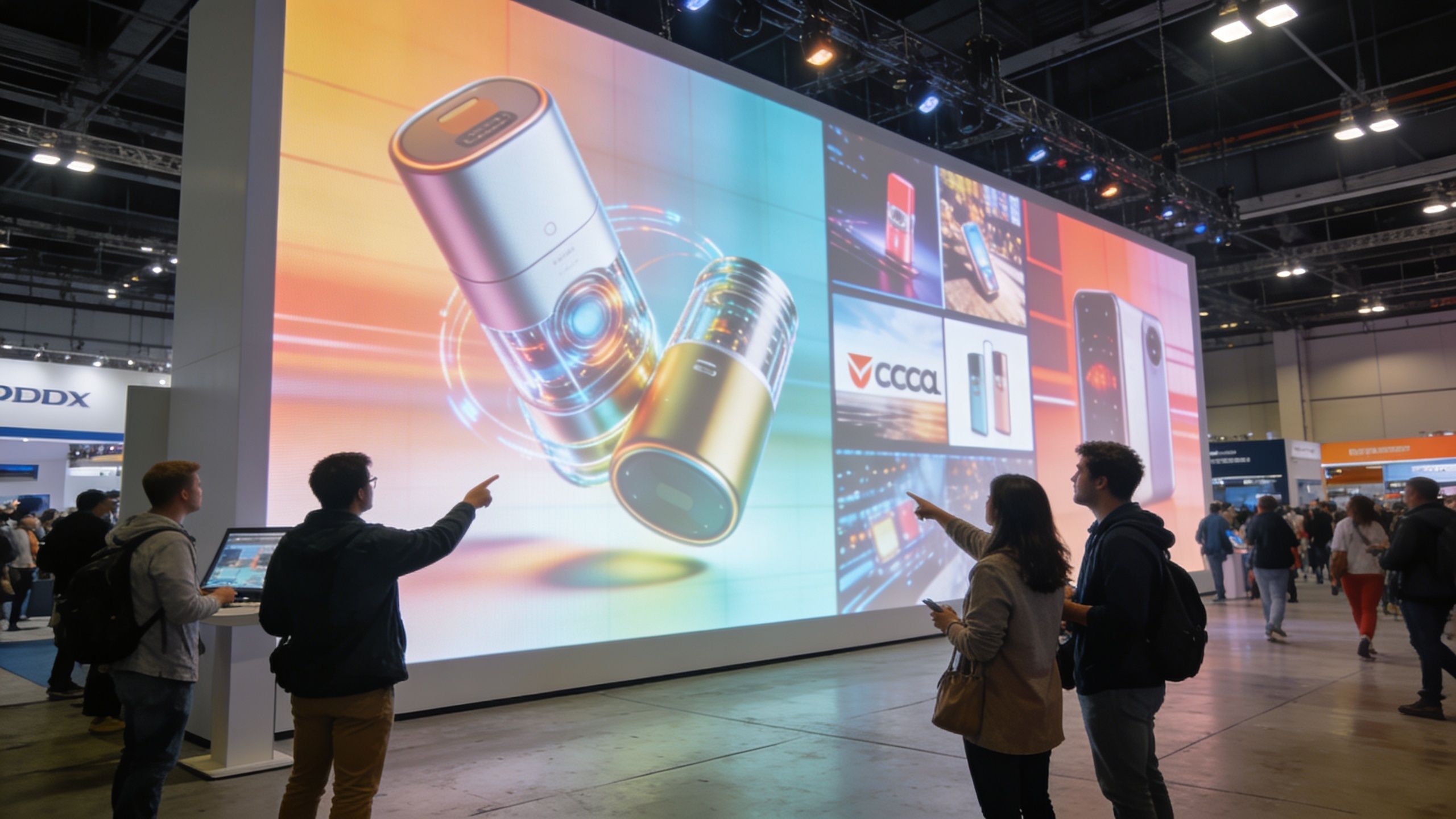
Projection depends on reflected light. That’s the problem. Convention centers are full of uncontrolled light sources, and they flatten projected content fast. Blacks lift. Contrast drops. Colors lose punch. The wall that looked dramatic in a dark demo becomes forgettable in a live hall.
LED handles this environment far better because the image is emissive. It stays bold enough to cut through the background noise, which is exactly what you need when attendees are scanning dozens of booths in a single aisle.
Low ceilings and awkward booth geometry
A lot of generic projection advice ignores trade show architecture. That’s a mistake. In major markets like CES or InfoComm, low ceilings under 10ft force compromises, and Elite Screens notes that vertical projection angles above 8.5 degrees cause keystoning that digital correction worsens, dropping image quality by up to 20% per pixel shift.
That matters if your booth footprint is tight or your hanging options are limited. Many exhibitors don’t have the luxury of perfect throw distance, perfect projector placement, or ideal ceiling height. They have a standard inline, a peninsula with constraints, or an island that needs sightlines from multiple aisles.
For teams planning around those constraints, it helps to look at how professional LED video wall installation is handled in actual exhibit builds rather than in home theater examples.
Here’s a quick visual on show-floor realities:
Viewing angles decide whether people stop
Attendees rarely approach your booth head-on. They catch your display from the side while moving. If the image falls apart off-axis, you lose the moment before your staff even gets a chance to start a conversation.
Projection is less forgiving in this situation, especially when the screen placement and angles aren’t ideal. LED is better suited to broad, aisle-facing visibility. In trade shows, that’s not a minor advantage. It’s the whole game.
Setup, Shipping, and Booth Integration
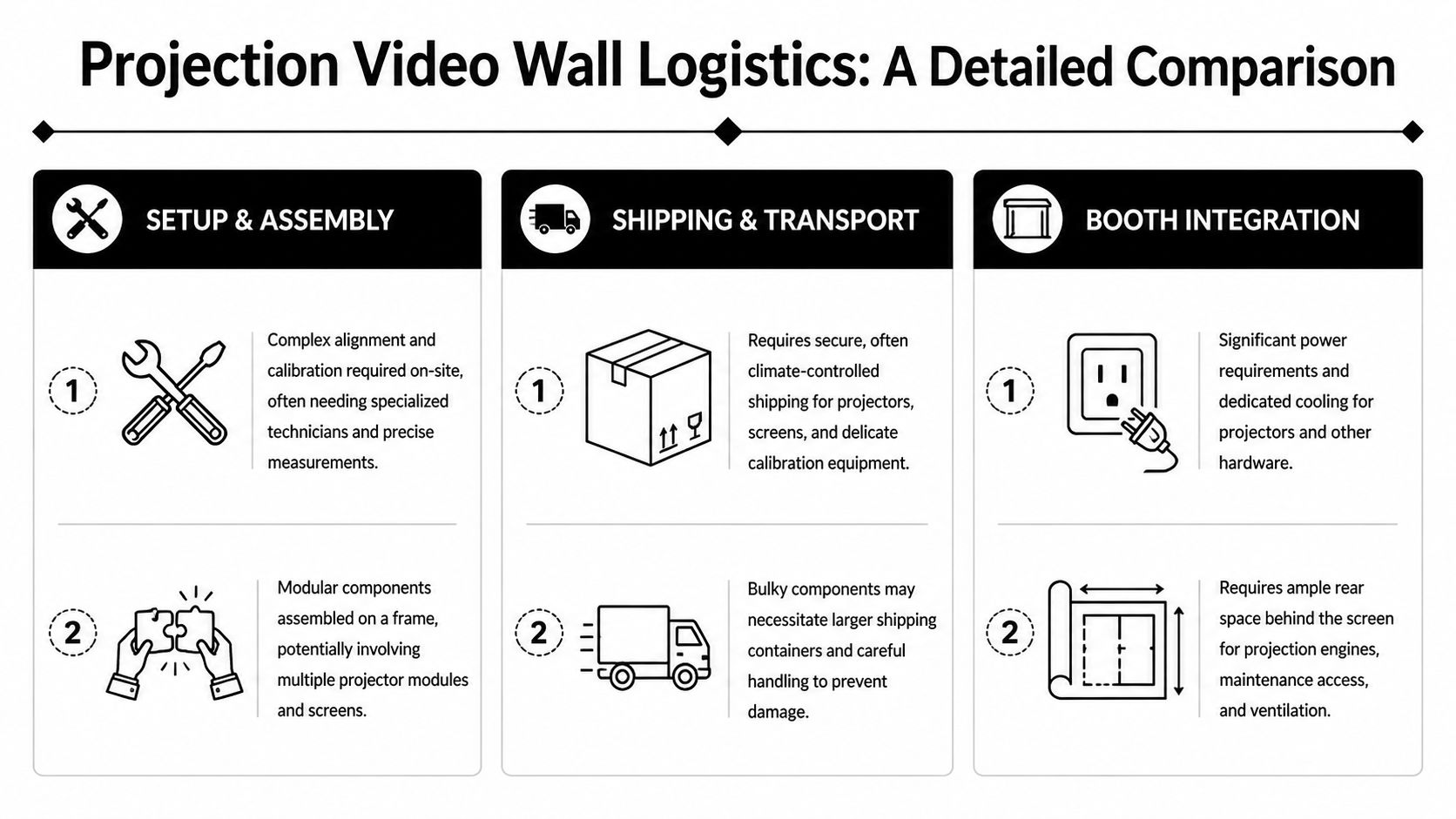
A projection video wall can look affordable until install day starts. Then the practical work begins. Projector placement, screen tension, throw calculations, rear clearance, cable management, rigging coordination, and alignment all start competing with your schedule.
That complexity is why exhibitors should stop judging display systems by the rendered booth image alone. Judge them by what your team and labor crews have to do in the hall.
Projection takes more room than most floor plans can spare
Rear projection needs depth. Front projection needs clean sightlines and careful placement. Both demand you think about obstruction, shadows, access, and ventilation. That’s before you account for neighboring booths, utility placement, and the realities of move-in.
As Screen Works explains in its projection versus LED comparison, projection offers theoretical scalability, but its practical use is limited by infrastructure needs like rear projection depth and ambient light control. For trade shows, that limitation is a big deal.
LED works like exhibit architecture, not just display hardware
Modular LED offers a distinct advantage. It doesn’t have to sit awkwardly inside the booth plan. It can become the booth plan.
You can build uninterrupted visual surfaces into structures that projection can’t handle cleanly:
- Full-height branded walls that double as the visual backdrop and the main traffic stopper.
- Columns and curves that carry motion content without relying on separate screens.
- Arches, counters, and islands that turn dead structure into active messaging.
That changes the design conversation. Instead of asking, “Where can we fit a screen?” you ask, “What part of the booth should communicate?”
Shipping and labor matter more than exhibitors want to admit
Shipping isn’t just about getting pieces from one city to another. It’s about road cases, handling, timing, and what happens once freight hits the dock.
If you’re evaluating logistics, look closely at how trade show shipping is managed and whether the display system reduces labor instead of adding to it. Modular magnetic LED systems are easier to stage, easier to assemble, and easier to integrate into exhibit structures without turning install into a fragile sequence of calibrations.
Good booth design reduces dependencies. If your display system demands ideal conditions, it’s not helping your exhibit team.
Comparing Cost Models and Total Investment With a Projection Video Wall
A projection video wall often gets approved because the first number looks manageable. That’s how exhibitors end up comparing the wrong thing.
The smarter comparison isn’t rental quote versus rental quote. It’s total investment, including setup labor, risk exposure, refresh cycles, service calls, and the cost of downtime when the wall doesn’t perform the way the rendering promised.
Cheap upfront can get expensive fast
For frequent exhibitors, lamp life and reliability aren’t background details. They hit the budget directly. According to Rent For Event’s event display guidance, projection bulb life is 2000-5000 hours versus LED’s 100,000+ hours, and projection failure rates spike 25% in humid expo halls.
That matters even if you’re renting. Rental buyers still pay for support, troubleshooting, replacement logistics, delays, and the indirect cost of a booth feature that underperforms during show hours.
Predictable pricing beats “surprise later” pricing
At this point, exhibitors need to ask tougher questions before signing anything:
- What exactly is included in the quoted number?
- Who handles setup and dismantle?
- Is on-site support included, or billed separately?
- What costs are still coming from the show?
- Who owns the problem if the display fails during open hours?
We prefer all-in pricing because budgeting for a trade show is hard enough already. The only charges that should sit outside the display provider’s price are the ones the show bills directly, such as electricity and material handling.
If you’re comparing options, review a clear video wall pricing breakdown and push vendors to define every included service in writing.
The right budget question
Don’t ask which option is cheapest. Ask which option gives you a predictable number, cleaner execution, and fewer ways to lose money once the booth is on site.
That’s the core comparison.
Reliability, Maintenance, and On-Site Support for a Projection Video Wall
Most exhibitors don’t worry about support until something breaks during show hours. Then support becomes the only thing that matters.
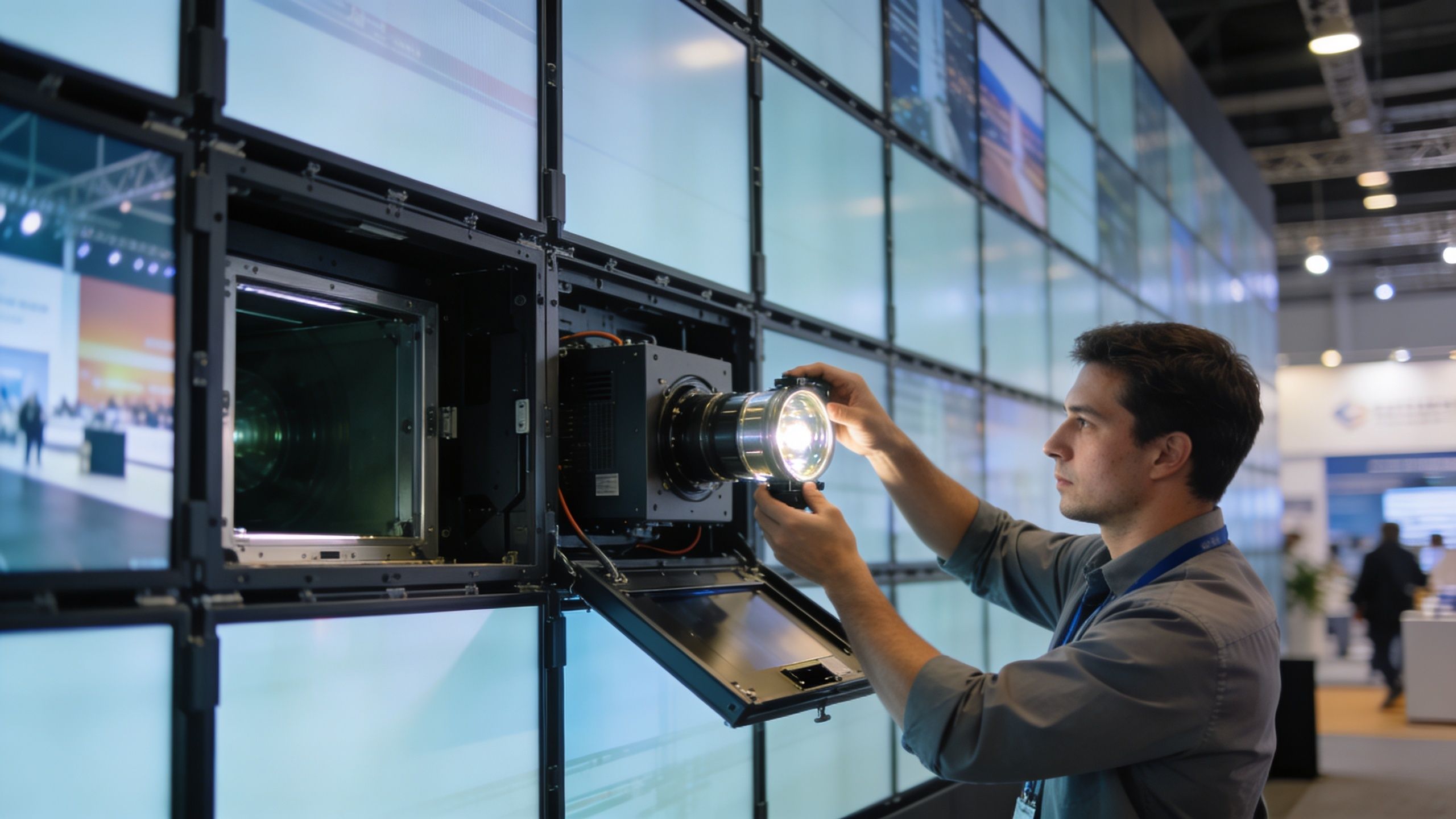
Projection video wall systems have more ways to create stress in a live event setting. Alignment can drift. A component can fail. A screen can get compromised. A projector issue can affect the image in a way that’s obvious to everyone walking past your booth.
Trade show reliability is different from permanent install reliability
A permanent installation gets consistency. Trade show gear gets freight movement, dock handling, compressed install windows, crowded floors, and constant operation. That environment punishes delicate systems.
LED is better suited to this reality because modular panels are serviceable in a practical way. If a tile needs attention, the problem is more contained than a projection setup that depends on alignment, optics, and screen conditions all working together.
The support model matters as much as the hardware
A lot of vendors say they offer support. That can mean a phone number. It can mean someone “available if needed.” That isn’t enough during a live show.
What you want is turnkey execution and a person on site who owns the outcome. If you’re exploring trade show rental support options, ask whether the vendor leaves an audiovisual technician on site while the show is open or disappears after setup.
Support standard: white-glove, turnkey service is the only model that makes sense for exhibitors who need to focus on customers. We believe the AV team should handle the wall, the content playback, and any issue resolution while your staff handles meetings and leads.
If something goes wrong, you shouldn’t open a help ticket. You should text or call, and an AV technician should be at the booth within minutes.
Peace of mind is not a luxury line item
It’s operational protection. Your sales team is too expensive to turn into a troubleshooting crew. Your marketing team shouldn’t spend show hours hunting down an installer. If the video wall is central to the booth, support has to be immediate and visible.
That’s why reliability is never just about hardware specs. It’s about whether the system and service model let your team stay focused on the reason they came to the show.
Your Trade Show Projection Video Wall Decision Checklist
If you’re still debating projection video wall versus LED, use this checklist and answer.
Ask yourself these questions
- Will your booth sit in bright, uncontrolled lighting? If yes, projection starts with a disadvantage.
- Will attendees see the wall from close range? If yes, image sharpness and pixel pitch matter immediately.
- Do you have low ceilings, a tight footprint, or an awkward layout? If yes, projection geometry can become a headache fast.
- Do you want the display integrated into the booth structure itself? If yes, modular LED is the stronger fit.
- Can your team tolerate technical downtime during show hours? If no, choose the system with the cleaner support path.
- Do you want a price that’s easier to forecast? If yes, insist on a package that includes everything except what the show bills directly.
- Do you need your staff selling, not troubleshooting? If yes, on-site technician coverage isn’t optional.
The practical recommendation
Projection video wall technology still has niche uses. If you control the room, can manage light, and have the space to engineer around throw distance and placement, it can work.
Most exhibitors don’t have that environment.
They have a live convention hall, a fixed move-in window, neighboring booths throwing light everywhere, and a sales team that needs the booth to work the minute doors open. In that setting, LED is the better decision because it solves the actual trade show problems, not just the display problem.
Buy for the hall you’re exhibiting in, not the demo room you were sold in.
If your display has to be bright, sharp, structurally flexible, logistically sane, and backed by real support, the answer is straightforward. Choose LED.
If you want a booth that looks sharp, installs cleanly, and comes with true turnkey support, talk to LED Exhibit Booths. We build high-resolution 1.9mm LED video wall booths, while many competitors still use 2.5mm pitch. Our pricing includes everything except the charges the show bills you directly, such as electricity and material handling. We also provide white-glove service with an AV technician on site the entire time the trade show is open, so your team can focus on customers instead of chasing technical fixes.