
Rentals for trade shows help you have a new look at every show while keeping your costs down. You have a show date on the calendar, the space is reserved, the team has talking points, and the budget has already been defended internally. Then a significant concern shows up. Your booth still has to earn attention in a hall full of companies that also paid to be there.
That is why rentals for trade shows deserve a more strategic look than they usually get. A rental is not just a backup plan for companies that do not want to buy. It can be the smarter way to put better technology, better support, and less operational risk on the floor.
The shift is obvious in the market. Companies report an average ROI of $20.98 for every $1 spent on trade shows, and nearly 40% of businesses plan to increase their trade show budget in 2026 according to these trade show statistics. When the upside is that strong, the cost of blending in gets harder to justify.
Why Your Rentals for Trade Shows Disappear on a Crowded Show Floor
The problem usually is not effort. It is sameness.
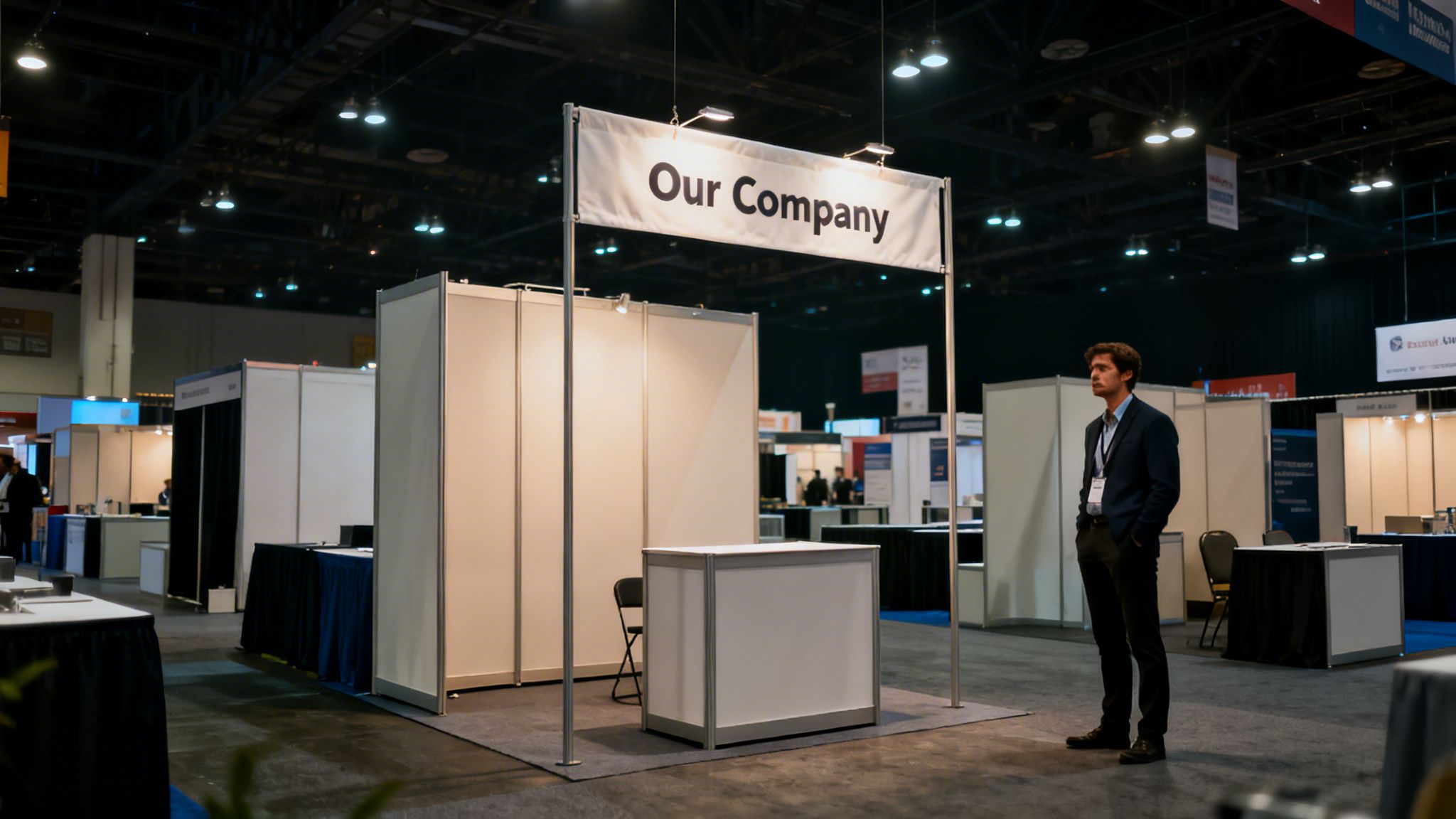
A team spends months planning a launch, approves graphics, ships samples, books travel, and arrives at the venue expecting momentum. Then the floor opens. Across the aisle, another booth has a fabric backwall. Two booths down, a competitor is running a looping product reel on a pair of monitors. Ten more exhibitors are using the same visual language. Everything starts to flatten.
Static rentals for trade shows lose the first battle
Attendees make fast decisions. They scan shape, motion, brightness, and visual clarity before they read a headline or ask a question.
If your exhibit relies on printed panels and a few disconnected screens, you are asking people to work too hard to understand what you do. Most will not. They keep walking until something feels more current, more active, or easier to process from a distance.
That is where many old-school rentals for trade shows fall short. They solve for footprint and basic presence. They do not solve for visibility.
Attention is part of the ROI equation
Trade shows can produce strong returns, but only if your booth creates enough stopping power to start conversations. The financial case for exhibiting is real. The tactical challenge is converting floor traffic into qualified engagement.
Practical takeaway: If your booth does not stand out in the first few seconds, your team ends up working harder to compensate for a weak environment.
The issue is not only aesthetics. It affects everything downstream.
- Fewer stops: Your staff spends more time prospecting outward instead of welcoming people in.
- Weaker demos: Product stories feel fragmented when content is split across separate screens and printed messaging.
- Lower recall: Attendees may remember the category, but not your brand.
The booth rentals for trade shows have to act like media
On a packed show floor, your structure is not just architecture. It is your broadcast surface.
That means the rental decision should be treated like a media decision. What are people going to see from the aisle? What feels premium up close? What supports movement, storytelling, and brand clarity without adding complexity for your team?
The answer is rarely a taller banner or one more monitor. It is usually a better display system.
The Modern Rentals for Trade Shows Seamless LED Video Wall Booths
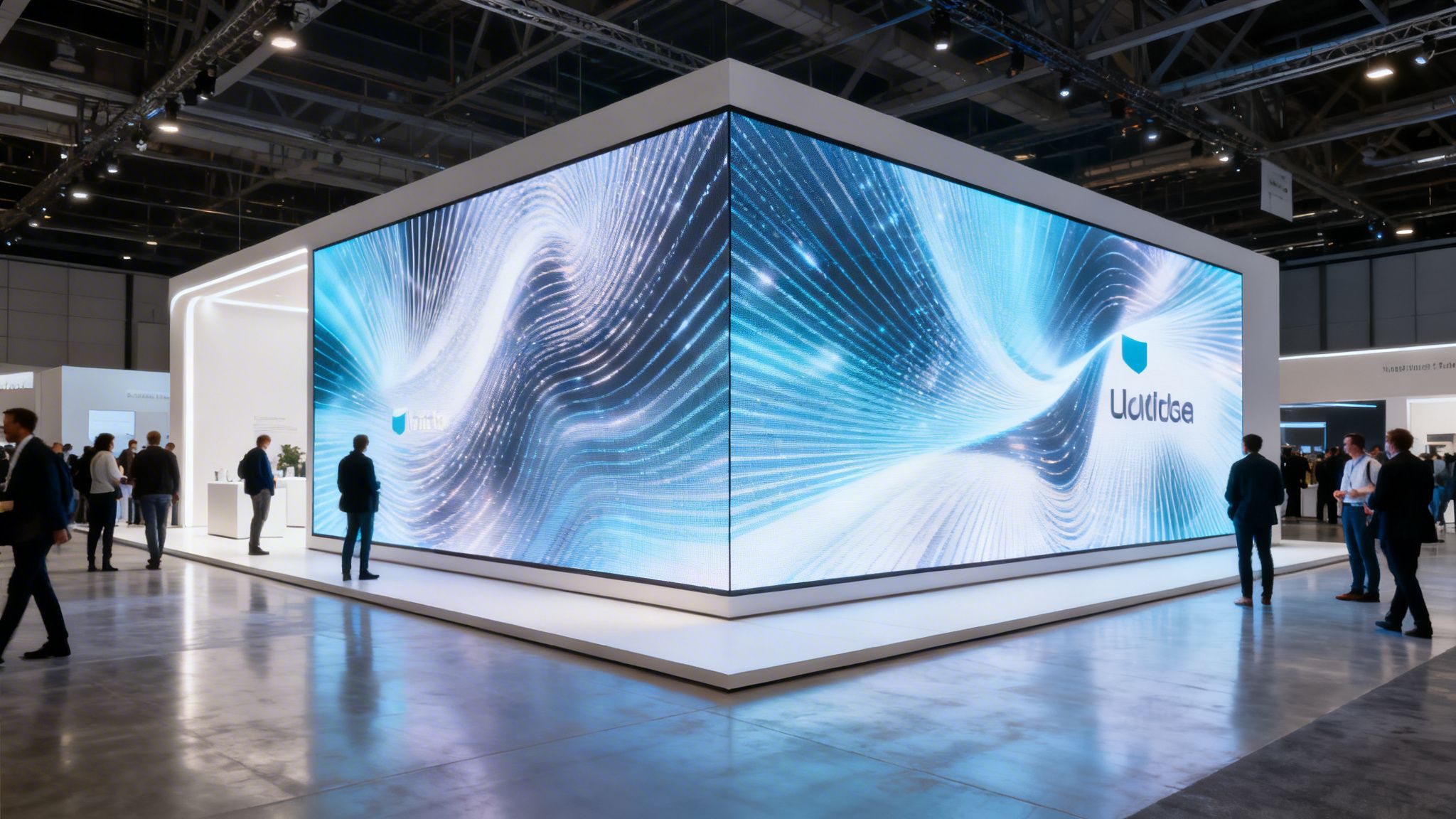
A modern LED rental booth works less like a traditional exhibit and more like a flexible digital building system. The easiest way to think about it is this. The booth is no longer a frame that holds a screen. The booth itself becomes the screen.
How modular LED walls work
Modular LED systems use lightweight tiles that connect with magnets and toolless locks. That matters because it changes both the look and the labor profile of the booth.
Instead of stacking flat panels with bezels, gaps, mounts, and cable clutter, the tiles snap together into one continuous visual surface. Walls, corners, columns, arches, and islands can all carry content without the visual breaks that make traditional monitor arrays look patched together.
Modern modular LED systems use high-powered magnets and toolless locks, reducing setup time by up to 70% compared to legacy truss systems. This magnetic alignment ensures sub-millimeter pixel registration, which is essential for achieving a seamless look with fine-pitch tiles (1.9mm-2.5mm) and has been shown to boost viewer engagement by 40% in eye-tracking studies, as described in this overview of trade show display rentals.
That technical point has a visible consequence. The content feels unified. Motion graphics move cleanly around corners. Product visuals do not break at the edges of separate monitors. The booth reads as one designed experience.
Why 1.9 pitch matters up close in rentals for trade shows
Pixel pitch is the distance between LED pixels. Smaller pitch means higher resolution at closer viewing distances.
Our standard pitch is 1.9, while many competing rentals sit at 2.5. The practical difference is simple. Your visuals look sharper when someone stands near the wall. Text holds together better. Fine details in product renders stay cleaner. Brand videos look more polished instead of slightly coarse.
For trade shows, that matters because attendees do not only view your booth from across the aisle. They step right up to it. They stand a few feet away during demos. They take photos. They look at technical diagrams, UI screens, packaging details, and motion assets from close range.
A wall that looks good at distance but soft up close undercuts the premium impression you are trying to create.
Tip: If your content includes product UI, small typography, or detailed animation, ask to see it on the actual pitch you will rent, not just a generic mockup.
The structure becomes part of the story
A seamless LED booth gives you more than a large display. It changes how you use the space.
You can turn a corner into a continuous brand narrative. You can wrap a column with motion graphics. You can build a backwall that shifts from atmosphere to product demo to lead capture prompt over the course of the day. For companies evaluating LED video wall rental options, that flexibility is often the key advantage, not just the visual impact. Plus, the same video wall technology can be used for conference audiovisual.
What works and what does not in rentals for trade shows
What works is using the wall as one coordinated canvas. One message at a time. Strong motion. Clear transitions. Readable calls to action.
What does not work is treating a high-end wall like a giant slideshow. If the booth has advanced display hardware but the content is static, cluttered, or overloaded with tiny text, the system is underused.
The display should simplify your story, not add another layer of noise.
Renting vs Buying A Strategic Decision Framework
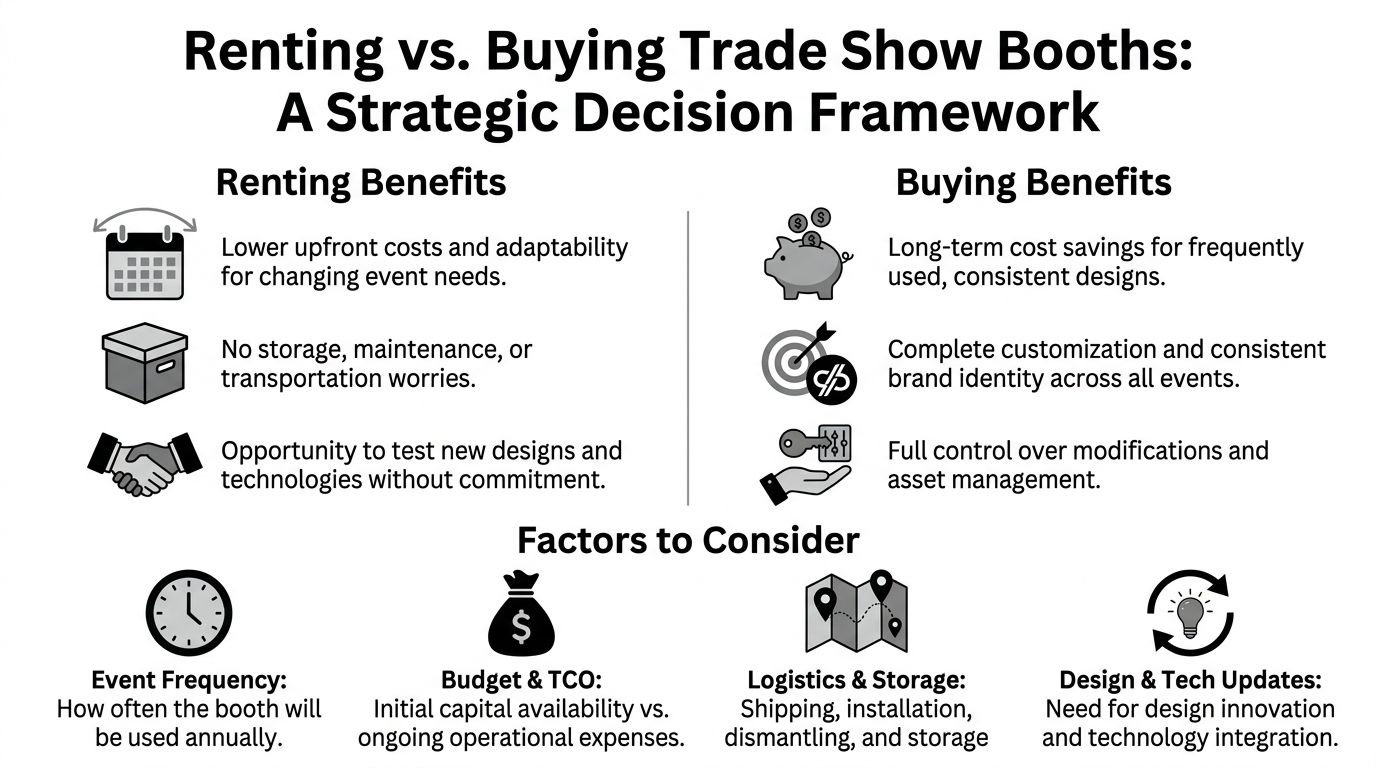
For most exhibitors, the rent-versus-buy question is not about preference. It is about usage pattern, internal process, and tolerance for operational overhead.
If you exhibit constantly, use the same footprint, and want long-term control of a stable booth system, ownership can make sense. If your schedule changes, your booth sizes shift, your campaigns evolve, or you want current display tech without carrying the burden of ownership, renting is usually the cleaner decision.
The comparison that matters
A lot of teams compare only the initial invoice. That is too narrow.
A thorough comparison includes storage, maintenance, repairs, logistics, refurbishment, and whether your owned booth still reflects the brand six or twelve months from now. It also includes internal friction. A rented system can be aligned to the event. An owned system often pushes the event to fit the asset.
Here is a practical side-by-side view.
| Factor | Renting | Buying |
|---|---|---|
| Upfront commitment | Lower initial commitment and easier to approve for a specific event | Higher initial capital commitment |
| Design flexibility | Easier to adapt booth size, shape, and messaging by show | Better if your program needs the same configuration repeatedly |
| Technology freshness | Access to current display formats without owning aging hardware | You manage obsolescence and upgrade timing |
| Storage | No long-term storage burden for your team | You need a storage plan |
| Maintenance | Provider handles service, prep, and replacement planning | Your team or vendor must maintain the asset |
| Shipping strategy | Built around the specific event and booth design | You ship the same owned assets repeatedly |
| Brand consistency | Strong when managed well, with room to tailor by audience | Useful when consistency across shows is the top priority |
| Risk if plans change | Lower, because the program can be adjusted show by show | Higher, especially if your footprint or campaign changes |
| Internal operations | Simpler for lean teams | Better for teams with established exhibit operations |
| Best fit | Brands that want flexibility, support, and current tech | Brands with frequent use and stable requirements |
When rentals for trade shows usually wins
Renting is usually the better strategic move when your team wants agility.
That includes situations like these:
- Changing show sizes: You may need a compact inline booth at one event and a larger island at another.
- Different messages by market: Product launches, regional priorities, and campaign themes change faster than owned structures do.
- Lean internal teams: If nobody wants to manage warehousing, repairs, and shipping coordination, renting removes that load.
- Technology-sensitive presentation: LED formats evolve. Renting helps you avoid being locked into older hardware.
A lot of companies also underestimate how often their exhibit needs revision. Messaging changes. Product lines expand. Brand standards get updated. What felt like a good owned solution can start looking dated long before accounting says it should.
When buying may still be right
Buying can be the right move if your exhibit program is highly repeatable and operationally mature.
That usually means:
- Your team exhibits often in similar footprints.
- The brand presentation stays consistent across events.
- You have a process for storage, maintenance, and logistics.
- You want direct control over owned assets.
Decision rule: If your event calendar and booth requirements stay stable, buying deserves consideration. If they move around, renting protects flexibility.
For a more focused look at the trade-offs, this guide on whether it is better to buy or rent an LED video wall is a useful planning reference.
A hybrid approach can also work
Some exhibitors split the difference. They keep a few branded assets they want to reuse, then rent the LED structure, support components, or event-specific elements around them.
That model works well when you want continuity without forcing every show into one fixed physical design. It also gives agencies and in-house marketers more room to refresh the experience without starting from zero each time.
Budgeting and Logistics for Your Rentals for Trade Shows
Once you decide to rent, the next question is usually less about design and more about certainty. What exactly is included, what will the show bill separately, and when do all the moving parts need to be locked?
That is where many exhibit projects get muddy. Pricing looks comparable until one quote leaves out installation, another excludes shipping, and a third says support is available but not present onsite.
What should be included in your rental price
A clean rental proposal should cover the parts your exhibit partner controls.
That normally includes the LED hardware, structural components, packing, transportation planning, installation, dismantle, and show-site coordination. In our model, everything is included except the charges the show itself bills directly to the exhibitor.
Those direct show charges typically include electricity and material handling. Those are venue and contractor costs, so no booth provider can credibly bundle them as fixed costs for every event.
This distinction matters because it lets you budget with fewer surprises.
- Included by your rental partner: Booth hardware, LED walls, setup, teardown, and managed execution.
- Billed by the show: Venue power, drayage, and any show-order services tied directly to the facility.
- Worth confirming early: Internet, rigging rules if applicable, and any venue-specific service forms.
If you are comparing proposals, use the same checklist against every vendor. A lower number is not a better number if half the scope is still sitting off-page.
For line-item guidance, this overview of video wall booth rental costs can help frame the conversation before you request a quote.
A workable planning timeline
The smoothest rentals for trade shows are usually the ones that get simple decisions made early. You do not need to finalize every animation months in advance, but you do need the booth concept, footprint, and support plan settled soon enough for production and logistics to stay calm.
A reverse timeline keeps the project practical.
Before the show opens
- Final pre-show checks happen on site.
- The booth is installed, tested, and content is verified on the wall.
- Show services like power and material handling should already be ordered.
About a month out
- Final content should be delivered in approved formats.
- Staff should know the flow of demos, lead capture, and escalation contacts.
- Any last booth adjustments need to be minor, not structural.
A few months out
- Lock the booth size, configuration, and major creative direction.
- Confirm venue rules and show forms.
- Approve the rental scope, so logistics and content production can move.
What creates avoidable problems
Most show-floor issues start earlier than people think.
Late content causes rushed testing. Unclear booth goals lead to generic visuals. Missing show forms create expensive scramble fees. And if nobody defines who owns approvals, small questions sit too long and become large delays.
Practical rule: Treat the venue as a separate billing entity and your exhibit partner as the execution entity. Budget for both from day one.
The simpler your scope and approval chain, the easier the install.
Designing High-Impact Content for Your Video Wall
A strong LED booth can attract attention on its own. To hold that attention, the content has to do a job.
Most exhibitors waste the wall by running a generic brand loop that could have lived on any lobby screen. It looks polished for a few minutes, but it does not guide the attendee toward a conversation, a demo, or a lead capture action.
Build content around booth behavior
Attendees do not all arrive in the same state of attention. Some are walking past fast. Some are scanning from the aisle. Others are already in the booth and waiting for a rep.
Your content should serve those moments differently.
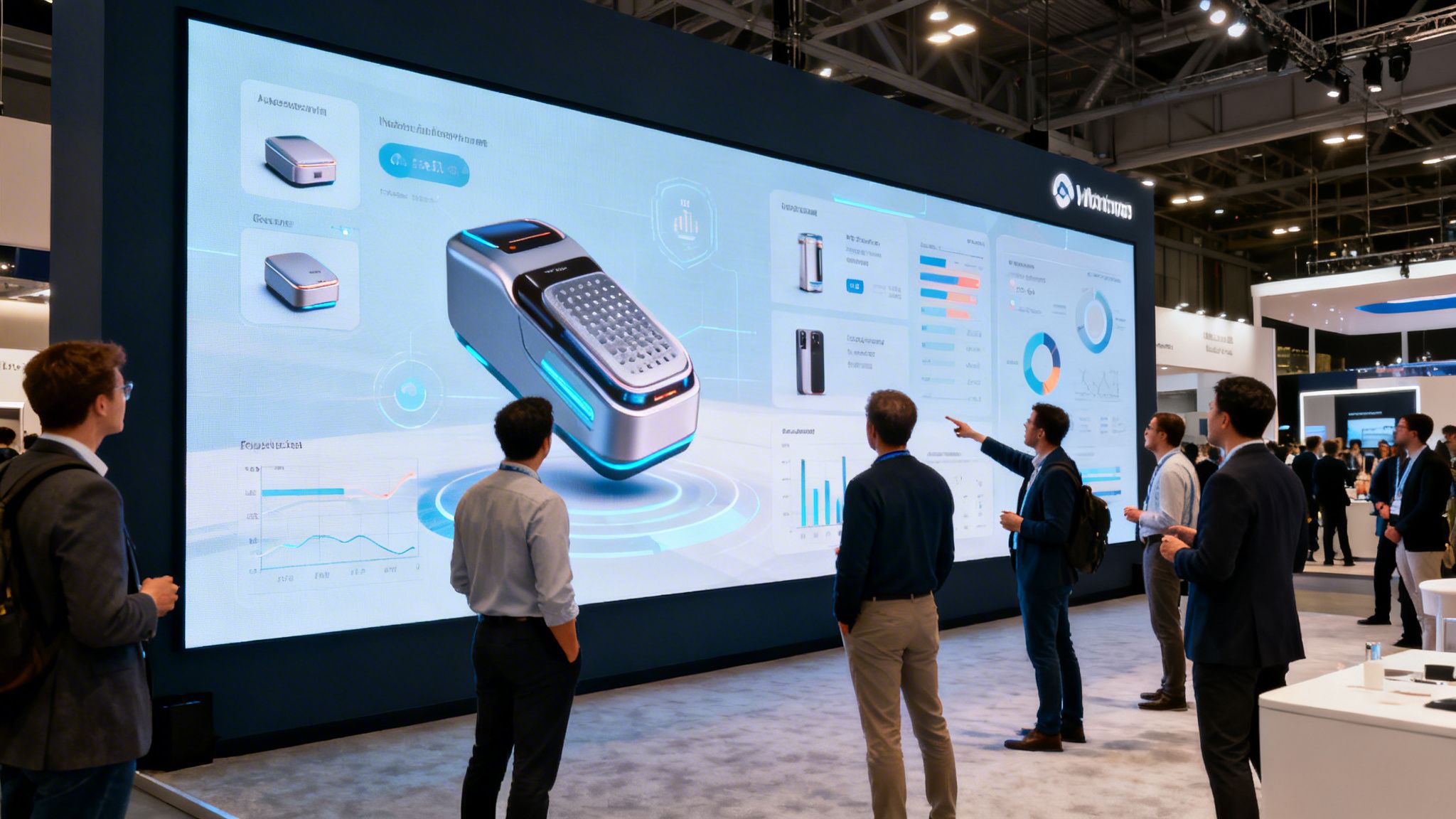
A practical content stack often looks like this:
- Aisle content: Large-format motion, short headlines, bold product visuals.
- Engagement content: Clear explanation of what you solve and for whom.
- Demo content: Product workflows, use cases, feature comparisons, or technical proof points.
- Conversion content: Prompt for a scan, signup, meeting, or live interaction.
When teams think like producers instead of designers, the booth gets stronger. The wall is not one asset. It is a schedule of assets that support the day.
Interactivity changes the value of the booth
The strongest rental booths often combine the main video wall with interactive touchpoints. That is where the display stops being just a visual attractor and starts functioning as a lead-generation system.
Integrating rental touchscreen kiosks and digital signage can deliver lead capture rates 3-5 times higher than static graphics. Interactive content like AR overlays can increase attendee dwell time by 150%, turning passive viewers into active participants, according to this article on smart trade show rental solutions.
That does not mean every booth needs a flashy gimmick. It means the content should invite action.
Some formats consistently work better than others:
- Product configurators: Useful when buyers need to compare options quickly.
- Interactive demos: Helpful for software, controls, equipment interfaces, or layered product stories.
- Live data or social feeds: Effective when they support credibility, not when they act as filler.
- Guided touchscreen journeys: Good for collecting intent before a rep steps in.
If you need support developing those assets, video wall video production for trade show content is usually a separate workstream worth planning early rather than treating as a last-minute add-on.
What content fails on LED walls
Tiny paragraphs fail. Overly corporate stock footage fails. Long explainer videos with no silent-mode clarity fail.
So do layouts designed for laptops or websites. A trade show wall needs visual hierarchy that reads instantly.
Content rule: If someone cannot understand the point in a glance from the aisle, simplify the message before you animate it.
The best booth content is clear before it is clever. Once the message lands, the motion and interactivity do the rest.
The White-Glove Service Difference Onsite and Stress-Free
A rental booth can look excellent in a rendering and still create a miserable show experience if support falls apart onsite.
This is the part many buyers underestimate. Hardware matters. Service determines whether the event feels controlled or chaotic.
Turnkey means your team is not managing the rentals for trade shows booth build
White-glove, turnkey service should mean one thing above all. Your team is not chasing labor, troubleshooting signal issues, or trying to decode a venue form while attendees walk by.
The booth partner handles planning, coordination, install, testing, dismantle, and show-site execution. Your staff can focus on the reason they came. Meeting prospects, running demos, and moving conversations forward.
That distinction becomes critical when something small goes wrong. A cable issue. A playback problem. A content trigger that does not behave the way it did in pre-show review. Those are manageable problems for the right technician and expensive distractions for your sales team.
Onsite technical support changes the risk profile
One of the most valuable service decisions is keeping an audiovisual technician onsite while the show is open.
That support model is simple. If something needs attention, you text or call. An AV technician comes to the booth and handles it. Your team does not leave the conversation they are in to become an emergency production crew.
That changes the emotional texture of the whole event. Demos feel safer to run. Staff can lean into the experience instead of worrying about what happens if the wall glitches at the worst possible moment.
A rental program should not ask your team to absorb technical risk just because the booth uses advanced display hardware.
Sustainability is now part of the service conversation
Support also includes helping modern brands make choices they can defend internally.
With 41% of B2B firms focusing on low-carbon rentals, modular LED systems offer a significant advantage. Built with 95% recyclable aluminum frames and shipped in reusable flat-packs, they can slash a booth’s carbon footprint by 45% over its lifecycle compared to traditional single-use exhibit materials, according to this rentals-focused sustainability discussion.
That matters if procurement, brand, or leadership is asking harder questions about materials and waste. It also matters if you exhibit often and want a solution that feels current on both performance and responsibility.
For companies looking at providers that handle both execution and support, this trade show display company page shows the type of turnkey service model worth asking about. LED Exhibit Booths is one example of a vendor that provides LED video wall trade show displays along with concepting, logistics, and onsite assistance.
What to ask before signing: Who is onsite during show hours, who handles failures, and how fast can they act without pulling your staff into the problem?
If the answer is vague, the support plan is weak.
FAQ and Pre-Show Rentals for Trade Shows Checklist
A rental project gets easier when the final questions are answered before they turn into show-week stress.
Pre-show checklist
Use this as a working list before you approve any booth.
- Confirm the booth objective: Product launch, lead generation, demos, meetings, or brand awareness.
- Lock the footprint early: Inline, peninsula, island, or a custom shape that fits the event.
- Review what is included: Hardware, install, dismantle, and onsite support should be clearly stated.
- Identify show-billed items: Electricity and material handling need to be budgeted separately.
- Finalize content ownership: Decide who creates motion graphics, revisions, and final playback files.
- Submit venue forms on time: Do not let power, internet, or labor paperwork drift.
- Assign one internal approver: Fast approvals prevent rushed production at the end.
- Share onsite contacts: Sales lead, marketing lead, and technical contact should all have the support number.
FAQ
What happens if a single LED tile fails
A well-supported rental program plans for service and replacement. The practical question is not whether hardware can ever have an issue. It is whether the support model can resolve it quickly without disrupting your team.
How much power should I order from the show
Ask your exhibit partner for the power requirements for your exact booth configuration. Do not guess, and do not use a prior show’s order as a template if the design changed.
What is the latest I can book a rental
Earlier is always safer because design, logistics, and content all benefit from lead time. Last-minute bookings are sometimes possible, but your options narrow and your team loses room for thoughtful planning.
Can I rent if my booth size changes from show to show
Yes. That is one of the main reasons renting works well. A modular system can be adapted more easily than an owned booth built around one fixed footprint.
Do I need custom content to justify an LED wall
Yes, at least to some degree. You do not need a cinematic campaign, but you do need content designed for the format. The wall should support your message, not just display an enlarged version of existing graphics.
Is turnkey support worth it
If your sales team is expensive, your event matters, and your display is central to the experience, then yes. It protects staff time and reduces show-floor risk.
If you are evaluating rentals for trade shows and want a booth that combines seamless LED visuals, transparent scope, and full onsite support, talk with LED Exhibit Booths. The right rental should do more than look impressive. It should make the show easier to run and easier to justify.