
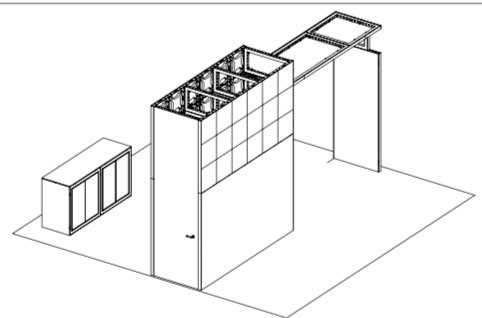
led wall panels solve a problem most exhibitors know too well. You pay for the space, ship the booth, brief the team, and still end up looking flat next to brands that move, glow, and pull people in from the aisle.
Marketing managers don’t need another gadget. You need a booth that gets noticed, supports your story, and doesn’t create technical chaos during show hours. That’s why we recommend led wall panels when the goal is stronger presence and less stress. Done right, they turn your structure itself into the message instead of treating the screen like an accessory.
Why Your Booth Needs More Than a Banner to Stand Out
Most booths fail before anyone reads the headline. Attendees scan fast. If your space looks static, they keep walking. A printed backdrop can still support a booth, but it won’t compete with motion, scale, and light on a crowded floor.
Modern led wall panels changed that. The key turning point came in 1992, when the invention of true blue LEDs enabled full-color RGB displays, a breakthrough later tied to the 2014 Nobel Prize in Physics. That innovation is what transformed LED displays from single-color indicators into the large visual canvases now used across trade shows and events, as noted in this history of direct-view LED video walls.
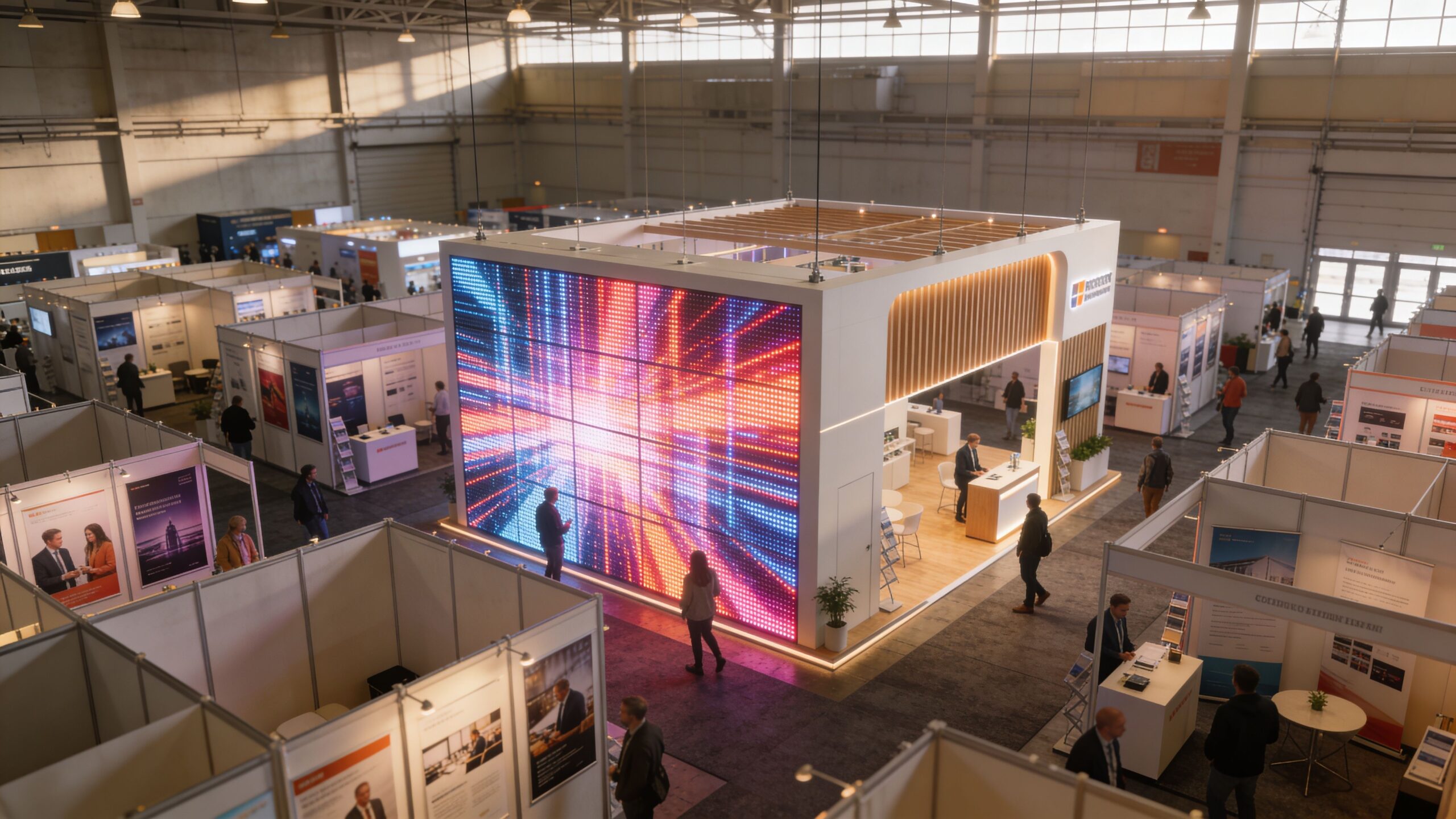
Static graphics don’t stop traffic like LED wall panels
A banner tells. A video wall demonstrates. That difference matters when you’re launching a product, showing software, running a brand film, or trying to make a small footprint feel bigger.
We see the same pattern at shows. Brands that rely only on print often struggle to create depth. Brands that use motion graphics, product visuals, and timed messaging across led wall panels create a booth people notice before the sales team says a word.
If you’re still weighing whether the upgrade is worth it, look at the difference between a standard backdrop and a pop-up wall display approach that creates a focal point.
A trade show booth has one job first. Earn the next three seconds of attention.
Attention is only half the value
The primary benefit isn’t just visual impact. It’s control. You can change messaging by daypart, audience, or meeting schedule. You can run a teaser before a demo, product visuals during traffic peaks, and cleaner brand content during networking hours.
That’s why we push clients to think beyond “screen size.” The right led wall panels give you a live communication surface that works as hard as your team does.
Decoding the Specs of High-Impact LED Wall Panels
Most spec sheets are written for engineers. Marketing managers need a simpler filter. When we evaluate led wall panels for a trade show booth, we care about one question first. Will this look sharp from the actual distance your audience sees it?
That’s where pixel pitch matters most. Pixel pitch is the distance between LED pixel centers. For trade shows, it’s the main driver of both cost and visual quality, and a finer pitch like P1.9 gives higher pixel density for close-up viewing than the coarser P2.5 or P3.0 options commonly offered elsewhere, as discussed in Samsung’s overview of digital signage and video wall innovations.
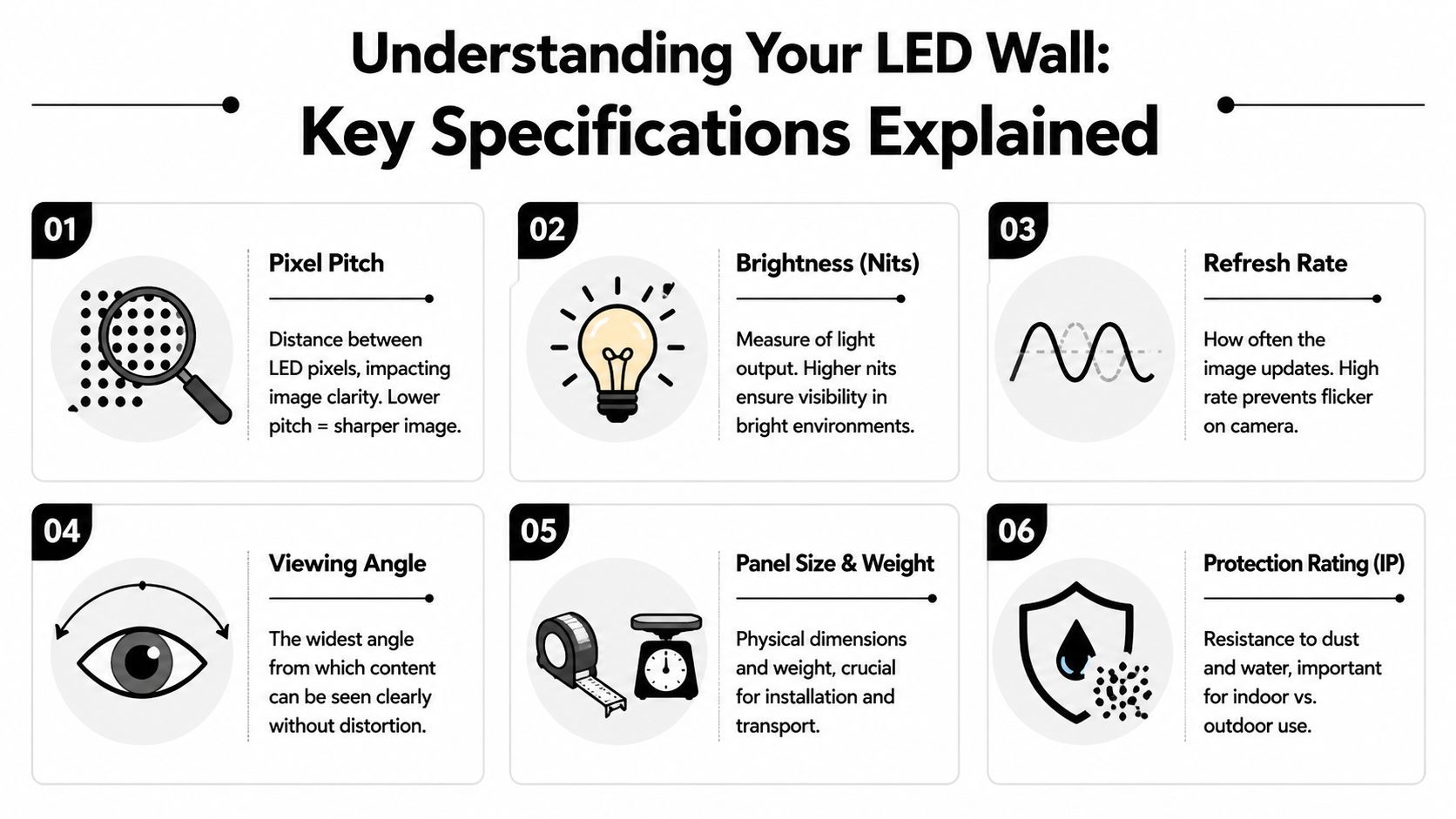
Pixel pitch decides whether your booth looks premium
Think of pixel pitch like the difference between a crisp laptop display and an old scoreboard. The smaller the spacing, the smoother the image looks up close. That matters in trade shows because people don’t always stand far away. They stop at the aisle, step into the booth, and often view the wall from only a short distance.
Our standard recommendation is P1.9 for brands that care about a polished presentation. Many competitors lean on P2.5 because it’s cheaper. That’s the tradeoff. Lower upfront equipment cost, lower resolution. If you’re showing product detail, software interfaces, lifestyle footage, or brand video with text overlays, P1.9 is the better call.
The core specs that actually matter with LED wall panels
Below is the practical version of the spec sheet.
| Specification | What It Means | Our Advantage (LED Exhibit Booths) | Competitor Standard |
|---|---|---|---|
| Pixel Pitch | Distance between LED pixels and the main factor behind clarity | P1.9 for sharper close-up viewing | Often P2.5 |
| Brightness | Light output needed for venue conditions | Spec matched to booth environment | One-size-fits-all recommendations |
| Refresh Rate | How smoothly video displays, especially on camera | Chosen for live event content and filming needs | Often treated as an afterthought |
| Viewing Angle | How well content holds up from the side | Better planning around aisle traffic and booth geometry | Flat-wall assumptions |
| Panel Construction | How panels connect and assemble | Built for fast exhibit deployment | More cumbersome setups |
| Service Model | What happens if something fails during show hours | On-site support model | Remote help or limited floor support |
If you’re comparing products, don’t get distracted by a long list of secondary features before you confirm the pitch and viewing distance match.
For a closer look at display options built for exhibit environments, review this page on LED panels for video walls.
Brightness has to fit the hall
Brightness is not a vanity metric. It’s about whether your content stays visible in the actual booth location. A dim panel can look fine in a dark showroom and washed out on a bright convention floor.
We also care about how the wall performs when the content is filmed. Brands doing interviews, demos, or social capture at the booth need panels configured to avoid visual issues on camera. That doesn’t mean chasing specs for the sake of it. It means choosing the right system for the content plan.
Practical rule: Start with viewing distance, then pick pixel pitch. Start with venue lighting, then pick brightness. Don’t do it in reverse.
Lightweight modular design affects real cost
Marketing teams often focus on the display and forget the labor. That’s a mistake. Panel construction changes setup time, install complexity, and the chances of something going wrong under deadline.
We prefer modular systems that go up cleanly and predictably. Better panel design means fewer install headaches, cleaner seams, and less booth-side improvisation. That has direct ROI because your team spends less time troubleshooting and more time meeting prospects.
Cheaper options usually hide the pain in deployment. The wall may technically work, but the finish looks rough, the process drags, and every adjustment becomes a production.
Creative Designs Using Modular LED Wall Panels
A flat rectangle is the most conservative use of led wall panels. It works, but it leaves a lot on the table. The modular format is what makes LED interesting for trade shows. You’re not limited to a screen on a stand. You can build the booth itself around the display surface.
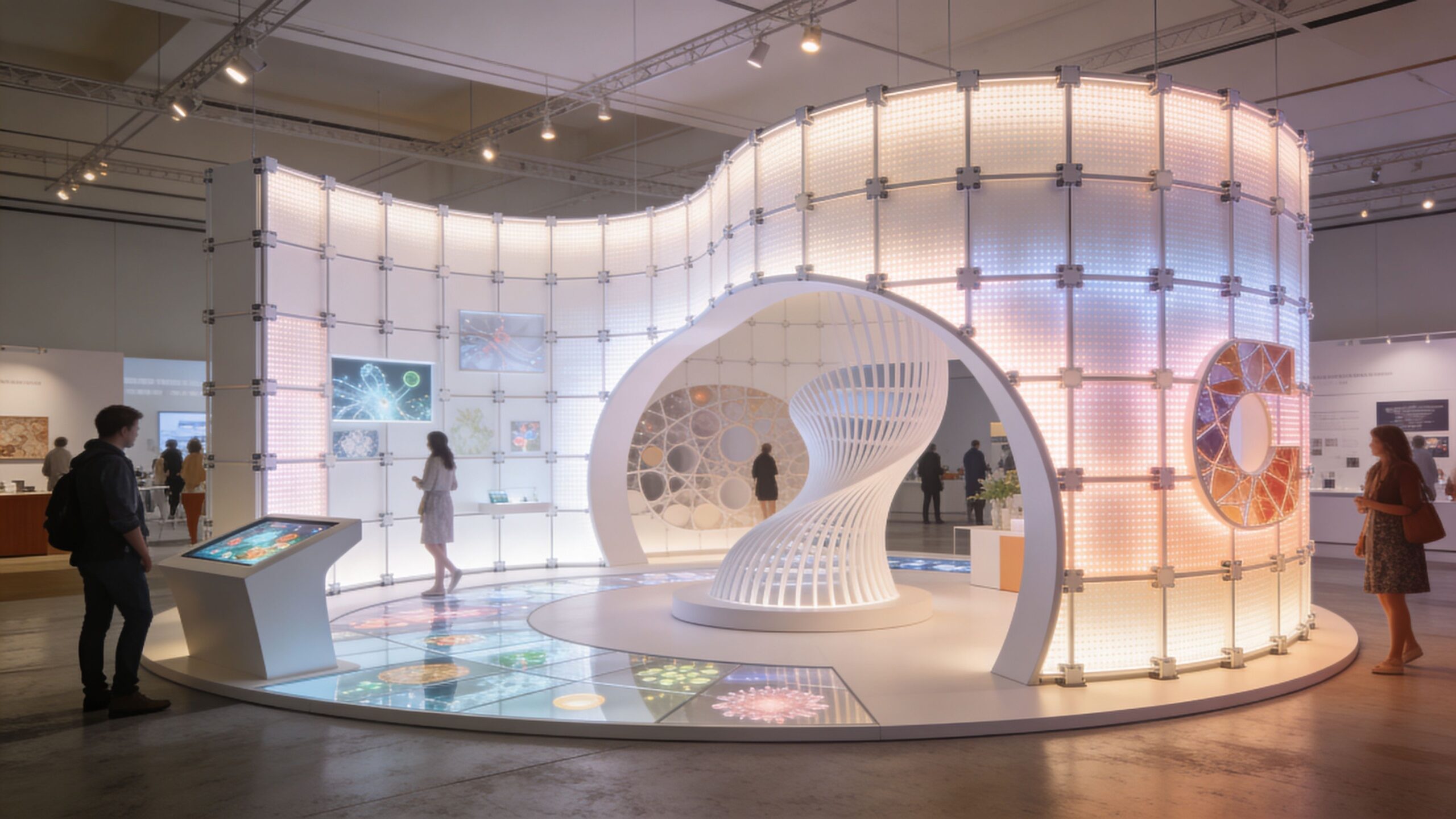
We’ve used modular walls to create branded backdrops that wrap into side returns, reception counters that animate with product visuals, and booth entrances that feel more like stage sets than standard exhibits. That matters because the physical form and the content work together. If the wall shape guides traffic, the message lands before the rep starts the conversation.
Shapes change how people experience the booth
Curved layouts deserve more attention than they get. In real trade show traffic, people rarely face the booth straight on. Many approach from the side, glance while walking, or stand at odd angles in crowded aisles. Standard viewing angle claims don’t tell the whole story.
A useful reference on placement notes that curved led wall panels can boost effective viewing by 25% in trade show layouts where people see content from sharp angles, according to this guide on LED video wall viewing angles. We agree with the practical takeaway. Curves are not decorative fluff. They help more people see the content as intended.
If you’re planning a custom environment rather than a basic inline booth, modular structures like those used in a modular trade show booth give you more design freedom.
Three configurations we recommend often with LED wall panels
- Immersive back wall: Best for product launches, software demos, and brand storytelling. Keep the main narrative on the center field and use side zones for motion texture or supporting visuals.
- LED columns and portals: Strong for island spaces where attendees approach from multiple directions. These forms create visibility from farther down the aisle.
- Reception counters with integrated motion: Useful when you want the first touchpoint to feel active instead of static. It can carry logo animation, product loops, or directional messaging.
Here is a visual example of how dynamic booth video can shape the whole environment:
Curved and sculptural LED works best when the content is designed for the form, not stretched from a flat template.
The common pitfall is buying the hardware idea before solving the storytelling problem. A dramatic structure with lazy content still underperforms. We push clients to match the shape to the audience flow and the content rhythm, not just the booth rendering.
Our White-Glove Turnkey Service for LED Wall Panels
Most LED projects go wrong. Not on the screen itself. In the handoffs.
One vendor handles the booth. Another handles the video wall. Someone else ships the pieces. A freelancer exports the content. Then show day arrives and your marketing team becomes the project manager for a technical installation they didn’t sign up to run.
We don’t think that’s acceptable. If you hire led wall panels for a trade show, you should not spend the event chasing cables, installer updates, or software issues.
What turnkey should actually include
A real white-glove process means one coordinated path from concept to teardown. We handle planning, booth integration, logistics, install, operation, and dismantle so your team can stay focused on customers.
Our pricing is also simple. We include everything except the charges the show bills you directly, such as electricity and material handling. Those venue bills come from the show. The rest is covered in our price.
That matters because a lot of cheaper proposals look fine until the add-ons start stacking up. Labor. Setup support. show-site fixes. content handling. On-site oversight. The invoice grows, and your team still carries the risk.
The on-site support difference
We leave an audiovisual technician onsite the entire time the trade show is open. If anything goes wrong, you text or call and within minutes an AV Technician is at your booth to resolve the problem.
That changes the experience completely. Your staff doesn’t need to troubleshoot playback. They don’t need to explain a signal issue to venue labor. They don’t need to stand in the aisle wondering whether the wall will come back online before the next demo.
Most exhibit problems are manageable. The real damage happens when no one owns the fix in the moment.
Why cheaper options often cost more
The low-price version of an LED wall usually cuts support first. You may get the hardware, basic setup, and a phone number. What you don’t get is accountability at the booth during live show hours.
That’s a bad trade. A trade show isn’t a warehouse install. It is a live sales environment with fixed deadlines and no tolerance for downtime during traffic peaks.
White-glove service protects you from:
- Last-minute install surprises: Booth plans and display plans need to align before freight arrives.
- Content mismatches: Screen dimensions, resolution mapping, and playback formatting have to be checked early.
- Live-show failures: If an issue appears during booth traffic, somebody needs to own the repair immediately.
- Team distraction: Your marketers should greet buyers, not coordinate technicians.
We’d rather be judged on a complete operating model than a bare hardware quote. That’s the right way to buy LED for events.
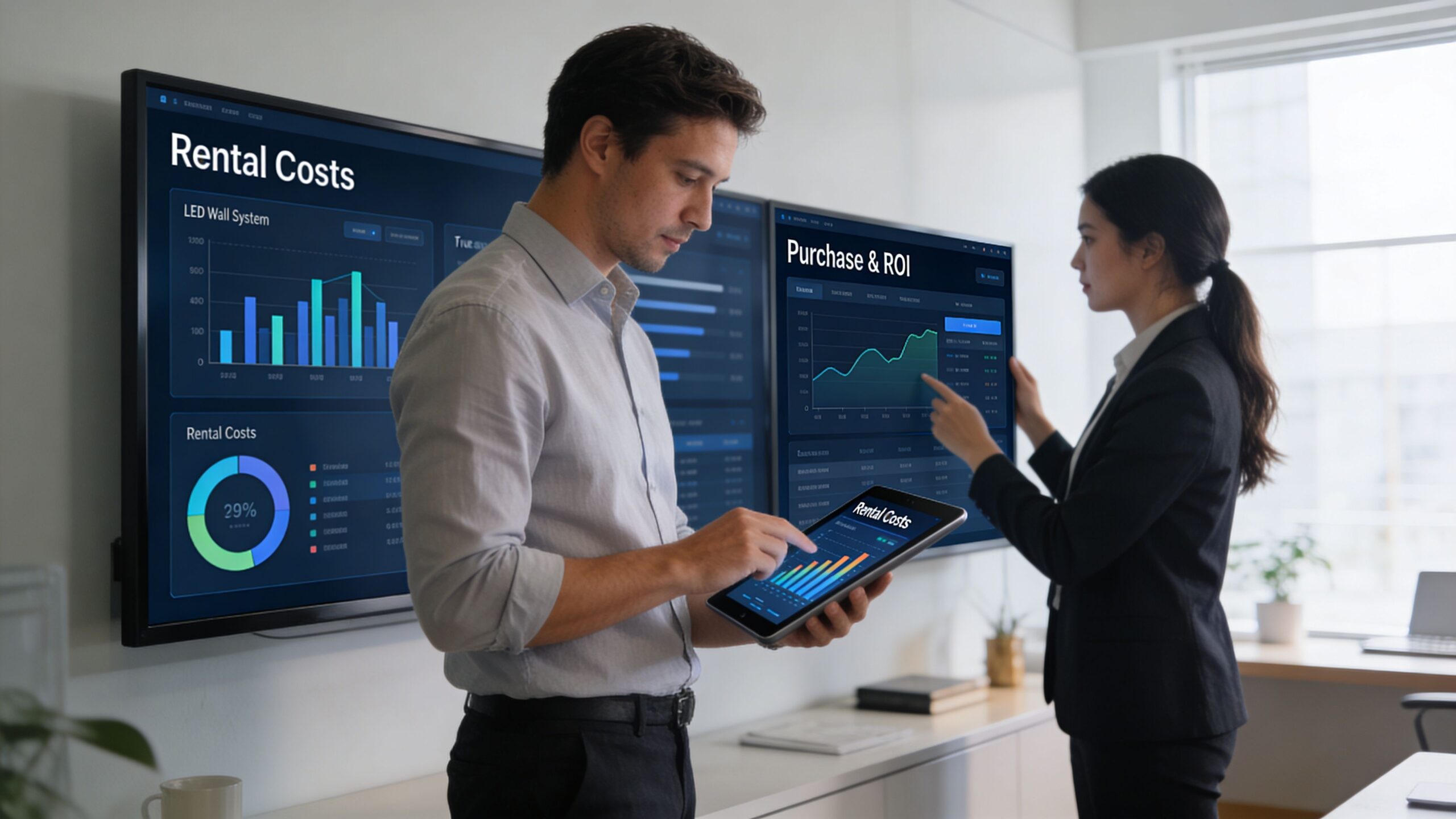
Rental vs Purchase Calculating the True Cost and ROI with LED Wall Panels
Most exhibitors should rent first. That’s our blunt advice.
If you exhibit occasionally, change booth sizes, or want flexibility across different shows, renting led wall panels is usually the smarter decision. You avoid storage, maintenance, refresh-cycle headaches, and internal technical ownership. You also keep the option to change configuration based on each event.
Buying makes sense when you exhibit frequently, use similar booth formats repeatedly, and have a clear plan for storage, transport, content management, and support. If you don’t have those pieces locked down, ownership can become a burden instead of an asset.
Rent when flexibility matters
Rental works well for launch campaigns, annual conferences, regional test programs, and brands that need different booth footprints over the year. It also fits teams that want a managed solution rather than becoming display operators.
The big advantage is operational simplicity. You get the visual impact without taking on long-term technical responsibility.
If you’re comparing options, use a transparent quote format and check what’s included. A useful starting point is to review video wall pricing for trade shows and compare that structure against competing proposals line by line.
Buy when repetition is predictable
Purchase is more defensible if your event calendar is stable and your booth architecture stays close to the same from show to show. In that case, the system can become part of your standard exhibit toolkit.
But don’t evaluate purchase on hardware alone. Include internal labor, logistics oversight, replacement planning, storage, and who supports the wall when something goes wrong at the venue. Many teams underestimate the management load.
ROI comes from outcomes, not just equipment cost
We look at ROI in three buckets.
First, brand perception. A sharper wall with P1.9 pitch presents content more cleanly than the common P2.5 competitor option mentioned earlier. That improves how polished your booth feels in close-range interactions.
Second, team productivity. If the booth runs smoothly and support is handled, your staff can focus on meetings, demos, and lead conversations.
Third, content visibility. Brightness has to match the hall. Indoor booths typically need 800 to 1,500 nits, while booths near windows or in brightly lit halls need 5,000+ nits to remain visible, and panels with adaptive brightness help maintain impact while avoiding sustained full-load operation, according to this overview of LED wall panel brightness and environmental use.
Don’t compare a managed rental to a bare panel quote. Compare complete outcomes against complete outcomes.
What to ask before approving either option
Use these questions in procurement conversations:
- What’s included in the quoted price? If labor, integration, on-site support, or content handling sit outside the quote, your actual cost is higher than it appears.
- Who owns show-site problem resolution? If that answer is vague, the risk falls on your team.
- Is the pitch right for our audience distance? Cheap resolution compromises are easy to miss until the wall is already on the floor.
- Does the system fit our booth environments? A panel that struggles in bright conditions undermines the whole investment.
The wrong LED wall isn’t just a visual downgrade. It’s a management problem waiting to happen.
Logistics and Content Tips for a Flawless Show
A strong LED booth is built long before install day. Most problems come from missed details in logistics or lazy content preparation, not from the display itself.
We handle the coordination work because it’s the part most exhibitors underestimate. Power requirements, load-in windows, rigging limitations, venue rules, freight timing, and floor conditions all affect how led wall panels get deployed. If nobody owns those details early, the booth becomes expensive improvisation.
Logistics details that matter
Before the show, we lock down the practical issues that can derail setup:
- Power planning: The venue has to know what the system needs, and your order has to match the actual booth design.
- Material handling expectations: Show-site handling affects timing and budget, so it needs to be accounted for early.
- Install sequencing: The LED structure, graphics, lighting, and any product demo stations have to be installed in the right order.
- Freight protection: Proper packing matters. If your team wants a useful outside perspective on transport protection, this guide to crating for shipping is worth reviewing.
Content that works on LED Wall Panels
Too many brands take desktop presentation content and push it onto a massive wall. That usually looks weak. LED content should be built for motion, distance, and fast comprehension.
Use these rules:
- Lead with motion, not paragraphs. Attendees should understand the category or message at a glance.
- Keep text minimal. Sales reps can explain. The wall should attract and reinforce.
- Use high-contrast visuals. Booth environments are busy, and subtle design often disappears.
- Build short loops. Repetition is fine if the sequence is clean and easy to enter at any point.
- Design for the structure. A curved wall, counter, or column needs custom framing and motion logic.
Good booth content doesn’t try to say everything. It gives your reps a stronger opening.
We also push teams to review content in the actual mapped canvas size before the event. A file that looks balanced on a laptop can feel cramped or empty on a large-format LED surface. That final pre-show review saves a lot of regret.
Exhibitor Questions About LED Wall Panels Answered
What if the wall fails during show hours
That depends on the service model you bought. This is exactly why we insist on on-site technical coverage for live events. If support lives somewhere off-site, your staff becomes the middle layer between the booth and the fix. That’s slow and avoidable.
Do we need special content for led wall panels
Usually, yes. You can repurpose existing assets, but they often need to be reformatted for the wall shape, viewing distance, and motion pacing. A good starting resource if you’re comparing approaches in a major event market is this Trade Show Booth LED Technology Las Vegas Guide, which helps frame the practical differences between booth LED applications.
Are LED wall panels only for large island booths
No. They work in smaller spaces too. The mistake is assuming LED only makes sense at massive scale. A compact booth can benefit a lot from one sharp visual surface if the content and structure are designed with discipline.
How much control do we have over messaging
A lot. That’s one of the biggest advantages. You can rotate loops, update product visuals, change messaging by audience, and tailor the content to the event goal. If you want a deeper look at common setup and planning concerns, review these LED video wall FAQs.
What’s the biggest buying mistake exhibitors make
They buy on panel price instead of show performance. The cheaper quote often excludes support, compromises resolution, or ignores the booth’s real lighting and traffic conditions. That’s how a “deal” turns into a distraction for your team.
If you’re planning a booth and want led wall panels that are handled end to end, talk with LED Exhibit Booths. We can help you evaluate the right pitch, configuration, service model, and show strategy so your booth works on the floor, not just in the rendering.