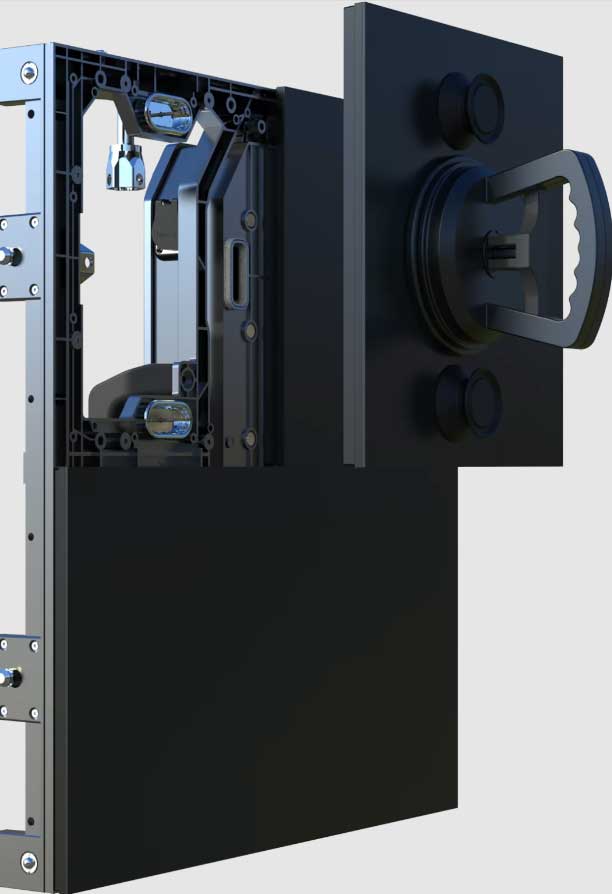

Think of a trade show shipping case as more than just a box. It’s your exhibit’s bodyguard, your insurance policy, and the first step to a successful show. It’s purpose-built to shield your valuable LED video walls and other gear from the brutal reality of freight shipping, ensuring your booth makes a flawless first impression.
Why Your Exhibit’s First Impression Starts with Its Case
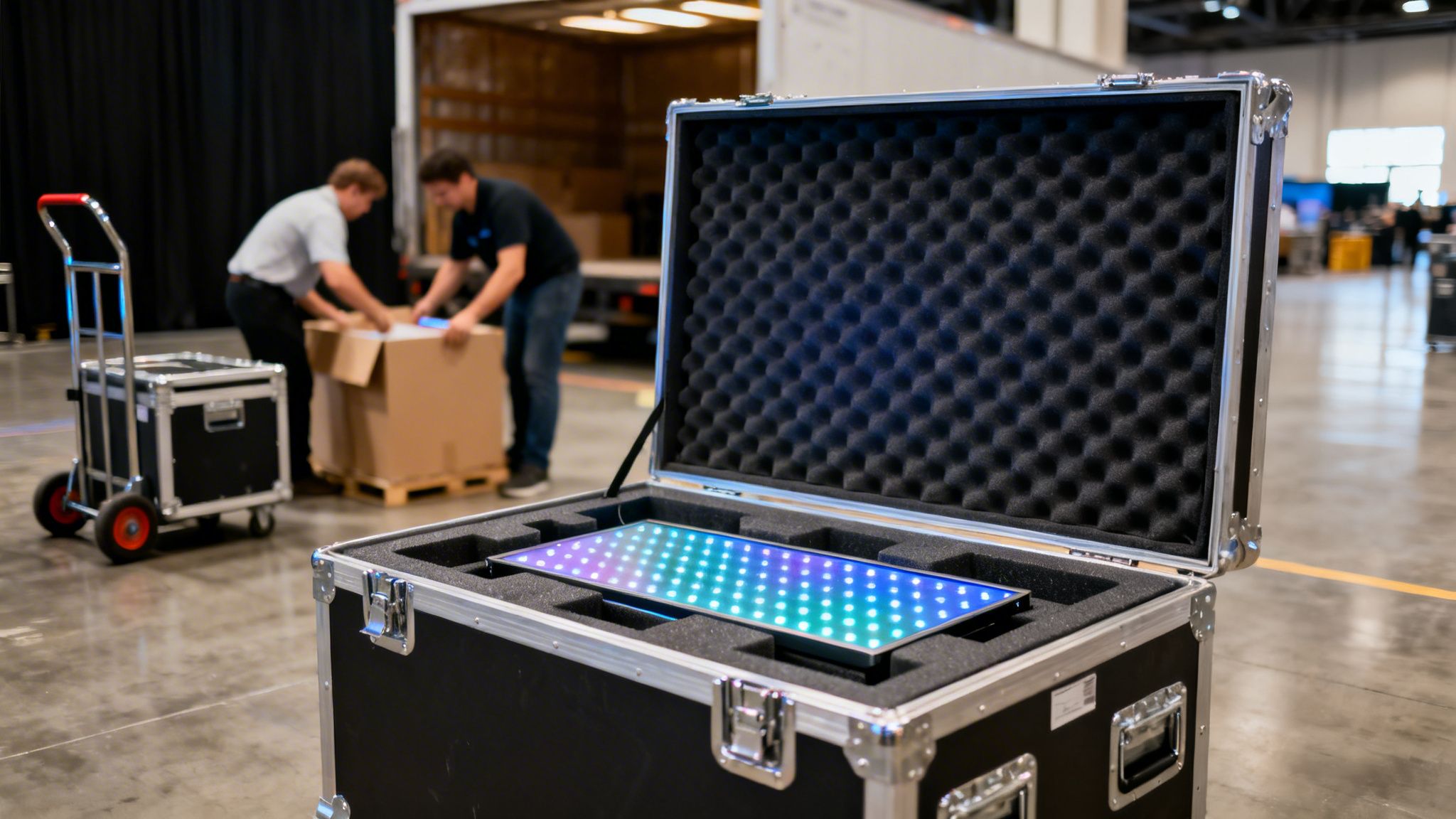
We’ve all heard the horror stories. Your team arrives at the convention hall, pumped and ready to build a show-stopping booth. But when they crack open the crates, they find a disaster: cracked LED panels, scratched graphics, and broken fixtures.
That gut-wrenching moment proves a simple truth in the event world. The journey to the show floor is just as critical as the trade show booth design itself. This guide isn’t just about getting from point A to B; it’s about making sure what arrives is perfect and ready to impress. A quality case is the difference between a smooth setup and a last-minute scramble.
Protecting Your Most Valuable Assets
For today’s exhibitors, the most expensive parts of the booth are often the most delicate. High-tech gear like a seamless LED video wall is a massive investment and the heart of your booth’s appeal. Protecting it isn’t a “nice-to-have,” it’s absolutely essential. A real shipping case with custom-cut foam stops the shock and vibration damage that happens all too easily in transit.
Here at LED Exhibit Booths, we’re focused on both protection and performance. That’s why we do two things differently:
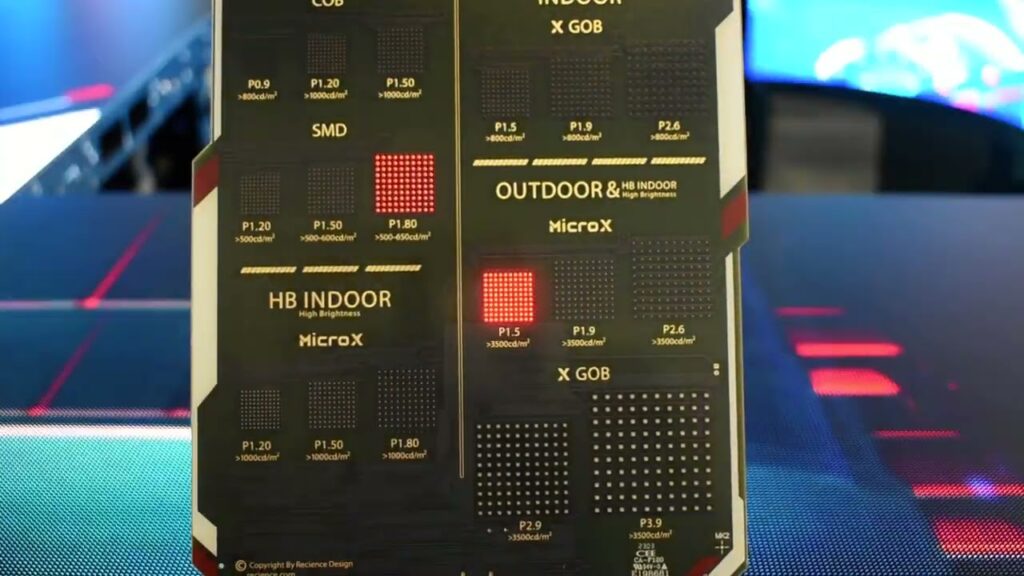
- Superior Visuals: Our video walls use a 1.9mm pixel pitch, giving you a much higher resolution with sharper, brighter images than the 2.5mm pitch our competitors mostly have. You have to protect that superior quality.
- Transparent Pricing: We keep things simple. We include everything in our price except the bills the show sends you directly, like drayage and electricity. No hidden fees for the important stuff.
A well-protected exhibit is an effective exhibit. Spending money on a proper shipping case is the first move to make sure your technology and brand message show up exactly as you planned. It has a direct impact on your event ROI.
More Than Just a Box
Thinking ahead about your shipping cases does more than just prevent damage. The right cases make life easier for your setup crew, speeding up both install and dismantle. When everything is organized in its proper place, your team isn’t wasting time hunting for parts under a tight deadline.
This connection between planning and on-site execution is huge. You can see how every piece fits together, from the case to the final layout, by taking a look at our complete guide to trade show booth design. It’ll help you understand how every detail contributes to a stress-free, successful show.
The Strategic Value of Investing in a Quality Shipping Case
Thinking of a trade show shipping case as just another expense is a big mistake. It’s not a cost; it’s an investment in your brand’s reputation and a safety net for your most valuable assets. Think of it as armor for your high-definition LED video wall.
This isn’t just our opinion; the whole industry is moving in this direction. The market for specialized transport cases is set to explode from USD 9.3 billion in 2026 to a staggering USD 25.5 billion by 2036. You can dig into the numbers yourself in this comprehensive analysis of the transport cases market. This boom is happening for one simple reason: more companies are using delicate, high-value gear like video walls and need to get them to the show floor in one piece. Alternatively, you may just want to change everything and go for a lightweight trade show display. Plus, we offer custom trade show booths.
Mitigating Catastrophic Financial Risks
The real cost of a trade show isn’t just what you pay for the booth space. The true disaster happens when your equipment shows up broken. A cheap or damaged case can set off a chain reaction of problems that make any initial savings look tiny. A proper trade show shipping case is your best defense against these budget-killers.
Imagine these all-too-common nightmares that a quality case helps you avoid:
- Emergency Repairs: One cracked LED panel can easily cost you thousands to fix on-site, assuming you can even find someone to do it in time.
- Last-Minute Rentals: If a critical part is broken, you’re stuck renting whatever is available at an outrageous markup, just so your booth isn’t a total dud.
- Wasted Staff Time: Your team should be prepping for meetings, not scrambling on the phone trying to fix a broken exhibit. Their time is expensive, and stress is high.
Investing in a durable, well-designed case is fundamentally an act of risk management. It safeguards your exhibit investment, protects your brand reputation, and ensures your team can focus on what they do best: connecting with customers.
At LED Exhibit Booths, we know how crucial it is to protect your assets. Our video walls are built with a tight 1.9mm pixel pitch, which gives you a much higher resolution and a sharper image than the 2.5mm pitch our competitors often use. You don’t invest in that kind of quality just to have it destroyed in transit. That’s why a rock-solid shipping solution is non-negotiable.
The Hidden Costs of a Damaged Exhibit
Let’s be blunt: a broken exhibit is a financial black hole. The direct costs of repairs are bad enough, but the indirect costs—like a tarnished brand image and lost sales—are even worse. Here’s a stark comparison of what you’re really risking by cutting corners on a case.
Damaged Exhibit Costs vs Quality Case Investment
| Expense Category | Without a Quality Case (Potential Costs) | With a Quality Case (Controlled Costs) |
|---|---|---|
| Equipment Damage | High risk of costly repairs or full replacement of LED panels, graphics, and structures. | Minimal risk of damage, preserving the value of your assets. |
| Show-Site Labor | Increased labor hours for troubleshooting, repairs, and frantic modifications. | Efficient, predictable setup and teardown, keeping labor costs in check. |
| Brand Perception | A damaged or incomplete booth looks unprofessional and signals unreliability to potential clients. | A polished, fully functional exhibit reinforces a strong, competent brand image. |
| Lead Generation | Missed opportunities as your team is distracted and the booth fails to attract attendees. | Maximized foot traffic and engagement, leading to more qualified leads. |
As you can see, skimping on a case is a gamble you’re almost guaranteed to lose eventually.
Plus, we make budgeting simple. Our price includes everything you need for a functional booth. The only extra costs you’ll see are the direct bills from the show organizer for things like electricity and material handling. This all-in approach takes the guesswork out of the equation and lets you focus your budget on what really matters.
How to Choose the Right Shipping Case for Your Exhibit
Picking the perfect trade show shipping case isn’t just about finding the biggest, toughest box on the market. It’s a careful calculation, balancing protection against weight and cost. The case you choose has a huge impact on everything from keeping your exhibit safe to how much you’ll owe on that final drayage bill.
This guide will walk you through the essential things you need to think about. We’ll cover everything from materials and construction to the foam inside, giving you a clear path to making a smart decision—especially when you’re protecting a high-value asset like an LED video wall.
Case Materials and Construction
The material your case is made from is your first line of defense. The two most common choices have their own pros and cons when it comes to durability, weight, and price. Understanding them is the key to a good investment.
-
ATA-Rated Plywood Cases: These are the old-school workhorses of the trade show world. They’re built with heavy-duty plywood that’s laminated with plastic or aluminum, making them incredibly tough and easy to build to any custom size. They offer maximum protection, but they’re also the heaviest option, which will definitely drive up your shipping and drayage fees.
-
Lightweight Molded Plastic Cases: These modern cases, usually made from high-density polyethylene (HDPE), are created through a process called roto-molding. This technique makes a seamless, single-piece case that’s tough against impacts, water, and chemicals but is way lighter than a plywood case.
For most exhibitors today, especially if you have a modular system, lightweight plastic cases are the sweet spot between protection and cost. They cut down on the weight you’re billed for without risking the safety of what’s inside.
This little decision tree shows exactly how choosing between a cheap case and a quality one hits your bottom line.
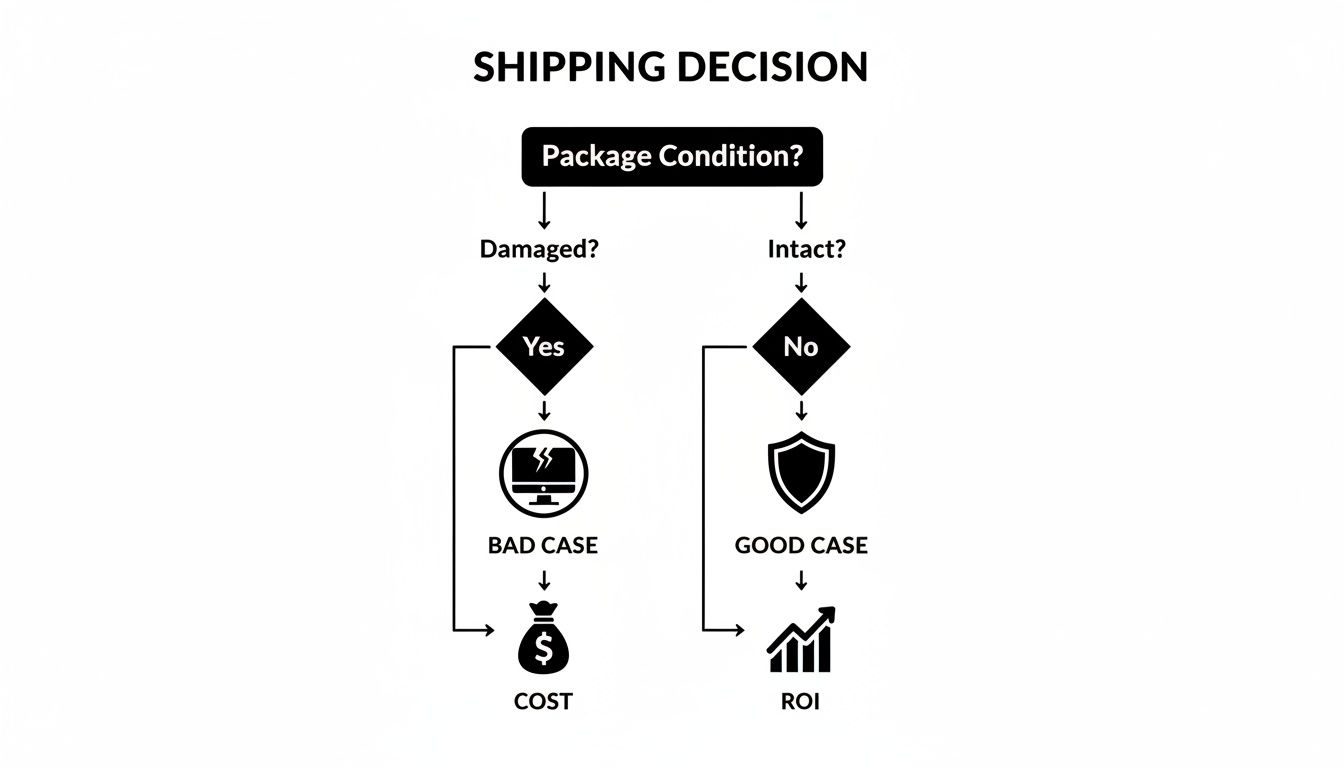
It’s pretty clear—investing in a good trade show shipping case isn’t just an expense. It’s how you protect your investment and make sure you get a positive return.
The Critical Role of Interior Foam
What’s on the inside of the case is every bit as important as the outside shell. Without the right interior support, your expensive LED panels and parts will just rattle, vibrate, and slam into each other during transit, which is a recipe for disaster. This is where custom foam inserts are a must-have.
Custom-cut foam cradles each component, holding it securely in place and absorbing all the shocks from the road. Think of it as a custom-tailored suit of armor for every piece of your booth. This is absolutely vital for delicate electronics like our video wall panels, which have an incredibly sharp 1.9mm pixel pitch. That’s a huge step up from the competitor standard of 2.5mm and delivers a much clearer, higher-resolution picture. You need precision-fit foam to protect that level of quality.
A great trade show shipping case is a complete system. The hard exterior shell protects from external forces, while the custom foam interior protects from internal movement and vibration. You need both to guarantee your exhibit arrives in perfect condition.
Balancing Size, Weight, and Cost
Finally, it all comes down to the delicate balance between the size and weight of your cases and your budget. Every extra pound and every extra inch adds up on your freight and drayage bills. The goal is simple: get the best protection with the least amount of bulk.
Here are a few tips to get that balance right:
- Choose the Smallest Case Possible: Pick a case that fits your equipment snugly, with just enough room for the right amount of foam padding. Any empty space is just wasted money.
- Optimize Your Packing: Wherever you can, consolidate items to cut down on the total number of cases you need to ship. Fewer cases mean simpler logistics and lower handling fees.
- Prioritize Lightweight Systems: Of course, the best way to reduce case weight is to start with a lighter exhibit in the first place. Our modular, magnetic LED panel systems are designed to be lightweight, which lets us use smaller, more efficient cases from the get-go.
By carefully thinking through these factors—material, interior foam, and the size-to-weight ratio—you can find a trade show shipping case that not only protects your valuable booth but also helps keep your logistics costs from spiraling out of control. Remember, we make budgeting easier by including everything in our pricing except for direct show bills.
Navigating the Hidden Costs of Trade Show Shipping
If you’ve been around the trade show circuit, you know the two words that can sink a budget: “freight” and “drayage.” These are often the biggest and most unpredictable costs you’ll face, and getting a handle on them is your first step to a smarter event strategy.
Freight is pretty simple. It’s what you pay to get your booth from your warehouse to the convention center’s loading dock. But that’s where the simplicity ends.
Drayage, also known as material handling, is a whole different animal. This is the fee charged by the show’s official contractor to move your trade show shipping case from the dock to your booth space. They also store your empty cases during the show and bring them back for tear-down. And this fee is often much, much higher than your freight bill.
Why Drayage Is the Real Budget Breaker
Here’s the surprise that gets a lot of first-timers: drayage can easily cost more than the freight to ship your booth across the country. The fee isn’t based on how far they move your cases, but on how much they weigh.
The calculation is based on CWT, or cost per 100 pounds. The heavier your cases, the more you pay. Since these rates are set by the show’s exclusive contractor, there’s no shopping around for a better deal.
Shipping logistics are a huge headache for exhibitors. In fact, industry data shows that drayage and freight can eat up 15-25% of an entire exhibit budget. The good news is that smart choices in your exhibit system can slash these costs. Some companies have saved up to 35% on logistics just by switching to more efficient, lighter cases that also speed up their setup times. You can see more data on how modern cases are changing the game in this in-depth market report.
A Real-World Cost Comparison
Let’s put some real numbers to this. Imagine you’re at a show where the drayage rate is a nice, round $100 per CWT.
- Exhibit A (Traditional Build): This shipment is a hefty 500 lbs. Your drayage bill comes out to (500 lbs / 100) x $100 = $500.
- Exhibit B (Lightweight System): This modern, modular setup weighs just 350 lbs. The drayage is (350 lbs / 100) x $100 = $350.
That’s an instant $150 savings on a single fee for just one show. When you consider that national vendors attend an average of 12.5 shows a year, those savings add up fast.
The most effective way to control your drayage bill is to control your shipping weight. Every pound you shave off your exhibit directly translates into money back in your marketing budget.
Strategies for Smarter Shipping
You don’t have to just accept massive drayage fees. With a little planning before your booth even leaves the warehouse, you can make a huge dent in your final bill. The key is to think lighter and pack smarter.
Actionable Steps for Cost Reduction:
- Choose Lightweight Case Materials: As we’ve talked about, modern roto-molded plastic cases give you all the protection you need but weigh a fraction of old-school wood crates. This is your easiest win.
- Consolidate Shipments: The fewer individual pieces the crew has to handle, the better. Pack everything into the fewest cases possible. This not only saves weight but can also simplify the billing process.
- Invest in a Lighter Exhibit System: Naturally, the biggest impact comes from the weight of your booth itself. Our LED Exhibit Booths use lightweight, magnetic panels that are far less bulky than traditional walls, which means smaller cases and lower shipping weights. You can see exactly how this works in our guide on portable tradeshow booths.
This focus on efficiency is central to our philosophy. We design our booths to make an impact on the show floor, not on your shipping invoice. It’s the same reason our video walls use a superior 1.9mm pixel pitch for a sharper, higher-resolution image than the common 2.5mm pitch, and why our pricing is transparent—we include everything except the direct show bills. This way, you can budget with confidence and focus on what really matters: your ROI.
Packing Your Exhibit Like a Pro
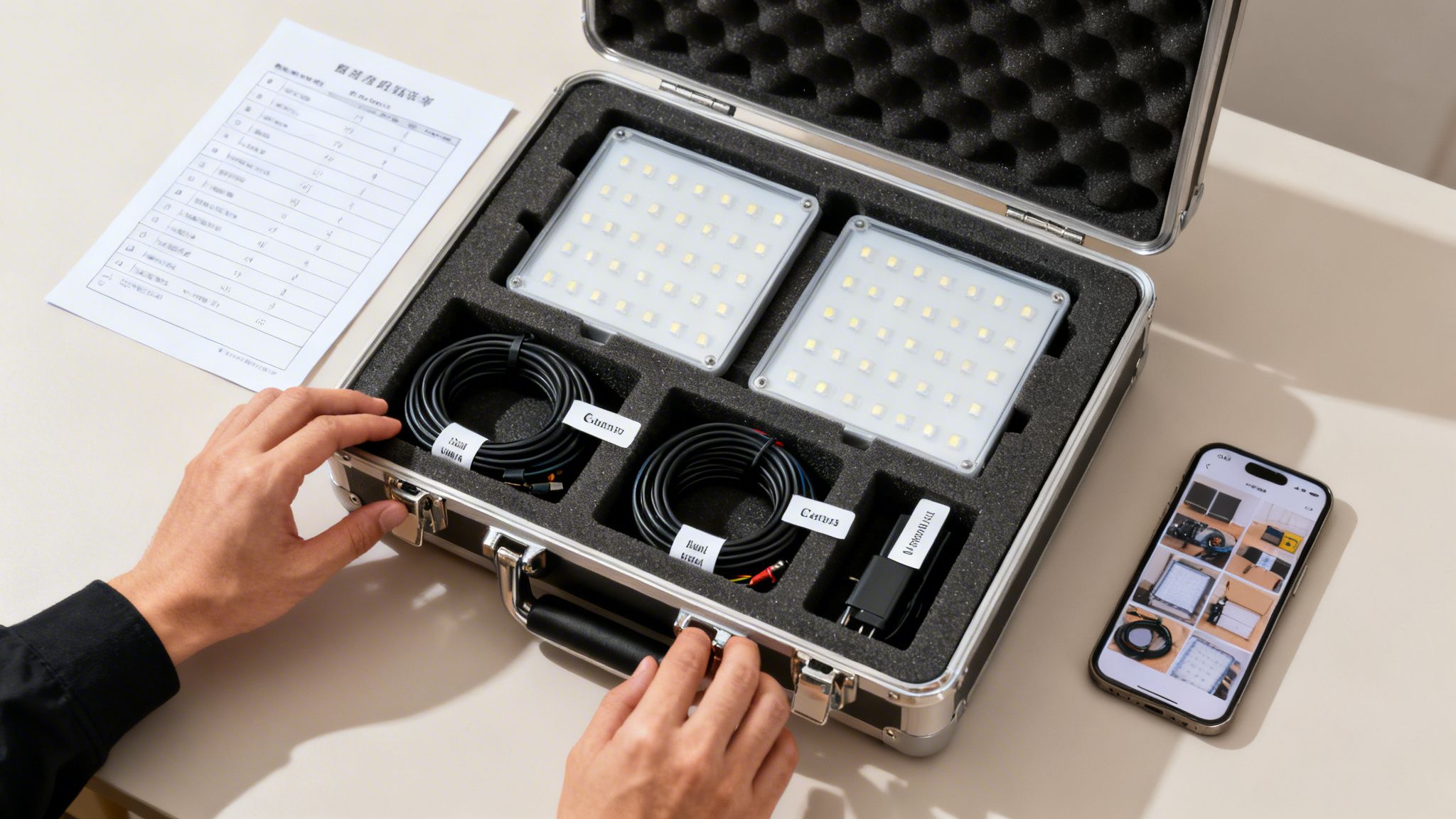
Having the right trade show shipping case is a great first step, but how you actually pack it makes all the difference. It’s what separates a calm, easy setup from a full-blown panic on the show floor.
Good packing is a system. It’s a repeatable process that protects your expensive gear, makes life easier for the handling crews, and ensures your team isn’t fumbling around when the clock is ticking.
The Pre-Pack Inventory and Protection Plan
Before anything goes into the case, you need to lay it all out and do a full inventory. This is your last chance to make sure every single component is there and in perfect working order. You’ll thank yourself for catching a faulty cable or a chipped panel before it gets to the show.
While you have everything out, think about how to protect each piece. This is especially true for the expensive stuff, like your LED panels.
- Wrap Individual Components: Give every sensitive part its own layer of bubble wrap or foam sheeting. This is your first line of defense against scratches and dings inside the case.
- Secure Cables and Accessories: Use velcro straps or zip ties to bundle all your cables and power supplies. Keep them in their own bags or compartments so they don’t turn into a tangled mess or get lost.
- Document Everything: Take photos of your equipment before you pack it. Then, take another photo of the open case once it’s fully packed. These pictures are a lifesaver for insurance claims and also act as a perfect repacking guide for your team.
This level of care is just common sense when you’re dealing with high-end tech. For instance, our video walls use a high-resolution 1.9mm pixel pitch, which is a huge step up in sharpness from the 2.5mm pitch you often see from competitors. You have to pack that kind of quality carefully to make sure it arrives looking perfect.
A great repacking guide is one of the most underrated tools in an exhibitor’s arsenal. Creating a simple, laminated sheet with photos and step-by-step instructions for teardown ensures that the booth is packed correctly every time, no matter who is on the crew.
Smart Packing for Weight and Handling
Once everything is wrapped and ready, it’s time to load the case. Your goal is to pack it tight so nothing can shift, rattle, or slide around in transit. An unbalanced case is more likely to tip over and cause problems for the freight crew.
Start with the heaviest, sturdiest items at the bottom. Lighter, more delicate pieces always go on top. Fill any gaps with extra foam blocks or padding to make sure everything is snug. For a deeper dive into how this fits with the overall process, our guide on exhibition stand building is a great resource.
Finally, we make budgeting for all this much simpler with clear, all-inclusive pricing. Our price covers everything you need for a working exhibit. The only extra costs are the direct bills the show sends you, like electricity and drayage. This way, you can focus on packing your booth perfectly without worrying about surprise fees.
The LED Exhibit Booths Advantage: Less Case, More Impact
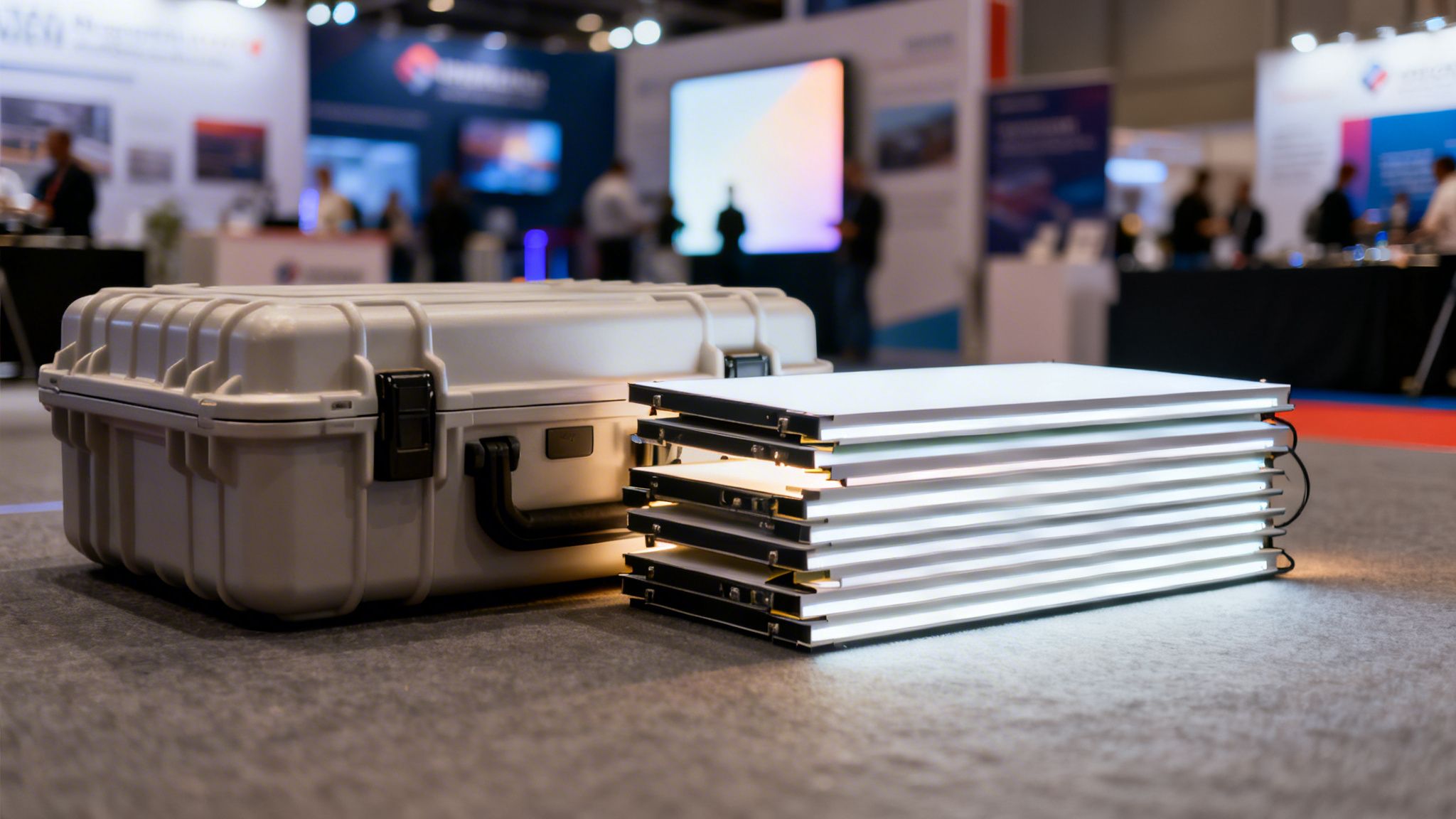
Sure, picking the right trade show shipping case is important. But what if your exhibit was designed from the start to make shipping less of a nightmare? This is where modern booth technology makes a world of difference. A smarter booth means a simpler, cheaper logistics process right out of the gate.
We designed our LED Exhibit Booths system to get around all the usual headaches of trade show shipping. Forget those old-school, back-breaking displays that need enormous, heavy cases. Our whole booth is built using lightweight, modular LED panels.
Smarter Design Leads to Smarter Shipping
The entire system is built around efficiency. Every panel is engineered to be as light as possible without giving up an ounce of durability or picture quality. They connect with a powerful magnetic and toolless locking system, so your crew can snap a full video wall together in no time.
This modular approach has a huge, direct impact on your shipping plan. Since the panels are so compact and light, they fit into smaller, more manageable cases.
- Drastically Reduced Weight: Lighter panels mean lighter cases. This directly slashes your freight and drayage bills.
- Smaller Case Footprint: Tighter packing means you need fewer cases, or smaller ones, cutting down the total volume of your shipment.
- Faster Setup and Teardown: The toolless, magnetic assembly saves a ton of labor time on both ends of the show, which saves you money.
By rethinking the booth itself, we’ve built a system that naturally reduces your need for a big, heavy, and expensive trade show shipping case.
Quality That Demands Attention
We didn’t cut corners on performance just to make things convenient. In fact, our panels are made to deliver a stunning visual that will make you stand out on a packed show floor. You can see this commitment to quality in our specs.
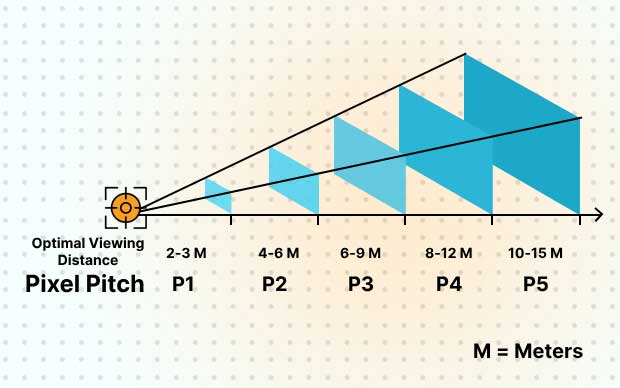
We use a 1.9mm pixel pitch for our video walls. This is a lot finer than the 2.5mm pitch many of our competitors use. A smaller pitch just means the pixels are closer together. The result is a much higher resolution, sharper images, and brilliant colors that make your content jump off the screen.
This top-tier image quality guarantees your brand message is delivered with real power. You get all the logistical perks of a lightweight system without sacrificing the “wow” factor that pulls attendees into your booth.
Radical Transparency in Pricing
Finally, we think your budget shouldn’t be a guessing game. One of the biggest frustrations for exhibitors is getting hit with a ton of surprise fees after the show is over. Our pricing is designed to get rid of that stress.
We include everything you need for a complete, working video wall booth in our initial price. This all-inclusive model means no hidden upcharges for parts you obviously need. As we always say, we include everything in our price except the bills the show sends you directly, like electricity and material handling.
This straight-up transparency lets you budget with confidence. You can focus on what actually matters: making a great impression on your future customers.
Your Top Questions About Exhibit Shipping, Answered
When you get into the world of trade show exhibiting, you quickly find that logistics can be a real headache. We get a lot of questions about shipping, so we’ve put together some straightforward answers to the most common ones we hear about using a trade show shipping case and handling the entire process.
What Is the Difference Between Freight and Drayage?
This is a big one, and the difference hits your wallet hard. Freight is what you pay a shipping company to get your booth from your warehouse to the convention center’s loading dock. Simple enough.
But then comes drayage. This is the fee, often an eye-watering one, charged by the show’s hand-picked contractor to move your cases from that dock to your specific spot on the floor. They also store your empty cases during the event and bring them back for load-out. Because drayage is based on weight (charged per 100 pounds, or CWT), a lightweight booth and cases are your number one defense against a shocking bill.
How Does Booth Quality Affect Shipping?
The quality of your booth hardware has a huge impact on both your shipping needs and how your brand is perceived on the show floor. For example, our video walls use a premium 1.9mm pixel pitch. This gives you a much crisper, higher-resolution image compared to the 2.5mm pitch you’ll often see from competitors.
Naturally, to protect that superior technology, you need a seriously durable and well-designed trade show shipping case. It’s not just about moving stuff; it’s about making sure the high-end visuals that make you stand out arrive in perfect, show-ready condition.
How Can I Simplify My Budgeting Process?
Budgeting for a trade show can feel impossible with all the hidden fees that pop up. The best way to get a handle on it is to work with a partner who actually believes in transparent, all-in pricing.
At LED Exhibit Booths, we make this incredibly simple by giving you one price that covers almost everything.
Our promise is simple: we include everything in our price except the bills the show sends you directly, like your electricity hookup or drayage fees. This takes all the guesswork out of the equation. You can budget confidently, knowing you won’t get hit with surprise charges from us for the gear and services you need.
Ready to make a bigger impact with less shipping stress? The team at LED Exhibit Booths can help you design a stunning video wall booth that’s lighter, smarter, and more cost-effective. Learn more about our turnkey rental and purchase options at https://ledexhibitbooths.com.