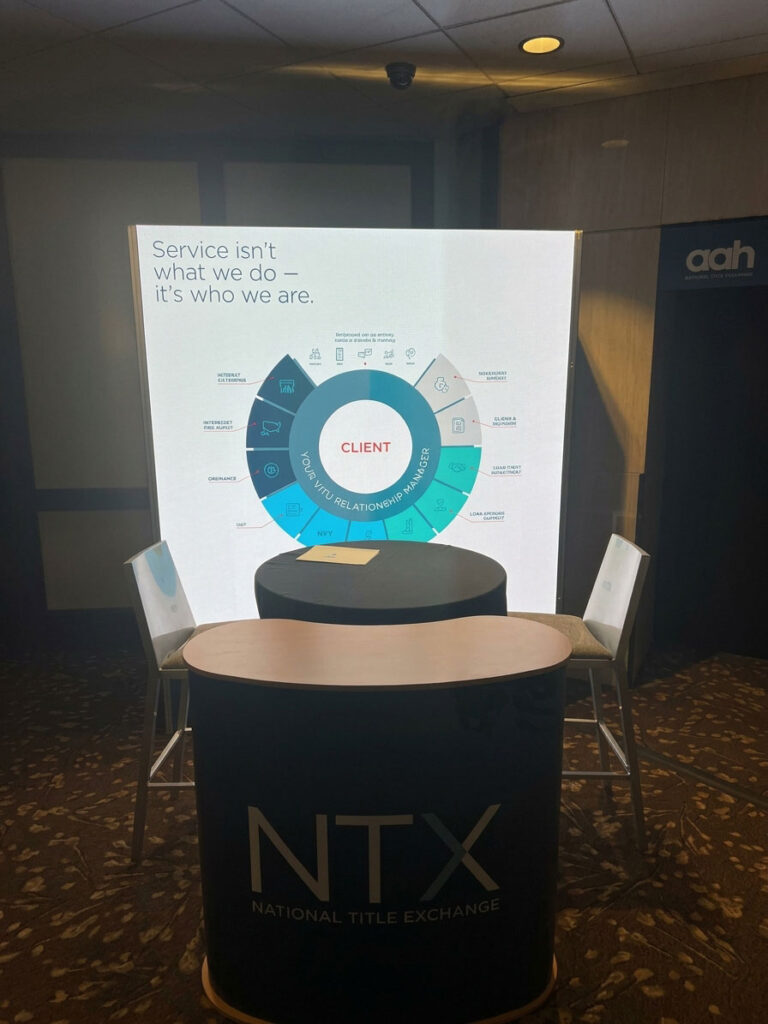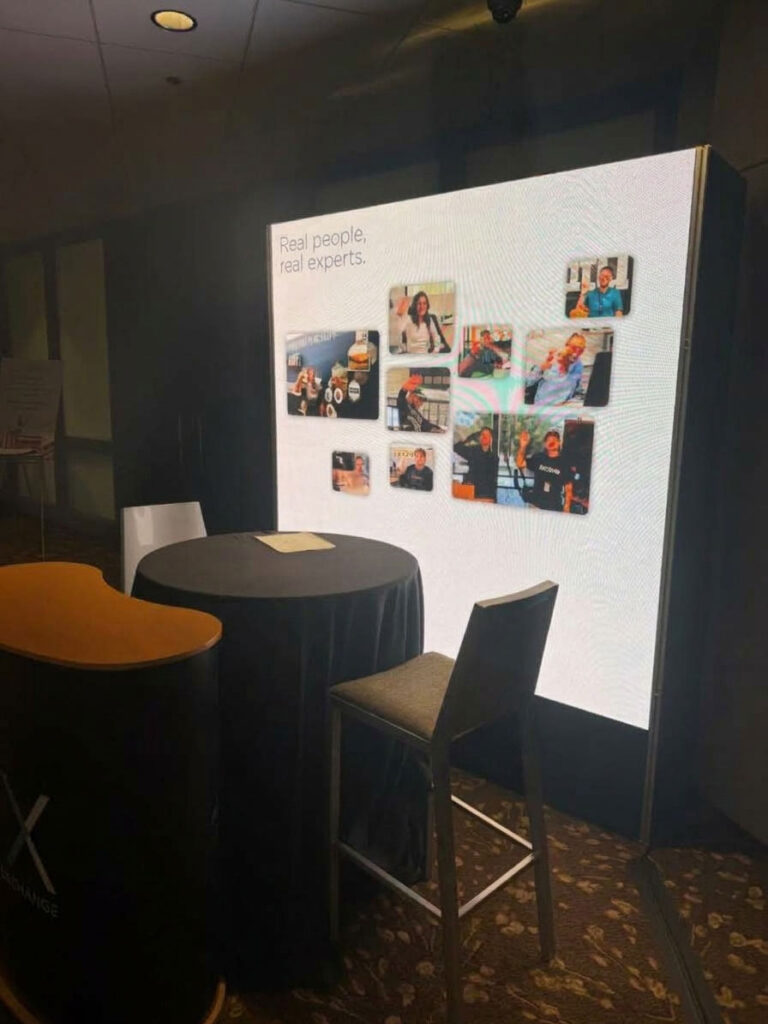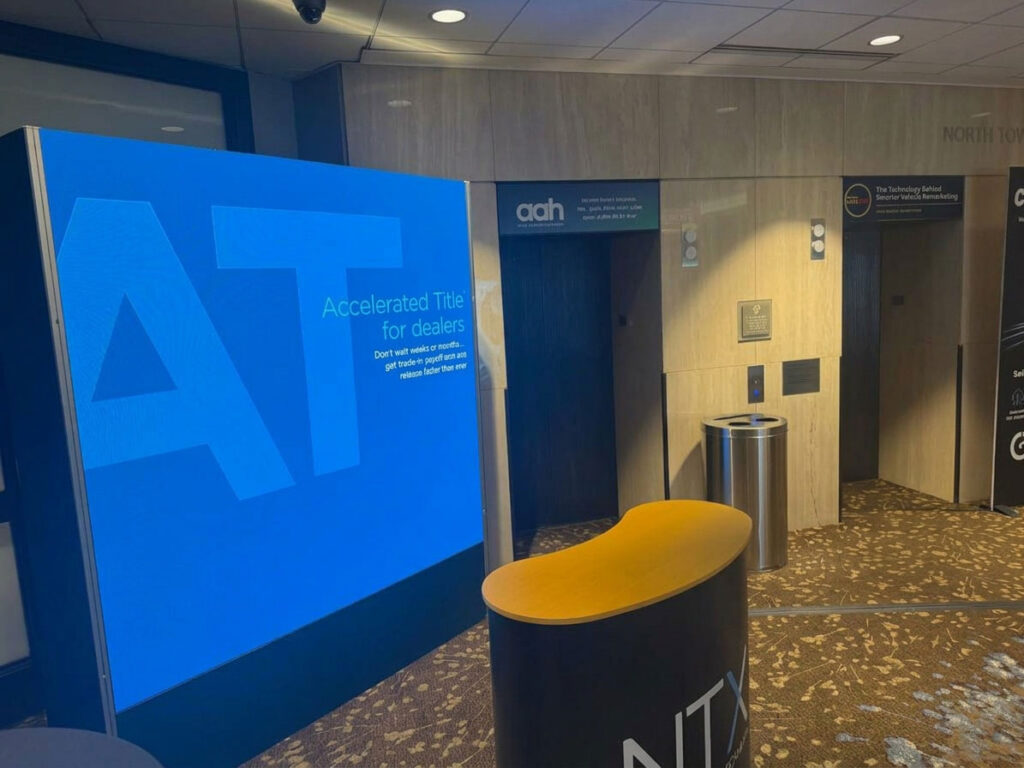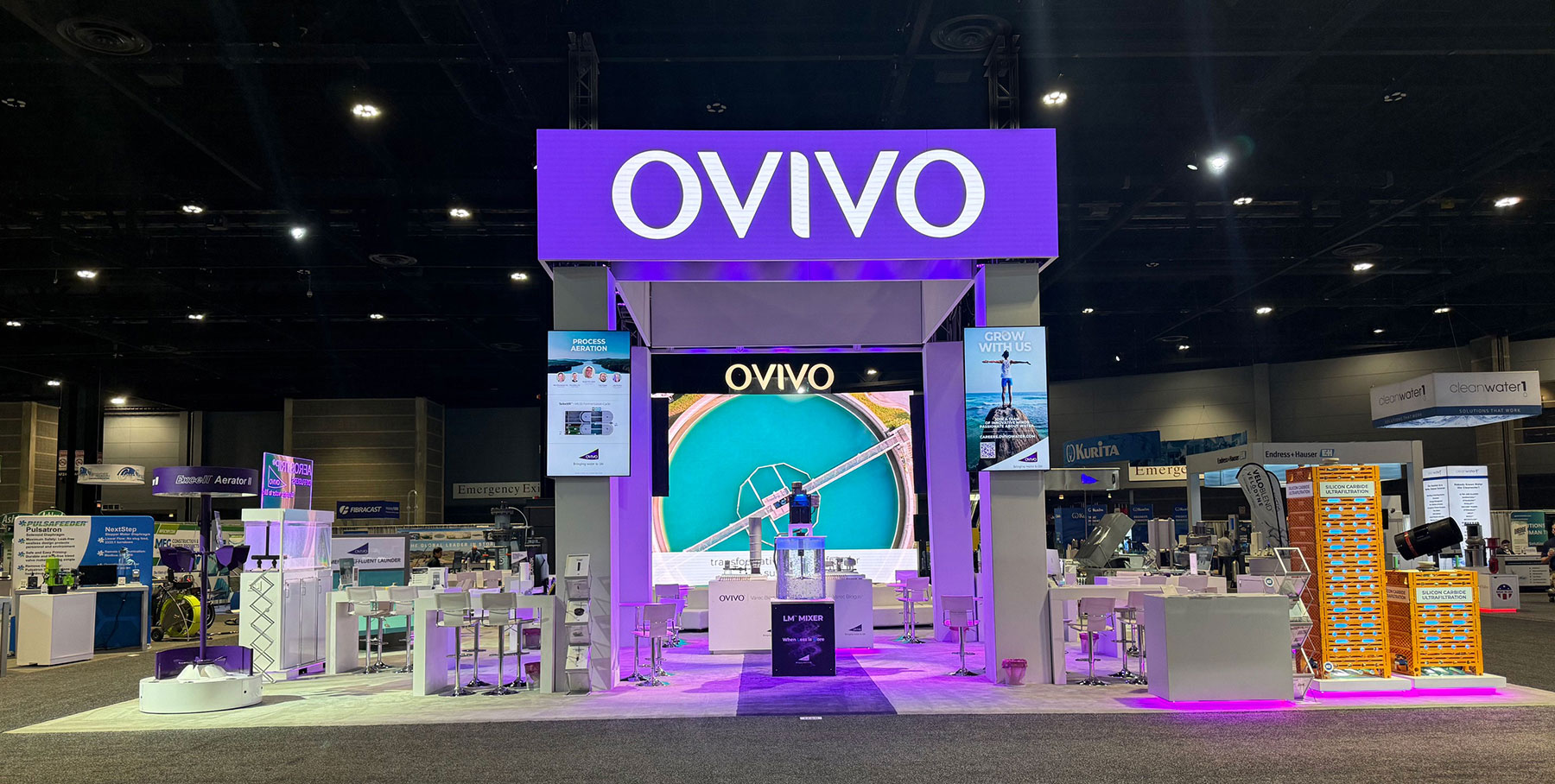
Vertical Banner Stand: A Guide to Upgrading Your Booth

Vertical banner stand decisions usually start the same way. You’re booking booth space, the deadline is close, and someone says, “Let’s just get a couple of banners and keep it simple.” That instinct makes sense. A vertical banner stand is familiar, portable, and easy to fit into almost any exhibit plan.

The problem is that “good enough” doesn’t perform the way it used to. Trade show floors are louder, brighter, and more crowded than they were even a few years ago. If your display looks like everyone else’s, attendees treat it like background.

Most exhibitors don’t need a lecture on what a banner stand is. They need honest advice on whether it’s still the right tool. Sometimes it is. Often, it’s just the baseline. If you’re still weighing lightweight printed graphics against more immersive options like a pop up display for trade show booths, the essential question isn’t convenience. It’s impact.

Introduction The Familiar Choice in a Changing World

You’ve seen this play out before. A team spends weeks refining messaging, books a decent booth location, then fills the space with one table, one branded backdrop, and a vertical banner stand by the aisle. The setup looks professional enough during install. Once the hall opens, that same booth disappears into a sea of similar hardware. However, there are many different types of retractable banners.

That’s why the vertical banner stand deserves a more serious look. It’s not a bad tool. It’s a legacy tool. It solved a specific problem for years: fast setup, small footprint, portable branding. But exhibitors in 2026 aren’t competing against blank booths. They’re competing against motion, brightness, product demos, and environments designed to stop traffic.

vertical banner stand

Why exhibitors still default to it

A banner stand feels safe because it removes friction. You can order it fast, carry it easily, and reuse it across events. For small booths, that convenience matters.

But convenience isn’t the same as performance. If your event matters, your display has to do more than mark your territory.

A vertical banner stand is often the first purchase exhibitors make. It shouldn’t be the last display strategy they consider.

The real decision in front of you

A modern vertical banner stand is usually a printed graphic on a retractable or tension-based frame. It gives you a tall, narrow branding surface that works in tight spaces and near booth edges. That’s useful.

What’s changed is the cost of being ignored. If you’re exhibiting to launch a product, book meetings, or reset market perception, the old “set up a banner and hope” approach won’t carry the load.

The Role of a Vertical Banner Stand at Trade Shows

The vertical banner stand has been around because it does a few jobs well. Historically, it has deep roots. It has been a cornerstone of trade show marketing since the Middle Ages, when similar vertical displays appeared as heraldic markers at trade fairs. By the 20th century, custom vinyl banners and popup retractable models had become standard, and retractable versions are favored for toolless setup in 80% of temporary promotions according to Banner N Print’s historical overview.

That long history matters because it explains why exhibitors still trust the format. It’s simple, direct, and easy to deploy.

What a banner stand is supposed to do

At a trade show, a vertical banner stand usually handles one or more of these tasks:

  • Aisle visibility: It gives attendees something tall enough to notice from outside your booth line.
  • Message compression: It forces you to narrow your pitch to a headline, a few bullets, and one visual.
  • Brand continuity: It helps a small booth look intentional instead of improvised.
  • Product support: It can reinforce a demo table, shelving unit, or literature station.

If you’re building a booth on a budget, that’s why banner stands remain common. They’re practical tools, not magic tools.

Why it became the default

The format earned its place because it solved event logistics better than many bulkier display systems. A retractable stand packs down quickly, ships without much drama, and doesn’t usually require a specialist to assemble it.

That’s also why banner stands still pair well with other printed assets. If you’re reviewing broader booth collateral, this guide to high-impact trade show materials is useful because it looks at how different printed pieces work together instead of treating the banner as a standalone solution.

Practical rule: Use a banner stand to support a booth strategy, not to become the whole strategy.

Where it still fits

A vertical banner stand still makes sense in a few cases. Satellite events. Recruiting fairs. Small inline booths. Temporary activations where speed matters more than spectacle. It can also work as a secondary branded element near a product pedestal or a compact display stand for products.

What it doesn’t do well is carry the visual weight of a serious exhibit by itself. That’s where many teams make the wrong call.

Types and Mechanics of a Vertical Banner Stand

Not all banner stands are built the same. Some are solid, stable, and easy to live with. Others wobble, curl, lean, or look tired after a few shows. If you’re buying one, the mechanics matter more than the graphic mockup.

Three different types of blank vertical banner display stands presented against a neutral beige background studio setting.

The main types you’ll run into

Retractable stands are the standard choice. The printed graphic rolls into the base, which protects it during transport and keeps the whole system compact. They are notably simple to manage.

X-frame or tension stands use a lightweight frame that stretches the graphic at the corners. They’re often cheaper, but they can look less polished.

Fabric tube systems rely on a frame-and-pillowcase style graphic. They can look cleaner than entry-level retractables, especially if the print quality is strong.

What separates good hardware from cheap hardware

Quality stand hardware comes down to stability, setup speed, and durability. According to the product specifications summarized in this Accuform vertical banner stand reference, quality models can use 3/8-inch diameter flexible anodized aluminum poles, support one-person setup in under 2 minutes, and reduce weight by up to 40% compared to steel. That same engineering logic is why modular spacing matters in more advanced display systems, where adjustable 24-36 inch pole spacing can help align with LED tile layouts.

That’s not a minor detail. It’s the difference between equipment your staff can set up confidently and equipment they fight with on the show floor.

What to check before you order

Use this checklist before you approve any vertical banner stand:

  • Pole construction: Aluminum is easier to transport and easier for your team to handle than heavier alternatives.
  • Base stability: A slick-looking graphic won’t matter if the stand shifts every time attendees brush past it.
  • Graphic tension: If the material curls or loosens, your message looks cheap fast.
  • Pack-down size: If you exhibit often, storage and shipping convenience matter every time.
  • Replacement graphics: Ask whether you can swap graphics without replacing the full unit.

Cheap banner hardware rarely fails in the showroom. It fails in the convention hall, under time pressure, with your staff already behind.

Why mechanics affect perception

Exhibitors often focus on artwork and ignore the stand itself. Attendees notice both. If the frame leans, if the banner edge curls, or if the base looks flimsy, they read that as a signal about your brand. Hardware quality is branding.

Advantages and Limitations of a Traditional Vertical Banner Stand

A traditional vertical banner stand has real strengths. It’s usually one of the fastest ways to add height, branding, and message control to a booth. It travels well, doesn’t take much floor space, and lets smaller teams look organized without major exhibit infrastructure.

That’s the upside. Now for the part many exhibitors avoid. Banner stands are often over-assigned. Teams expect them to create stopping power, carry product education, and define the booth experience. That’s more than static signage can realistically do in a busy hall.

Where the traditional stand still works

The format earns its place when you need a support piece, not a centerpiece. It can label a zone, reinforce a key message, or clean up an otherwise sparse footprint. It’s especially useful when you need portability and repeat use across multiple smaller events.

For simple environments, that may be enough.

Where it starts to break down

The biggest weakness is that the banner can’t adapt. The message is fixed. The visual is fixed. If you need to shift emphasis during the show, feature a video, rotate product benefits, or respond to audience behavior, the stand gives you nothing.

Outdoor and mixed-use environments are even less forgiving. According to Platon Graphics’ discussion of vertical banner use cases, 65% of events occur in mixed indoor-outdoor venues, standard vinyl banners can fail in 25 mph gusts, and 42% of booth failures at such events stem from display collapse. The same source notes that rigid LED tile solutions can endure 50+ mph winds.

That changes the conversation. The issue isn’t just aesthetics. It’s operational risk.

What a traditional stand does well What it struggles with
Fast to deploy Fixed messaging
Small footprint Limited stopping power
Easy to transport Vulnerable in challenging conditions
Good as a support graphic Weak as a primary booth experience

The hidden cost of choosing static

A banner stand looks inexpensive because the purchase price is straightforward. But the total cost includes missed attention, limited storytelling, and the possibility that your booth looks smaller or less current than the brands around you.

If your event is low stakes, that tradeoff may be acceptable. If the event is important, it usually isn’t.

Beyond Static Why Your Vertical Banner Stand Needs an Upgrade

The vertical banner stand isn’t obsolete. Static-only thinking is. That’s the core issue.

Exhibitors are asking for more because they need more. They need motion, modularity, and content that can carry a sales story without forcing a rep to repeat the same explanation all day. They need displays that work from a distance and still hold attention up close.

vertical fabric banner stand

The market has already moved

Demand for digital integration is no longer niche. According to Signs.com’s retractable banner discussion, 78% of recent trade show-related forum questions asked about “LED upgrades for vertical banner stands,” and a 2026 Nielsen study cited there found that video walls boost attendee dwell time by 47% compared to static displays.

That should end the debate about whether motion matters. It does.

Static print hits a ceiling fast

Even well-designed print has limits. Once attendees understand the headline, the experience is over. There’s nothing left to discover. A digital surface can cycle product views, testimonials, interface demos, launch messaging, or timed sequences for different audience segments.

That doesn’t mean every booth needs giant spectacle. It means every serious exhibitor should think beyond a frozen graphic.

A related issue is asset quality. If you’re still preparing artwork for printed components, this guide on upscale images for print is worth reviewing because poor source files make even expensive displays look second-rate.

What an upgrade actually changes

Upgrading the vertical format changes more than the look of the booth. It changes how your team uses the space.

  • Storytelling improves: You can show the product in use instead of describing it with bullets.
  • Content becomes flexible: You can change loops for different shows, audiences, or campaigns.
  • The booth earns attention: Motion gives people a reason to look before a rep starts talking.
  • Your staff works smarter: The display can carry core talking points while the team focuses on real conversations.

If your booth has to explain something complex, static print makes your staff do all the heavy lifting.

That’s why interactive environments are becoming a smarter path for exhibitors who need more than name recognition. If your team is thinking beyond passive signage, interactive trade show displays are a better benchmark than another roll-up banner.

Vertical Banner Stand vs Our Turnkey LED Video Walls

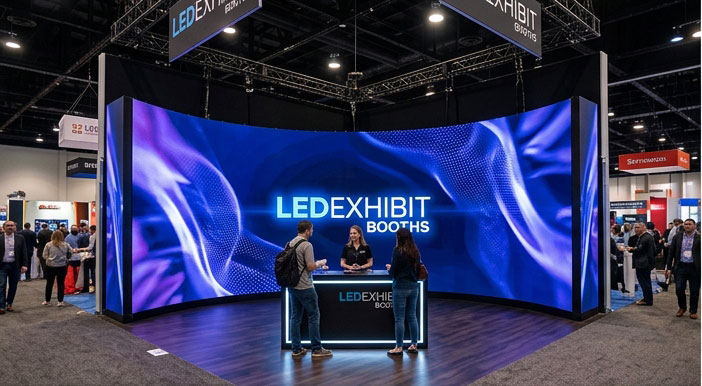
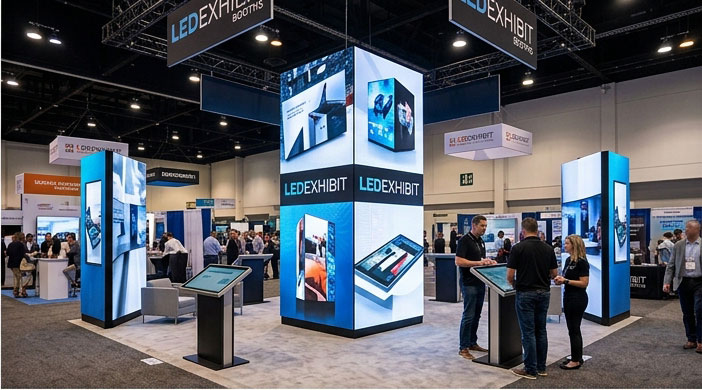
A vertical banner stand gives you a narrow printed message. Our turnkey LED video walls give you a branded environment. That’s the difference.

If you’re serious about ROI, stop comparing a banner stand to nothing. Compare it to the result you want. Better attention, stronger presentation, easier logistics, cleaner execution, and support when something goes wrong.

vertical banner stands

Resolution matters more than most exhibitors realize

A lot of exhibitors hear “LED wall” and assume all LED is roughly the same. It isn’t. We use 1.9 pitch, while competitors mostly use 2.5 pitch. That means our video walls deliver higher resolution and a cleaner image, especially when attendees are standing close to the booth.

For trade shows, that matters. People don’t view your display from across a parking lot. They view it from the aisle, from inside the booth, and during conversations. Finer pitch holds up better in those real-world distances.

Turnkey service beats DIY every time

Display comparisons often become dishonest at this stage. A banner stand looks simple because your team absorbs the risk. They carry it. They set it up. They troubleshoot it. If the booth underperforms, they live with it.

We don’t work that way. Our pricing includes everything except what the show bills you for directly, such as electricity and material handling. That transparency matters because exhibitors get burned when vendors quote hardware but leave out key execution pieces.

We also provide white glove, turnkey service. We handle the planning, logistics, setup, and execution so your team can focus on customers instead of booth problems.

Here’s the product in action:

On-site support is the part most vendors skip

Most vendors disappear after install. That’s unacceptable for live events.

We keep an audiovisual technician onsite the entire time the trade show is open. If something goes wrong, you text or call, and within minutes an AV technician is at your booth to resolve the problem. That’s a major difference between renting equipment and buying confidence.

Booth hardware is only half the product. Show-day support is the other half.

Feature Face-Off Traditional Banner Stand vs Our LED Video Wall

Feature Traditional Vertical Banner Stand Our Turnkey LED Video Wall
Content format Static printed graphic Dynamic video, motion, and flexible messaging
Visual resolution Limited by print only 1.9 pitch for higher resolution than the more common 2.5 pitch competitor option
Setup responsibility Usually handled by your team White glove, turnkey service
Pricing clarity Hardware may be simple, but support is limited Everything included except direct show charges like electricity and material handling
Problem resolution Your staff handles issues Onsite AV technician stays for all show-open hours
Reconfiguration Fixed format Modular system that can adapt to different booth designs
Best use Basic branding support High-impact presentation and serious event ROI

If you’re evaluating options for a launch, a major expo, or a booth that has to do real work, a simple printed stand isn’t the benchmark. A turnkey LED video wall rental is.

Making the Right Investment for Your Booth in 2026

The vertical banner stand still has a place. It’s just not the right answer when the event is important.

The vertical format itself is powerful. According to Taboola’s overview of vertical banner performance, 120×600 skyscraper formats achieve 30% higher sustained visibility, and in B2B expos, vertical displays have been shown to boost foot traffic by 35%, while bulleted lists on vertical layouts improve scannability by 50%. That’s the case for vertical. The smarter move is taking that same vertical advantage and upgrading it into a digital surface that works harder.

Rent when flexibility matters

Rent if you exhibit occasionally, need a high-impact booth for a launch, or want premium visual presence without owning and storing a system. Renting also makes sense if your booth size changes from show to show.

Buy when exhibiting is a core channel

Buy if you’re on the road constantly, repeat the same exhibit structure, and want long-term control over content and deployment. Ownership works best when the display becomes a recurring part of your sales operation, not a one-off campaign.

If you’re still comparing options, start with total booth performance, not unit price. A booth that attracts more attention and supports better conversations usually justifies the investment more clearly than a cheaper setup that blends in. That’s also why it helps to review the full trade show booth cost picture instead of isolating one display component.


If you’re done settling for a basic banner and want a booth that commands attention, talk to LED Exhibit Booths. We build turnkey LED trade show displays with higher-resolution 1.9 pitch walls, transparent pricing that includes everything except direct show charges like electricity and material handling, white glove service from start to finish, and an onsite AV technician during show hours so your team can focus on selling, not troubleshooting.

LED Video Wall Installation: A Step-by-Step Trade Show Guide

led video wall installation is usually on your to-do list right when everything else is also on fire. The booth design is approved late. Show forms are due. Electrical orders are confusing. Your marketing team wants crisp motion graphics. Your exhibit house says the wall is “easy to install.” Then move-in day arrives, and suddenly “easy” means crates, labor windows, union rules, alignment issues, and a screen that has to work the first time.

That’s why smart exhibitors stop treating the wall as a box of panels and start treating it as a managed system. At a trade show, the hardware matters, but the install process matters more. If the wall looks soft, seams show, content is mapped wrong, or a panel goes dark during show hours, nobody cares what the spec sheet promised.

I’ll be direct. Resolution matters too. We use P1.9 where many competitors still push P2.5, and that difference shows up fast at booth viewing distances. Text is cleaner. Product shots hold up better. Motion looks tighter. If attendees are standing a few feet away, lower resolution is a compromise you’ll notice.

The Exhibitor’s Dilemma Why Installation Is More Than Hardware

Most exhibitors underestimate led video wall installation because they focus on the visible part. They compare screen size, maybe ask about pixel pitch, then assume setup is just labor. It isn’t. Installation is where budgets get chewed up and reputations get tested.

Installation and labor can represent 15 to 20% of total project budgets, according to LED video wall industry statistics. That’s a big enough slice that mistakes stop being annoying and start being expensive. If your install method requires extra hands, extra time, or extra troubleshooting, you feel it in labor bills, drayage, and setup stress.

Why trade show installs fail

Trade show floors are not forgiving. You’re working in a shared venue with strict schedules, crowded aisles, limited dock access, and other vendors competing for the same labor pool. A wall that’s simple in a warehouse can become a headache in a convention center.

The common failure points are usually predictable:

  • Bad assumptions about assembly: Someone assumes the wall will go together like consumer AV gear. It won’t.
  • Low-resolution compromise: A cheaper wall can look acceptable in a rendering and disappointing under hall lighting.
  • Missing scope items: Quotes often leave out pieces you assumed were included.
  • No live support: When something breaks during the show, you’re stuck calling a help desk instead of fixing the problem.

If you need a quick primer on the broader category of audio visual equipment, that resource gives useful context. Trade show LED walls sit at the high-stakes end of that spectrum because they combine structure, power, content, and live presentation in one system.

Practical rule: If your vendor talks mostly about panels and barely talks about labor, show paperwork, content mapping, or support, you’re not buying a solution. You’re buying risk.

What a managed install actually changes

A serious exhibitor needs more than screens. You need a team that plans the booth, coordinates setup, and owns the outcome. That’s the difference between “we rented a wall” and “the booth worked.”

That’s also why a proper trade show set up strategy matters before anyone touches a crate. When the structure and the display are designed together, the result is cleaner, faster to assemble, and less likely to create ugly seams, exposed cables, or emergency fixes on show day.

White glove service wins because it removes the hidden jobs from your list. You shouldn’t be chasing freight, decoding labor rules, or babysitting a playback issue while prospects are walking into your booth. You should be greeting customers.

Pre-Show Planning for a Flawless LED Video Wall Installation

Most led video wall installation problems start long before move-in. They start when somebody skips detailed planning and assumes the venue will be flexible later. It won’t.

led video wall installation

In the US, installation costs can range from $900 to $3,000 per square meter, as outlined in this LED video wall installation guide. That range is exactly why pre-planning matters. If the panel count, power load, and support structure are wrong on paper, you don’t get a small inconvenience. You get change orders, delays, and expensive improvisation.

The work that has to happen before the show

A professional install team should lock down the technical basics early. That includes booth dimensions, structural needs, power requirements, content format, and show paperwork. None of that is glamorous. All of it matters.

Here’s the checklist we insist on before a project moves forward:

  • Confirm exact booth dimensions: Not the rounded version from a sales deck. The actual usable footprint.
  • Match screen size to the booth design: The wall should fit the exhibit, not bully it.
  • Calculate power correctly: You need enough power ordered from the show, with a plan for where it enters the booth.
  • Review venue rules: Every hall has its own labor, rigging, and safety expectations.
  • Map content to the canvas: A unified display wall still fails if the content was designed for a different aspect ratio.
  • Schedule freight and access: Timing mistakes at the dock create a cascade of problems later.

One of the easiest ways to blow a budget is to treat shipping like an afterthought. A proper shipping trade show displays plan should account for crate timing, move-in windows, and the handling conditions at the venue.

What should be included in your quote

Often, buyers get burned. A low quote often looks attractive because it strips out the hard parts. Then the missing costs show up later.

Our advice is simple. Ask for a scope that clearly states what’s included and what the show bills directly. In a clean turnkey model, everything should be included except the charges the show itself imposes on you directly, such as electricity and material handling. That gives you real budget clarity.

Don’t compare LED wall quotes line by line until you know whether both vendors included labor coordination, setup, dismantle, content handling, on-site service, and logistics management.

The hidden planning traps

The dangerous part of DIY isn’t just assembly. It’s administration. You can have excellent hardware and still fail because nobody handled the boring details.

A few common traps:

Planning issue What goes wrong
Late electrical order The wall can’t be powered where you need it
Poor content mapping Logos stretch, text crops, and motion doesn’t align
No venue compliance check Setup stalls while approvals get sorted out
Wrong support assumptions The install team has to redesign on site

The best installs look easy because the hard work happened weeks earlier. That’s the standard you should expect.

On-Site Assembly The Power of a Toolless Magnetic System

Move-in day tells you whether your led video wall installation was designed by people who understand trade shows or by people who just sell screens. You can spot the difference fast.

led video wall installation

A traditional bracket-and-screw build is slow, fussy, and prone to little errors that become very visible once content goes live. A magnetic, toolless system is different. The frame goes in cleanly, the modules snap into place, and the whole process is built around speed and repeatability instead of field improvisation.

Why precision matters on the floor

This isn’t cosmetic nitpicking. A misalignment of just 0.5mm can cause visible seams, and a properly engineered magnetic system can achieve less than 0.2mm gaps and under 1mm flatness tolerance, supporting a 98% first-boot success rate compared with a 75% industry average for complex builds, according to this installation methodology reference.

That’s the difference between a wall that reads as one unified digital canvas and a wall that looks like a patchwork of panels.

How the assembly should happen

A good crew doesn’t rush. They move in the right order.

First, the team establishes the reference lines and builds the support structure so the surface is flat. Then they mount the modules row by row, checking alignment as they go. Data and power are routed cleanly, not draped where they’ll create safety problems or service headaches later.

The best part of a toolless system is not that it feels modern. It’s that it removes unnecessary failure points.

  • Fewer loose parts: Less hardware means fewer chances to lose time on the floor.
  • Cleaner integration: The booth structure can serve as the framework, so you don’t need bulky truss cluttering the design.
  • Faster corrections: If a module needs adjustment, the crew can handle it quickly.
  • Better finish quality: Tight seams and tidy cable paths make the whole booth look intentional.

If you want to understand the hardware category behind this process, this overview of LED panels for video walls gives useful context.

Cheap installs usually look cheap at the edges first. Seams show. Corners drift. Cables peek out. That’s where attendees decide whether your booth feels premium or improvised.

Cable management is part of the install

A lot of exhibitors think cables are an internal technical issue. They’re not. They affect safety, reliability, and the final look of the booth.

A disciplined crew routes data and power so nothing is pinched, visible, or vulnerable to traffic. That matters during setup, and it matters even more when booth staff start moving around with demo gear, literature, and personal bags.

This video gives a useful visual sense of how modular screen builds come together in practice.

Why low-cost labor often backfires

Low-cost options usually save money only on the quote. On the floor, they cost time. The crew may not know the system, may not understand the venue, and may not care whether your content team is waiting on final sign-off.

That’s why I’m opinionated about this. If your wall is central to your booth, don’t outsource assembly to the cheapest available hands and hope they figure it out. Hope is not an installation plan.

Calibration and QA From Pixels to a Perfect Picture

A wall can be physically assembled and still look wrong. That’s where calibration separates a professional led video wall installation from a merely finished one.

A technician using a color calibration sensor on a professional LED video wall for precise color accuracy.

Convention halls are harsh environments for color and brightness. Overhead lighting shifts. Aisle light spills into the booth. Nearby exhibits throw competing color into your space. If nobody calibrates the wall for the actual venue, your expensive content can look flat, mismatched, or washed out.

What calibration actually does

Think of calibration as the last stage of fit and finish. The wall is built. Now the image has to become consistent across every module.

That means checking for:

  • Color uniformity: Reds should match from panel to panel.
  • Brightness balance: One cabinet can’t run hotter than the rest.
  • Dead or weak pixels: Tiny defects become obvious on bold backgrounds.
  • Playback integrity: Motion content has to read cleanly across the full canvas.

Our technicians use professional spectrometers to achieve ΔE of less than 2, and that calibration, paired with redundant controllers, supports a 99.2% uptime record, as described in these LED video wall best practices. For a trade show brand, that means your logo colors stay on-brand instead of drifting into “close enough.”

Why P1.9 earns its keep here

Higher resolution hardware yields benefits. P1.9 gives the calibration team more to work with than P2.5 at close viewing distances. Fine text, product UI screens, and detailed imagery all hold together better when the underlying pixel structure is tighter.

That doesn’t mean hardware alone solves the problem. It means good hardware rewards good setup. Poor calibration can still make a premium wall look average.

For practical answers to common performance questions, this collection of LED video wall FAQs is worth reviewing before a show.

A wall isn’t ready because it powers on. It’s ready when your content looks right under the same lights your buyers will see.

QA before the hall opens

A proper QA pass should happen before your team starts rehearsing or meeting with prospects. The technician should run test patterns, verify input sources, confirm scaling, and review scheduled playback.

I also recommend checking actual show content, not just color bars and generic loops. The ultimate test is whether your launch video, product demo, and branded slides all display correctly at full size. That final review catches the embarrassing stuff before attendees do.

Renting vs Buying Your Video Wall A Strategic Breakdown

Most exhibitors should rent. That’s my view, and I haven’t seen many real-world show schedules that change it.

A comparison chart outlining the strategic advantages of renting versus the considerations for buying LED video walls.

Buying sounds smart because ownership feels efficient. In practice, many brands don’t buy a system. They buy a list of new responsibilities. Storage, maintenance, transport coordination, repair risk, software updates, spare parts, crew training, insurance, and technology aging all become your problem.

The real comparison

A rental model offloads complexity. A purchase model creates obligations.

The most straightforward understanding is:

Decision area Renting Buying
Flexibility Good for varying booth sizes and event schedules Best only if your use case stays consistent
Technology refresh Easier access to newer display options You carry obsolescence risk
Maintenance Handled by the provider Your team owns it
Logistics Usually bundled into service You manage storage and freight strategy
On-site support Often available in turnkey packages Depends on your staffing and vendor contracts

If you’re weighing both options, this guide on owning vs renting an LED video wall is a useful decision aid.

When buying makes sense

I’m not against buying. It fits some exhibitors.

Buying can work if:

  • You exhibit constantly: Repeated use may justify ownership.
  • Your booth format rarely changes: Standardized designs are easier to support.
  • You have internal technical staff: Someone has to own maintenance and deployment.
  • You’re prepared for lifecycle management: The wall will age, and replacement planning matters.

But most small and mid-sized exhibitors don’t have those conditions. They exhibit a few times a year, sizes vary, and marketing teams don’t want to become AV operations managers.

Why rental is usually the stronger trade show move

Rental keeps your focus on outcomes. You get the right size wall for the event, current hardware, installation, service, and teardown without carrying the burden between shows.

That’s especially valuable when your quote is structured as an all-inclusive turnkey package except for the direct show charges. Electricity and material handling are often billed by the show itself. Everything else should be spelled out and covered. That’s the pricing model I trust because it leaves less room for “surprise” invoices after the event.

Renting buys flexibility. It also buys accountability, because one partner owns the result from delivery through dismantle.

If you only remember one thing from this section, remember this: ownership lowers risk only when you already have the infrastructure to support it. If you don’t, rental is the safer and usually smarter business decision.

Your Secret Weapon On-Site Support and Troubleshooting

This is the part exhibitors undervalue until the first thing goes wrong.

You can have a beautiful wall, sharp content, and a clean install. Then the keynote file stutters ten minutes before your big demo. Or a panel starts acting up at opening bell. Or your audio handoff doesn’t sync with the presentation laptop. At that point, the question isn’t whether the vendor was polite during the sales process. The question is who can fix the problem right now.

What live support changes

An on-site AV technician changes the entire show experience because you stop carrying technical anxiety in the background. You don’t need to troubleshoot during a customer conversation. You don’t need to leave the booth manager holding the bag while someone calls a remote help line.

You text or call. A technician comes over. The issue gets handled.

That matters more than most buyers realize because modular, magnetic event systems are becoming more common. Post-2025 CES reports noted 35% growth in demand for modular, magnetic LED systems for events, with setups cutting time by up to 50%, according to this CES-related discussion of event installation trends. Fast setup is great. Fast support is even better.

The problems that show up during live hours

Most on-site issues are manageable if the right person is already in the building. They become stressful when nobody owns them.

Typical live-show problems include:

  • A playback issue: The media file is correct, but the output settings aren’t.
  • A panel anomaly: One cabinet flickers, dims, or needs a quick swap.
  • A source switch problem: The feed from a demo laptop doesn’t hit the wall properly.
  • An audio mismatch: Video is running, but the booth sound path isn’t behaving.
  • A last-minute content edit: Marketing wants to change a slide, loop, or CTA before the afternoon rush.

A staffed booth can’t solve those issues alone. They need a technician who understands the system, knows the signal path, and can act without turning a minor glitch into a floor-wide panic.

Why remote support isn’t enough

Remote support works for software subscriptions. It’s a weak answer for a live trade show environment.

The floor is loud. Inputs get swapped. Salespeople unplug the wrong cable. A laptop goes to sleep. Someone changes a playback schedule. A dock delay pushes setup late and compresses testing time. Physical environments create physical problems, and physical problems need a human being on site.

Here’s the core value of white glove service:

  • You protect the customer-facing team: They stay focused on meetings, demos, and lead capture.
  • You reduce downtime: Problems get addressed before they become public.
  • You avoid blame loops: Nobody wastes time arguing whether the issue is content, hardware, or venue power.
  • You keep momentum: The booth stays open, presentable, and functional.

The best support model is simple. If something goes wrong while the show is open, someone qualified should be able to walk to your booth and fix it.

The peace of mind most quotes omit

A lot of competitors quote the install and disappear after handoff. That’s not support. That’s delivery.

If your booth depends on LED for storytelling, product launches, or lead generation, then on-site technical coverage isn’t an upgrade. It’s part of the core operating plan. You want a technician available for the full time the show is open, someone who can respond within minutes and keep your team from losing face in front of customers.

That kind of support doesn’t just solve problems. It changes how confidently your staff works the booth. They know somebody has their back.

Frequently Asked Questions and Final Thoughts

A few questions come up almost every time.

What if we need to change content at the last minute

It happens all the time. Product teams update messaging. Legal wants a revision. A logo lockup changes. A good turnkey partner plans for late adjustments and has the playback workflow to load, test, and verify updated content without turning it into a crisis.

How is teardown handled

Teardown should be handled by the same team that installed the wall or by a crew working under their direction. That keeps dismantle organized, protects the hardware, and reduces the chance of damage during repacking and outbound freight.

What power do we need to order from the show

That depends on the wall size, content brightness, and the rest of the booth systems. Don’t guess. Have the install partner specify the requirement during planning so you order correctly the first time. If you’re reviewing the electrical side yourself, this checklist of questions to ask an electrician is a practical resource for understanding how to vet that part of the job.

What’s actually included in a proper turnkey price

The cleanest model is simple. Everything is included except the charges billed directly by the show, typically electricity and material handling. That means the quote should already account for the wall, structure integration, logistics coordination, install, dismantle, and service coverage. If the proposal is vague, assume the surprises are still hiding in it.

Final take

led video wall installation is not a commodity task. It’s a high-visibility execution job with technical, logistical, and operational consequences. The wrong partner can leave you with hidden costs, visible seams, and no safety net when something fails. The right partner gives you a crisp wall, a controlled install, all-inclusive clarity, and live support while the hall is open.

For most trade show exhibitors, the smartest choice isn’t just better hardware. It’s a white glove team that handles the full process so you can focus on customers.


If you want a turnkey partner for your next exhibit, LED Exhibit Booths delivers high-resolution P1.9 video wall rentals, all-inclusive project management except direct show charges like electricity and material handling, and on-site AV technician support throughout show hours so your team can focus on selling, not troubleshooting.

Optimize Your Trade Show Shipping Now

Trade show shipping may seem boring but it’s very important. The show date is fixed, the booth design is approved, sales wants the team focused on meetings, and someone suddenly realizes the exhibit still has to get from your warehouse to a convention center with dock rules, move-in windows, marshaling yards, and paperwork nobody enjoys reading.

That’s when trade show shipping stops feeling like a line item and starts feeling like a risk.

For most exhibitors, the stress doesn’t come from one dramatic mistake. It comes from a stack of small ones. A crate list that doesn’t match what’s packed. A carrier that knows general freight but not show-site delivery. Labels that say your company name but not the booth number. An outbound plan that gets all the attention while return shipping gets ignored until teardown. Then the invoices show up, and the “shipping budget” turns out to be much bigger than expected.

Trade show shipping can be controlled. It just doesn’t reward improvisation. It rewards early planning, clean documentation, disciplined packing, and a booth design that doesn’t punish you with unnecessary weight. If you’re still estimating costs or trying to understand where the money really goes, this breakdown of trade show booth cost factors is a useful starting point before you lock in your logistics plan.

Your Trade Show Shipping Wake-Up Call

A lot of exhibitors approach shipping as if it’s the last operational task before the event. It isn’t. It’s part of the exhibit strategy.

The common scenario looks like this. A marketing manager has one spreadsheet for freight, another for labor, a PDF exhibitor manual with hard-to-find deadlines, and a handful of carrier quotes that don’t seem directly comparable. One quote looks cheap until you realize it doesn’t include the kind of coordination needed for show-site delivery. Another looks expensive until you understand what happens when freight misses its window and sits in limbo while setup labor waits.

That’s where things go sideways. You’re not just moving boxes. You’re moving a live environment that has to arrive intact, on schedule, and in the right sequence for installation.

Trade show shipping gets expensive when companies treat it like ordinary freight. It isn’t ordinary. The handoffs are tighter, the penalties are sharper, and the consequences land on your event team in real time.

The hidden stress is operational, not theoretical. If your booth components arrive late, your team doesn’t get more time. They get less. If your freight is misplaced on-site, the problem doesn’t stay in the freight yard. It affects labor, setup order, AV testing, and your confidence before the floor opens.

The good news is that this process becomes much more predictable when one person owns the timeline, one inventory governs the shipment, and one partner handles the details in a white glove, turnkey way. That kind of structure lets your internal team stop chasing logistics and focus on the reason you’re exhibiting in the first place, which is meeting prospects, supporting sales, and running a booth that looks ready the moment attendees walk in.

The Pre-Show Blueprint Your Shipping Timeline

Most trade show shipping problems start weeks before the truck moves. They start when nobody turns the exhibitor manual into an action plan.

The numbers make the stakes clear. The average cost to ship booth materials ranges from $2,000 to $5,000 per event, and missing targeted move-in windows can trigger a 30% surcharge for late deliveries after 4:30 p.m. or a 50% surcharge for missing the advance warehouse window entirely, according to Exhibitor Online’s trade show shipping guidance. That’s why the timeline matters more than the quote.

A timeline infographic detailing the pre-show planning and shipping process for trade show exhibits and equipment.

If you want a practical overview of what exhibitors usually miss, this guide on shipping trade show exhibits is a helpful companion to the schedule below.

Four to six weeks out

This is budgeting and decision time. By this point, you should know exactly what’s shipping, where it’s shipping from, and whether it’s going to the advance warehouse or direct to show site.

Handle these items early:

  • Read the exhibitor manual closely: Find freight deadlines, warehouse receiving dates, move-in instructions, target floor plans, and show contractor forms.
  • Choose the delivery path: Decide whether advance warehouse delivery gives you more control, or whether direct-to-show makes sense for your assigned timing.
  • Review your booth design through a logistics lens: Ask what’s bulky, fragile, or unnecessarily heavy.
  • Build the first real shipping budget: Include freight, material handling, labor exposure if freight is delayed, and any special handling needs.

A lot of teams skip one critical step here. They never compare the exhibit concept to the logistics cost it creates. A booth that looks efficient in a rendering can still become a shipping headache if it breaks into too many pieces or requires oversized crates.

Three to four weeks out

Estimates need to become exact enough to book.

Create a working shipment file with weights, dimensions, crate count, contact names, booth number, and destination details. Your Bill of Lading has to match reality. If the paperwork says three crates and the dock sees four, you’ve created a problem before the truck is even unloaded.

At this stage, I tell teams to finalize three documents before they celebrate being “booked”:

  1. Bill of Lading
    This is the carrier-facing document that defines what’s moving. It should match your actual crate count, descriptions, and destination instructions.

  2. Master packing list
    This is your internal control document. Every crate should have a corresponding contents list.

  3. Material handling paperwork
    Read the show forms carefully. Material handling charges aren’t just a freight issue. They affect the total cost of getting your booth from dock to space and back again.

Practical rule: If your inventory, labels, and BOL don’t all say the same thing, fix that before pickup day. Don’t assume the venue will sort it out for you.

Two weeks out

It’s important that two weeks out is not “we’ll get to it.” Naturally, two weeks out is final execution.

Do a physical verification. Open the crates if needed. Confirm the actual booth number, show name, destination address, and receiving deadlines. Print fresh labels. Make sure each crate has visible identification on multiple sides.

Use this short checklist:

  • Confirm shipping method: Warehouse or direct-to-show, based on the move-in plan.
  • Verify labels: Booth number, exhibitor name, event name, and handling notes should be easy to read.
  • Lock down pickup: Get written confirmation from the carrier.
  • Distribute contact info: Your exhibit house, booth supervisor, carrier, and on-site contact should all have each other’s details.

One week out

By now, you should be in monitoring mode, not decision mode.

Track the shipment from pickup forward. Confirm delivery timing against the show’s requirements. If anything changes, get in front of it immediately. Silence is dangerous in trade show shipping. Problems rarely improve by waiting.

A good timeline does one thing above all. It replaces frantic reactions with controlled handoffs. That’s the difference between a shipment that arrives as part of a coordinated move-in and one that becomes everybody’s problem on setup day.

Crate Pack and Label Like a Pro

The best freight plan in the world won’t save a poorly packed booth. Damage often starts with movement inside the crate, not with dramatic mishandling on the road.

That’s especially true for exhibit systems that mix structural parts, branded graphics, electronics, and accessories. Every category needs a different packing standard.

A warehouse worker carefully secures a fragile wooden crate for shipping with a heavy-duty strap.

If you’re new to carrier terminology, this overview of LTL freight shipments helps clarify how shared freight moves and why packaging discipline matters when your crates won’t be the only freight on the truck.

Pack for handling, not hope

A crate has one job. It has to survive multiple touchpoints without letting the contents shift, crush, scrape, or bounce.

That means your packing approach should change based on what’s inside:

  • For high-value electronics: Use fitted protective materials so each component stays immobilized. LED tiles, processors, and control gear should not rattle or lean against each other.
  • For structural elements: Bundle and secure them so they don’t become internal battering rams.
  • For accessories and hardware: Contain small parts in labeled cases or pouches, then secure those inside the crate.

Empty space is the enemy. If there’s room for parts to move, there’s room for damage.

For exhibitors moving LED-based environments, the safest approach is compartmentalized packing. Tiles should sit in purpose-built protection, not in improvised foam-and-blanket solutions. Magnets, locks, connectors, and cables should be grouped logically so the install crew can unload in sequence instead of hunting through mixed bins.

Label for humans under pressure

A label system should work for tired dock staff, rushed labor crews, and anyone scanning a freight yard quickly.

Use this method:

  • Crate number first: Mark each unit as Crate 1 of X, Crate 2 of X, and so on.
  • Show identity clearly: Include exhibitor name, booth number, and event name.
  • Repeat labels on multiple surfaces: Put them on all four sides and the top.
  • Match the master inventory: Each crate number should correspond to one contents record.

Many “lost crate” stories begin with this scenario. The freight wasn’t always lost in transit. Sometimes it wasn’t labeled in a way that made quick identification possible at the venue.

For a practical example of how fragile, high-visibility booth components are handled in the field, this trade show shipping case study shows why methodical packing matters.

A short visual can help your team standardize the process before the first crate is sealed:

A simple crate control system

If you want fewer setup surprises, keep the system boring and strict. Don’t rely on memory.

Crate element What to include Why it matters
Exterior label Exhibitor, booth number, event name, crate number Speeds identification at dock and floor
Interior packing sheet Detailed contents list Helps setup crew verify fast
Photo record Images before seal-up Useful when checking condition and repacking
Hardware container Fasteners, tools, adapters, cables Prevents the classic “one missing connector” delay

A crate should tell the installer what it is before anyone opens it, and confirm what’s inside once it is opened. That’s how you cut confusion during setup and teardown.

Choosing Your Carrier and Ensuring Safe Passage

The carrier decision is where many exhibitors either buy peace of mind or buy trouble. Cheap freight can become expensive freight fast when the shipment needs venue-specific timing, marshaling yard coordination, and careful handling for electronics.

There isn’t one right answer for every show. There is a right answer for your level of complexity.

Warehouse workers loading freight boxes into semi-truck trailers at a busy logistics distribution center.

Common carrier or specialized trade show carrier

A general freight carrier can work when the shipment is straightforward, the booth is durable, and the delivery conditions are forgiving. A specialized trade show carrier earns its keep when timing is tight and the freight is event-critical.

Here’s the practical comparison:

Option Where it works Where it struggles
General LTL carrier Budget-sensitive shipments, simpler exhibits, less fragile freight Venue coordination, strict move-in timing, show-site familiarity
Specialized trade show carrier High-value booths, narrow receiving windows, complex setup sequencing Higher upfront cost in some cases

A common carrier thinks in terms of freight movement. A trade show carrier thinks in terms of event execution. That distinction matters when the truck driver has to work through venue procedure, not just arrive at an address.

Insurance is not a checkbox

A lot of exhibitors assume the carrier’s liability has them covered. Usually, it doesn’t cover the actual value of the exhibit or the business impact of damage.

If your booth contains premium finishes, electronics, or custom fabrication, review the shipment’s protection before pickup. Ask what the carrier covers, what it excludes, and how claims are handled. Then compare that to the actual replacement cost and the consequences of having a damaged booth on opening day.

Don’t confuse “the shipment is booked” with “the risk is covered.” Those are separate decisions.

The right insurance conversation also forces a useful discipline. It makes teams define what’s in the shipment, what it’s worth, and which parts would create the biggest operational problem if damaged.

Tracking that’s good enough, and tracking that isn’t

A PRO number is useful. It is not enough for a high-value booth shipment with narrow delivery timing.

That gap has become more serious for electronics-heavy exhibits. For high-value electronics like LED video walls, lack of real-time shipment visibility is a primary risk factor. Exhibitors face at least 16 common challenges, including lost cargo and misrouted shipments. A 2025 logistics report noted that 68% of exhibitors experienced visibility issues, leading to drayage fee increases of 20-30% due to misplaced crates upon arrival, according to Tive’s analysis of trade show freight visibility.

That finding matches what operators see on the ground. A shipment can be “delivered” in a broad system sense and still be difficult to locate in a venue workflow. For trade show freight, visibility has to help you answer practical questions:

  • Where is it right now
  • Has it reached the correct handoff point
  • Who has custody
  • Can the booth team act on the update

What works in practice

The better approach is to choose a carrier and tracking method that fit the exhibit’s risk profile.

For simple branded counters or literature, standard tracking may be adequate. For modular LED walls, control gear, or custom structures that must arrive in install order, you want more than generic milestone updates. You want timely exception reporting and a contact who understands that “close enough” isn’t acceptable when labor is waiting and the floor clock is running.

Carrier choice isn’t just about transportation. It’s about reducing uncertainty at the exact moment your team can least afford it.

Mastering Drayage and On-Site Coordination

Ask exhibitors what surprised them most on their first major show, and drayage is usually near the top of the list. It feels expensive because it is expensive, and it feels confusing because the process involves show contractors, dock scheduling, labor rules, and freight handling that most marketing teams rarely deal with directly.

Drayage, or material handling, is the movement of your freight from receiving to your booth and then back out after the event. You don’t control much of it once the freight enters the venue ecosystem. What you can control is how efficiently your freight moves through that system.

A forklift driver transports a large wooden crate at a busy industrial trade show exhibition floor.

Why targeted move-in matters

A targeted move-in is not just a scheduling detail. It’s your chance to align freight arrival with your assigned setup window.

For a Targeted Move-In, exhibitors should consolidate freight into minimal crates and adhere strictly to the show’s schedule for advance warehouse or direct-to-show deadlines. On-site, union labor for unloading can cost $100-150 per hour in major venues, and XPO Logistics reports that exhibitors who hit their targeted move-in windows have a success rate over 95%, compared to 70% for unscheduled arrivals who face significant delays, according to XPO’s trade show shipping guide.

That’s why crate count and timing are linked. Scattered freight creates more opportunities for delay. Consolidated freight is easier to track, unload, and stage.

What exhibitors should do on-site

The best on-site teams act like receiving managers, not just booth builders.

Use this checklist when freight starts moving:

  • Check in with documents ready: Have manifests and booth details accessible at the freight yard or service desk.
  • Verify what arrives first: Match incoming pieces against your master inventory before installation gets rolling.
  • Escalate discrepancies immediately: Waiting “until later” usually makes missing items harder to trace.
  • Sequence the unload: Bring in what the installation crew needs first, not just whatever crate gets dropped first.

Freight problems are easiest to solve the minute they’re discovered. Once the dock gets busy and labor starts moving, small mysteries become expensive ones.

Working with union labor instead of against it

Experienced exhibitors don’t waste energy fighting the site rules. They prepare for them.

That means understanding who can unload, who can assemble, what your EAC or install team can touch, and when labor should be called. A lot of cost overruns come from idle time. The crew is present, the clock is running, and the booth can’t move forward because a crate is late or the wrong components were staged first.

A simple operating model works best:

On-site task Best practice
Freight check-in Send one informed lead with complete documents
Inventory review Compare every arriving unit to the pre-shipped manifest
Labor coordination Queue crews only when freight and install order are clear
Issue handling Report missing or damaged items immediately through the proper desk

Where turnkey support changes the experience

This is the moment when service quality shows up in real life. If your provider coordinates shipping, paperwork, targeted move-in, labor timing, and setup supervision, your internal team gets to focus on the event instead of becoming amateur freight managers.

That’s the difference between merely having a booth and having control of the move-in. The venue won’t simplify its process for you. Your system has to be better than the chaos around it.

The Modern Advantage How Lightweight Booths Slash Costs

Traditional booths create shipping problems long before the invoices arrive. Heavy truss, stacked monitors, separate mounts, extra cabling, and bulky support structures all add weight, crate count, and setup friction. That affects freight, drayage, labor, and the odds that something goes wrong on the floor.

Modern lightweight exhibit systems change that math.

A 2025 Exhibitor Times study found that modular, lightweight LED video wall booths can be 40-60% lighter than traditional displays, can slash drayage by up to 50%, and can cut ground shipping costs by 35%. The same source notes that a typical 10×10 booth can drop from 5,000 lbs to under 2,000 lbs when the display system shifts from a traditional setup to lightweight LED construction, according to this trade show shipping cost analysis.

That’s not just a logistics improvement. It’s a design decision with direct operational consequences.

Why the old approach costs more

A conventional booth often ships like a collection of unrelated parts. Structure in one crate. Screens in another. Mounts and cables in another. Counters and trim in another. The more pieces you create, the more handoffs you create.

Those extra handoffs usually lead to familiar problems:

  • More crate volume: More items to receive, identify, move, and return
  • Higher handling exposure: More opportunities for scratches, misrouting, and missing hardware
  • Longer install logic: More dependencies before the booth is fully functional

That setup can still work. Plenty of companies use it. But it tends to punish teams on the show floor, especially when labor windows are short and timing is unforgiving.

What lightweight LED systems do differently

A modern LED booth collapses display and structure into one integrated system. Instead of building a booth and then hanging screens onto it, the booth itself becomes the display surface.

That changes several shipping variables at once:

Traditional setup Lightweight LED approach
Separate truss and monitor ecosystem Integrated display architecture
Higher overall shipment weight Reduced freight weight
More hardware pieces to track Fewer critical components to manage
Longer install with tools and alignment Faster assembly with modular systems

The practical advantage isn’t only lower freight cost. It’s lower complexity.

Toolless, magnet-based systems are especially useful here because they reduce assembly friction. Fewer fasteners, fewer alignment headaches, and fewer install errors mean fewer ways to lose time during setup. For exhibitors moving from city to city, that consistency matters.

Better resolution matters too

Not all LED walls are equal once they arrive.

A 1.9 pitch wall has higher resolution than a 2.5 pitch wall. On a trade show floor, that difference affects how refined your graphics, product visuals, and motion content look at closer viewing distances. If attendees are standing near the booth, sharper pixel density helps the display feel more premium and less coarse.

That may sound like a creative issue, but it has logistics implications too. When the display itself carries more of the visual impact, brands often need fewer add-on monitors, printed panels, and support elements to create presence.

Lighter systems help before the show starts. Higher-resolution walls help once attendees are standing in front of the booth.

The pricing model exhibitors actually want

One of the biggest frustrations in trade show execution is fragmented responsibility. One vendor handles the structure. Another handles AV. Another handles setup. Another handles shipping. Then the exhibitor becomes the coordinator of everybody else’s process.

A cleaner model is bundled execution with transparent exclusions. In practical terms, that means the booth provider includes everything in its own price except the bills the show sends directly to the exhibitor. Typically, the show bills for electricity and material handling, while the provider handles the rest as part of the turnkey scope.

That kind of structure does two things:

  1. It reduces budgeting ambiguity.
  2. It cuts the number of vendors your team has to manage under deadline.

For exhibitors comparing options, it also changes the decision criteria. Don’t just compare booth price to booth price. Compare what’s included, who owns logistics, and who is still standing next to you when the floor opens.

If you’re evaluating lighter exhibit formats for repeated use, these portable trade show booth options are worth reviewing alongside your shipping model.

White glove service is not a luxury

For many teams, the key value isn’t just the booth hardware. It’s the reduction in operational stress.

White glove, turnkey service means someone else handles the planning, shipping coordination, setup, and support while your team does its real job, which is talking to customers. The strongest version of that model includes an AV technician on-site the entire time the show is open. If something goes wrong, your team texts or calls, and help reaches the booth quickly.

That support changes the emotional experience of exhibiting. Instead of hoping the display behaves for three days, you know someone owns the outcome in real time.

The modern advantage is bigger than weight savings. It’s the combination of lighter freight, simpler setup, sharper visuals, fewer failure points, and direct support when the show is live. That’s what lowers cost and raises confidence at the same time.

The Return Trip Planning Your Exit Strategy

The outbound shipment gets all the attention. The return trip is where tired teams make expensive mistakes.

By teardown, people are focused on lead capture, post-show meetings, flights home, and getting off the floor. That’s exactly why return shipping needs a written plan before the event opens. If not, you risk forced freight, missing paperwork, or freight left behind because nobody closed the loop with the carrier.

A strong move-out routine is simple and disciplined. If your operations team wants broader ideas for process discipline beyond events, this collection on logistics shipping efficiency offers useful thinking on reducing avoidable friction.

What to do before teardown starts

Don’t wait until the booth is half packed to figure out the outbound process.

Confirm these points in advance:

  • Carrier pickup is scheduled: Make sure your chosen carrier knows the move-out timing and venue rules.
  • Empty crates are returning properly: Know where empties will come back from and when.
  • Return labels and paperwork are ready: Don’t count on rebuilding this from memory at the end of a long day.
  • Booth repacking sequence is clear: Pack delicate and high-value items first, not last.

If your team needs a practical model for installation and dismantle planning, this trade show set up guide can help align teardown with the way the booth should be repacked.

The end-of-show checklist that prevents chaos

A good teardown lead should manage move-out like a controlled receiving process in reverse.

Use this checklist:

  1. Inspect before repacking
    Check screens, structural pieces, cables, and accessories for visible damage or missing parts.

  2. Pack to the original inventory
    Return each component to its assigned crate or case, not just the nearest open space.

  3. Complete the material handling agreement carefully
    Make sure the outbound destination, carrier details, and booth information are accurate.

  4. Leave proof inside and outside
    Put the packing list in the crate and keep a separate copy with your team.

  5. Confirm pickup
    Before anyone leaves the floor, verify that the shipment is tagged correctly for the right carrier.

The most expensive move-out mistakes are boring ones. Wrong paperwork, rushed repacking, and assumptions about who is picking up the freight.

The return trip should feel uneventful. That’s the goal. If your trade show shipping plan works only on the way in, it isn’t complete.


If you want a booth solution that reduces freight weight, simplifies setup, delivers higher-resolution 1.9 pitch LED walls, and comes with white glove, turnkey support, LED Exhibit Booths is built for exactly that. Their pricing includes everything except the show’s direct charges such as electricity and material handling, and they keep an AV technician on-site while the show is open so your team can focus on customers instead of troubleshooting.

10 x 10 pop up booth: From Basic to High-Impact in 2026

If you’re planning a trade show right now, there’s a good chance you’re staring at the same starting point as thousands of other exhibitors. You booked a 10 x 10 pop up booth, you have a logo, a message, maybe a product demo, and now you’re trying to make 100 square feet feel bigger than it is.

That tension is normal. A 10 x 10 is the standard footprint at most major shows, which is exactly why it creates so much pressure. You get enough space to show up professionally, but not enough room to hide weak design, cluttered messaging, or a booth team that isn’t ready.

The good news is that a small booth doesn’t have to feel small. A lot of companies have generated serious results from compact spaces when the booth, the layout, and the pre-show plan all worked together. The challenge isn’t getting on the floor. The challenge is making sure your booth earns attention instead of disappearing into a line of similar backwalls and counters.

Your First 10×10 Pop Up Booth The Starting Line of Every Trade Show

The first 10 x 10 usually starts the same way. The crate arrives, the carpet goes down, the backwall goes up, and then the team sees the hard truth. One hundred square feet exposes every weak decision fast.

That is why the 10 x 10 pop up booth has lasted. It is small enough to control, affordable enough for a first serious event, and flexible enough to test a market without paying for a bigger footprint before the program proves itself. It also forces discipline. In a larger booth, companies can hide mediocre messaging behind more hardware. In a 10 x 10, the offer, the staff plan, and the visual hierarchy have to work.

I have seen first-time exhibitors waste a decent budget on the wrong things. They order a branded counter, a tall backwall, a pair of lights, and a bowl of giveaway items, then wonder why traffic stalls. An intentional first booth looks different. One clear headline sits high enough to read from the aisle. One demo answers one buyer problem. One staffer qualifies while another books follow-up meetings. Storage stays hidden, and every item in the footprint earns its place.

Results can come from a compact booth when the team treats it as a working sales environment instead of floor decor. IMEX publishes exhibitor guidance and case examples that reinforce the same pattern: pre-scheduled appointments and disciplined follow-up do more for ROI than adding more printed graphics, as shown in IMEX exhibitor planning resources.

That is why many exhibitors start by reviewing a classic pop up display for trade show use. It is the familiar entry point. But it also helps frame the bigger decision. A basic pop-up marks your space. The modern version of that same idea, especially an LED-backed 10 x 10, turns the same footprint into an active visual canvas that can hold attention, explain faster, and keep working after static graphics stop doing their job.

A first booth should do three things well: stop the right attendee, start the right conversation, and support a follow-up your sales team will actually make.

Anatomy of a Classic 10 x 10 Pop Up Booth

The classic pop-up booth is simple, and that’s exactly why it lasted. In essence, it’s a collapsible display system built for speed, portability, and repeat use. If you’ve ever opened an accordion file or pulled apart a folding drying rack, you already understand the basic mechanics.

In most systems, the frame expands outward, locks into shape, and creates the structure for the display wall. Graphic panels or fabric skins attach to that frame, and accessories such as lights, counters, or brochure holders finish the booth.

10 x 10 pop up booth

The frame is the engine

The part that makes a pop-up a pop-up is the accordion-style collapsible aluminum frame. It opens quickly, holds shape without complicated tools, and packs down into a transport case when the show ends.

One useful technical description comes from this straight pop-up booth product explanation, which notes that the accordion-style collapsible aluminum frame enables tool-free assembly in under 10 minutes by utilizing magnetic connectors and expandable magnetic bars that snap high-resolution graphic panels into place, achieving a smooth display with zero visible gaps.

That matters in practice because setup speed changes everything on show day. If your team can unload, expand, attach graphics, and get the booth presentable fast, you reduce stress and you lower the odds of setup mistakes.

Magnetic bars and graphic panels

Most traditional systems rely on magnetic channel bars or similar supports that attach to the frame. Those bars create mounting points for the graphic face. Depending on the system, the graphics may be rigid panels, fabric, SEG graphics, or photomural-style pieces.

The practical differences show up fast:

  • Rigid graphic panels tend to look crisp, but they can be less forgiving in shipping.
  • Fabric graphics travel more easily and often reduce weight.
  • SEG graphics usually produce a cleaner, more contemporary finish when installed correctly.

What buyers often miss is that the visual result depends as much on installation quality as on the graphic material itself. A great design can still look amateur if the panel edges don’t align, the frame isn’t fully expanded, or the lighting washes out the print.

Why this 10 x 10 pop up booth system became so common

Classic pop-ups stayed popular because they solve real exhibitor problems:

  • They travel well: The booth can pack into cases that are easier to move than bulkier custom structures.
  • They reduce labor: A smaller team can usually manage setup without specialized crews.
  • They lower complexity: Fewer structural parts means fewer things to forget, damage, or assemble incorrectly.

Practical rule: If your internal team is handling setup, choose a system they can rehearse in the office before the show. Booth stress usually comes from unfamiliar parts, not from the booth size.

A traditional pop-up works best when you need a clean branded backdrop, predictable setup, and a footprint that doesn’t require a full exhibit program to manage. It works less well when your brand needs motion, layered storytelling, or a stronger visual break from the booths around you.

Planning Your Booth Layout and Logistics

A 10 x 10 pop-up booth gives you 100 square feet, which sounds workable until you start placing real things into it. A backwall, one counter, two staffers, a monitor, a literature stand, a small storage area, and suddenly the space is crowded. Layout discipline then becomes more important than creativity. The most effective small booths are usually edited, not overdesigned.

The format is standard at most major trade shows, and an 8-foot height limit is common. Pop-up versions can assemble in under 10 minutes, cutting labor, drayage, and logistics costs by up to 50% compared to truss-based setups, according to Willwork’s 10×10 booth guide.

10 x 10 pop up booth

Layout choices that usually work

The rear backwall layout is still the safest starting point. Put the main display on the back line, keep the front edge open, and leave enough room for people to step in without immediately blocking the aisle. This is the easiest layout for product conversations, scans, and quick demos.

An L-shape can work when you need a more guided flow. It creates a partial pocket for conversation, but it also makes the booth feel smaller if the furniture is bulky or the staff tends to cluster near the front corner.

A few layout habits consistently help:

  • Keep the entrance obvious: If visitors have to guess where to stand, many won’t stop.
  • Push storage out of sight: Bags, cases, and personal items kill credibility fast.
  • Use one focal point: A booth with three equal messages usually communicates none of them clearly.

If you’re weighing different footprints and traffic patterns, this gallery of trade show booth layouts is useful for thinking through what fits in a compact inline space.

Logistics decide whether the booth feels easy or expensive

Many exhibitors focus on purchase price and ignore deployment cost. That’s backwards. What drains time and budget is usually the chain of handling around the booth, not the backwall itself.

Watch these items closely:

  • Shipping format: A booth that packs into fewer cases is easier to move, store, and track.
  • Material handling: Even a compact booth triggers show-floor handling charges once it reaches the venue.
  • Setup timing: Tool-free doesn’t mean effortless. Someone still has to unpack, stage parts, attach graphics, test lights, and clean the booth before the aisle opens.
  • Show services: Electricity, internet, cleaning, and rigging rules vary by venue and can affect your design choices.

A short walkthrough helps if you’re mapping booth decisions to real floor use:

Compliance is not a detail with your 10 x 10 pop up booth

Plenty of exhibitors assume a booth that worked at one event will pass everywhere else. That’s risky. Venue rules can change by organizer, by country, and even by hall within the same complex.

Things to verify before production or shipment:

  1. Backwall height limits: Inline booths often have specific rear-wall allowances.
  2. Line-of-sight rules: Side returns and forward elements can trigger objections.
  3. Canopy and overhead restrictions: Some designs are fine on paper and noncompliant in the hall.
  4. Monitor and lighting placement: Protrusions can create rule violations if they extend too far.

The mistake I see most often is building for aesthetics first and compliance second. That approach gets expensive quickly because on-site changes are always harder than pre-show revisions.

If your booth only works when every venue interprets the rules generously, it doesn’t really work.

The Pros and Cons of a Traditional 10 x 10 pop up Booth

A traditional 10 x 10 pop-up booth is still a practical starting point. It gets a brand on the floor fast, contains upfront cost, and keeps the program manageable for a small team. That matters, especially for a first show or a light event schedule.

It also has a ceiling.

The classic pop-up was built for an era when a clean printed backwall could do enough of the selling on its own. On many show floors now, that same booth has to compete with motion, light, and constantly changing content. The question is no longer whether a pop-up works. The better question is whether it works hard enough for the money and effort required to show up.

Where the classic pop-up wins

The strongest argument for a traditional booth is control. Costs are easier to predict, shipping is usually simpler, and the format is familiar to internal teams who do not want production surprises.

Common reasons exhibitors still choose it:

  • Lower upfront spend: A basic 10 x 10 pop-up usually sits in a price range that is easier to approve than a custom exhibit or digital build.
  • Simpler transport: Lighter hardware and compact cases reduce freight, drayage risk, and storage headaches.
  • Easy graphic updates: Reprinting panels is usually cheaper than rebuilding the booth structure.
  • Good fit for limited schedules: If a company only does a few regional shows a year, a static system can be the sensible call.

For that reason, traditional pop-ups still make sense for budget-sensitive teams, short campaigns, or brands that are still testing which events deserve larger investment.

Where it starts to lose ground

The weakness is not size. The weakness is that the booth stops working the moment the graphics stop someone in the aisle. If they do not, your staff has to create the traffic manually.

That is the trade-off.

A static backwall can present a brand clearly, but it cannot rotate messages by audience, show movement, support live content changes, or build visual energy on its own. In a busy hall, that matters. A neighboring booth with motion graphics or a digital backdrop often gets the first look, even if the footprint is identical.

There are also practical wear-and-tear issues that show up after repeated use:

  • Frames loosen over time: Shipping vibration, rushed installs, and repeated packing can throw off alignment.
  • Printed graphics age quickly: Creases, scratches, edge curl, and dated messaging are common after a few events.
  • Message flexibility is limited: One printed wall has to serve every audience, every conversation, and every product focus.
  • Labor carries more of the load: If the booth itself is static, staff energy has to make up the difference.

If you’re comparing display formats, this guide to trade show pop-up wall systems is useful for understanding where the format still performs well and where its limits show up.

A traditional booth is still the entry point for many exhibitors. It is no longer the high-impact version of a 10 x 10. That role is shifting to digital backwalls and LED video wall booths, which use the same footprint more aggressively and give exhibitors more chances to earn attention, adapt messaging, and get more return from the same 100 square feet.

The Modern Alternative A 10×10 LED Video Wall Booth

The modern successor to the static pop-up isn’t a bigger printed wall. It’s a digital backwall that turns the booth itself into the message. This represents the core change. Instead of treating motion as an add-on through a single monitor or tablet, the structure becomes the content surface.

That matters because the weakness of the traditional booth isn’t that it’s small. The weakness is that it’s static. In a 10 x 10 footprint, every square foot has to work harder. Motion, sequencing, and live visual storytelling let one small booth communicate more than one fixed graphic ever could.

A sleek modern 10x10 pop-up trade show booth display featuring a large digital screen by Seamless.

Why this format is gaining ground

A lot of online guidance still treats pop-ups as static print systems. But the market is shifting. While 95% of online content focuses on static pop-ups, demand for video booths has risen 35%, yet 62% of small exhibitors avoid them due to perceived complexity, according to this video booth market gap reference.

That last part is important. Many exhibitors don’t reject LED because it lacks value. They reject it because they assume it’s too complicated for a 10 x 10. In practice, the right setup removes complexity rather than adding it.

A well-executed LED booth fixes several problems at once:

  • It breaks visual sameness: Motion naturally separates your booth from flat printed neighbors.
  • It improves message flexibility: You can rotate product visuals, demos, brand statements, customer proof, and launch content.
  • It reduces monitor clutter: One integrated visual canvas is cleaner than stacking separate screens, cables, and mounts.

Resolution matters at close range

Not all LED walls look the same, especially in a small booth where attendees stand close to the screen. The pixel pitch becomes critical. A 1.9 pitch produces a tighter, sharper image than the more common 2.5 pitch used by many competitors. In practical terms, that means text looks cleaner, product visuals hold detail better, and the wall reads as premium instead of coarse when someone is only a few feet away.

That’s a big deal in a 10 x 10 environment. You’re not designing for a stadium. You’re designing for buyers who may be standing right in front of the display while talking to your team. If the screen looks rough up close, the booth loses credibility fast.

The real advantage is operational, not just visual

Exhibitors often focus on the wow factor first. The more meaningful difference is that a modern video wall booth can be packaged as a turnkey service instead of a pile of rented parts. That’s the difference between managing a booth and using one.

The most practical version of this model includes everything in the price except the charges the show bills directly, such as electricity and material handling. That matters because trade show invoices get messy fast. If the booth provider includes design coordination, hardware, delivery, setup, dismantle, and show support, your internal team isn’t stuck stitching together vendors or guessing what was excluded.

If you’re exploring that route, this overview of LED video wall rental is the right category to compare against static options.

White glove support changes the exhibitor experience

The feature discerning exhibitors appreciate most isn’t the wall itself. It’s support. A white glove, turnkey model means someone else handles the logistics, timing, installation, and troubleshooting. Your team shows up ready to meet people instead of sweating load-in schedules and cable problems.

The strongest version of that support includes an AV technician on site the entire time the show is open. That’s more valuable than most buyers realize until something glitches in the middle of live traffic. If a processor, tile, content loop, or connection issue appears, the response isn’t a help-desk ticket. It’s immediate booth-level support.

The best booth technology is the technology your team doesn’t have to babysit.

That changes behavior inside the booth. Staff members stay focused on conversations. Marketing isn’t pulled into show-floor tech triage. Leadership doesn’t get dragged into emergency decisions about a screen that stopped cooperating during peak hours.

Trade-offs worth being honest about

An LED booth isn’t the right fit for every exhibitor. It asks for stronger content, clearer brand discipline, and more intention. A weak message on a digital wall is still a weak message. The screen won’t rescue lazy creative.

It also requires a provider that knows trade show operations, not just AV hardware. The booth has to look good, fit the venue rules, arrive on time, install cleanly, and run reliably under show conditions.

But when it’s done right, the LED wall isn’t a flashy alternative to a pop-up. It’s the modern version of the pop-up’s original promise. Compact footprint, strong portability, fast deployment, and a cleaner way to turn a small booth into something people stop for.

Comparing Your Options Rent vs Buy

Once you’ve decided that your 10 x 10 booth needs to do more than hold a printed backdrop, the next question is structural. Should you buy a traditional pop-up, rent a turnkey LED booth, or buy an LED system and use it repeatedly?

There isn’t one right answer for every exhibitor. The right choice depends on how often you exhibit, how much internal bandwidth you have, and whether your team wants to manage booth ownership or avoid it.

A comparison infographic showing the pros and cons of renting versus buying a 10x10 trade show booth.

Three paths with very different burdens

The simplest purchase is still the classic pop-up. You own it, store it, ship it, and update the graphics when needed. That works well when the exhibit schedule is limited and the team is comfortable handling the booth’s physical lifecycle.

A turnkey rental shifts the burden outward. You get the impact of an advanced display format without taking on storage, technical maintenance, and system ownership. This is often the cleanest choice for brands that want a high-end presence but don’t want exhibit operations to become a side business.

Buying an LED system makes sense only when the company exhibits often enough, and consistently enough, to justify ownership discipline. That means having a plan for storage, testing, service, content management, and venue-by-venue logistics.

Side-by-side 10 x 10 pop up booth decision table

Option Best fit Upfront commitment Visual impact Internal workload Flexibility
Traditional pop-up purchase First-time or budget-conscious exhibitor Lower Modest to solid, depending on design Higher after purchase because your team handles storage, shipping, upkeep Good for graphic swaps
Turnkey LED booth rental Brand that wants strong presence without owning hardware Moderate and event-based High Lower because most execution is handled for you Strong for changing campaigns
LED system purchase Frequent exhibitor with repeat use and operational discipline Highest High Highest unless dedicated support is built in Strong, but ownership adds maintenance responsibility

What rent versus buy really means in practice

The financial question is only part of it. The more revealing question is who will carry the work.

With a purchased traditional booth, your team owns these problems:

  • Storage after the event
  • Condition checks before the next event
  • Graphics replacement
  • Shipping coordination
  • Damage management

With a rental model, many of those responsibilities shift to the exhibit partner. That doesn’t remove planning, but it reduces operational friction.

This comparison of owning vs renting an LED video wall is helpful because it frames the decision around actual use patterns instead of abstract preference.

Compliance can change the answer

One factor that pushes many exhibitors toward rental or managed solutions is compliance. Booth rules don’t stay identical across venues. Strict venue height and line-of-sight rules vary between U.S. and European shows. U.S. rules often limit back walls to 8 feet, while European venues may allow up to 3.5m, creating real compliance challenges without expert guidance, according to this venue rules overview.

If your team owns a booth that only fits one interpretation of the rules, every new show becomes a risk review. A managed rental setup often avoids that problem because the configuration can be adapted to the venue rather than forced into it.

Buying saves money only when the system continues to fit your shows, your staffing, and your workflow.

A practical way to choose a 10 x 10 pop up booth

Use this filter if you’re deciding quickly:

  • Buy a traditional booth if you’re entering the show circuit, keeping spend controlled, and willing to manage the booth yourself.
  • Rent a turnkey LED booth if you need stronger impact now, want cleaner execution, and don’t want to own the logistics.
  • Buy an LED system if trade shows are a major recurring channel and your organization is ready to support the asset properly.

A lot of bad booth decisions happen because companies buy for pride instead of process. Ownership sounds efficient until the system sits in storage, ages out visually, or becomes one more thing your team has to troubleshoot before every event.

The best choice is usually the one your team can execute well, repeatedly, without scrambling.

Making Your 100 Square Feet Unforgettable

The aisle is busy, attendees are tired, and your team has about three seconds to answer a simple question. Why should anyone stop here?

That is the test of a 10 x 10 booth. Size is not the limiter. Unfocused execution is.

The exhibitors who get strong results from 100 square feet treat the booth as a working system. The graphic has to communicate fast. The layout has to support a clean conversation. The screen content, demo flow, staffing, and follow-up all need to point to the same outcome. If one part breaks, the whole booth feels smaller than it is.

Pre-show outreach also changes what happens on the floor. A booth rarely creates demand by itself. It converts demand that your team has already started building. Exhibitors who email booked prospects, invite current customers to stop by, and give sales reps a short list of target accounts usually have better conversations than teams waiting for random traffic. The booth matters. The pipeline work around it matters just as much.

Three factors decide whether a 10 x 10 gets remembered:

  • Clear message: Attendees should know what you sell and who it is for almost immediately.
  • Strong visual stop: The booth has to earn attention from the aisle, not just occupy rented space.
  • Operational discipline: Shipping, install, power, content playback, staffing, and lead capture all have to hold up under show conditions.

The same mindset behind maximizing your 100 square feet applies here. Every inch needs a job.

This is also where the old pop-up booth starts to show its age. A static fabric wall can still work for a company with a simple message, a tight budget, and a team that only exhibits a few times a year. But for brands that need to show multiple products, rotate campaigns, or create more energy in the aisle, the modern successor to that booth is the 10 x 10 LED video wall.

An LED wall turns the same footprint into a digital canvas. One structure can run motion graphics, product demos, customer proof, and scheduled messaging without reprinting panels for every event. The trade-off is straightforward. You will spend more than you would on a basic pop-up, and you need content that is built for the format. When the show matters and the traffic is competitive, that extra spend often buys the one thing a static booth struggles to create consistently: attention at scale.

Memorable booths are rarely complicated. They are clear, visually sharp, and executed without mistakes. In 100 square feet, that is what wins.

Your Guide to a High-Impact Trade Show Display Wall

Most exhibitors start with the wrong question. They ask, “What does the trade show display wall cost?” The more useful question is, “What will this choice cost me by the time the show opens, the booth is staffed, the content is running, and something goes wrong at 2:15 p.m. on day one?”

That’s where a trade show display wall stops being a line item and becomes an operating decision. On paper, a printed backdrop, a monitor array, and a continuous LED wall can all look like ways to fill the back of a booth. On a live show floor, they behave very differently. One gives you static branding. One gives you motion with visible seams and a lot of parts. One turns the booth itself into a digital surface that can sell, demo, and adapt.

The difference shows up in attention, labor, shipping, setup stress, and how much your team can focus on actual buyers instead of booth problems. If you’re comparing options for an upcoming show, that’s the lens worth using.

Why Your Booth Needs More Than Just a Backdrop for a Trade Show Display Wall

You already know the scene. The aisle is crowded. Every booth is trying to do the same thing at once. Sales reps are smiling, screens are flashing, product samples are out, and attendees are walking fast because they’re late to the next meeting.

trade show display wall

In that environment, a trade show display wall can’t just “look nice.” It has to stop people long enough for your team to start a conversation. The U.S. trade show industry generated $15.8 billion in 2024 and is projected to reach $17.3 billion by 2028. In the middle of that competition, 76% of attendees say booth design directly influences their decision to visit, according to trade show booth design statistics.

That aligns with what experienced exhibitors see in real life. People decide with their eyes first. They only evaluate your offer after your space gives them a reason to slow down.

The trade show display wall sets the first impression

A weak back wall makes the whole booth feel temporary, even when the product is strong. A strong one gives structure to everything else. It frames your message, controls sightlines from the aisle, and tells visitors whether your brand feels current or dated.

If you’re refining the overall look of your exhibit, it helps to think beyond the hardware and spend time building a visual brand identity that can scale across motion, graphics, demos, and signage.

A booth usually wins or loses attention before anyone reads a headline.

Cheap-looking isn’t the same as inexpensive

A lot of exhibitors still treat the back wall as a passive surface. They pick a printed panel because it’s familiar, or they rent a few monitors because “video is better than static.” Sometimes that’s enough. Often it isn’t.

A display wall should do at least three jobs:

  • Pull attention from the aisle: It has to compete visually before your staff can compete verbally.
  • Carry the brand story: People should understand what you do within seconds.
  • Support the booth plan: Demos, meetings, product launches, and lead capture all work better when the wall is part of the strategy.

If you need inspiration before locking a concept, reviewing trade show booth design ideas can help clarify what fits your space, message, and traffic goals.

Understanding the Modern Trade Show Display Wall

The market lumps very different products into the same category. “Display wall” can mean a printed fabric backdrop, a hard-panel modular wall, a cluster of mounted TVs, or a continuous LED structure. They aren’t interchangeable.

The simplest way to think about them is this. Some walls are surfaces. Others are systems.

Printed walls and modular panels

Fabric walls and printed panel systems are the standard entry point. They’re widely used because they’re familiar, relatively straightforward, and good for static branding. If your message doesn’t change, your budget is tight, and your booth needs only a clean backdrop, they can do the job.

They also have obvious limits. They don’t move. They can’t adapt during the day. They can’t carry product animation, timed messaging, or ambient motion that changes the mood of the booth. Once the graphic is printed, you’re committed.

Modular panel systems add more structure. They can include shelving, storage, and architectural elements. They often look more substantial than basic fabric. But they also add parts, packing complexity, and more assembly decisions on site.

Monitor walls and where they fall short

Many exhibitors try to bridge the gap with stacked monitors. On paper, that sounds modern. You get dynamic content without stepping into full LED. In practice, monitor walls often create their own problems.

The seams are the first issue. Bezels break the image into boxes, which matters a lot if you’re running brand video, product animations, or motion backgrounds. Cabling and mounting hardware add more complexity. Weight adds more handling. The result can still look better than static print, but it rarely feels integrated.

If attendees notice the screens before they notice the message, the display is working against you.

Seamless LED trade show display walls

A continuous LED trade show display wall works differently because the wall itself becomes the display surface. You’re not hanging content on the booth. You’re building the booth out of digital canvas.

That changes the design conversation. Curves, columns, back walls, counters, and structural features can all become active visual elements. You can run brand motion, product demos, ambient loops, schedules, testimonials, or live presentation content across one uninterrupted surface.

Here’s the practical distinction:

  • Static wall: good for fixed branding
  • Monitor wall: good for motion, but with visible interruptions
  • Continuous LED wall: good for immersive storytelling and flexible content delivery

Why the distinction matters on site

The difference shows up after freight arrives and install begins. A display option that looked inexpensive in a quote can become expensive when it requires more coordination, more troubleshooting, and more compromises in final presentation.

For exhibitors who rotate campaigns, launch products, or need the booth to feel current every show, an adaptable system behaves more like a platform than a prop. That’s the difference between a static painting and a digital canvas. One displays a message. The other can perform one.

Comparing Display Types LED vs Fabric vs Monitors

When exhibitors compare options objectively, the conversation usually shifts away from “What’s cheapest?” and toward “What creates the least friction while still drawing people in?” That’s the right comparison.

The big three categories are fabric walls, stacked monitor walls, and continuous LED video walls. Each has a place. They just don’t solve the same problem.

trade show display wall

What changes when content moves

Static graphics can still work, especially for a simple brand presence. But dynamic content gives you more ways to earn attention. Interactive elements integrated into display walls can boost visitor engagement by up to 50% compared with static displays, as noted earlier in the article’s referenced research.

That doesn’t mean every booth needs touchscreens or elaborate motion effects. It means motion, sequencing, and live content can hold attention longer than a printed message that attendees absorb in one glance.

The practical trade-offs

Fabric walls are portable and familiar. They’re often the easiest to understand and approve internally. The downside is creative rigidity. If your team wants to update messaging between shows, support product launches, or shift the booth mood throughout the day, print locks you in.

Stacked monitor walls solve some of that. They let you run demos and video. But they also introduce bezel lines, more hardware, more points of failure, and a less unified look. When a monitor goes dark or a mount shifts, the whole wall starts to feel improvised.

LED walls with a continuous display carry the highest upfront commitment among the three, but they remove many of the visual compromises. They also let the exhibit do more with less clutter. Instead of adding separate signs, screens, and feature areas, the wall itself can do that work.

Trade Show Display Wall Technology Comparison

Feature Fabric/Printed Wall Stacked Monitor Wall Seamless LED Video Wall
Visual impact Clean but static Dynamic but segmented High-impact and continuous
Content flexibility Fixed graphics Video-capable Video, ambient motion, demos, interactive content
Setup complexity Usually simple Moderate to difficult due to mounts, wiring, and alignment Depends on system design, often streamlined with integrated tiles
Durability in use Good for repeated static use Depends on monitor mounts and transport handling Strong when built as modular event-grade panels
Aisle presence Adequate for simple branding Better than print, but seams distract Strongest visual statement
Best fit Budget-conscious, low-change messaging Brands needing video without full LED build Brands prioritizing impact, flexibility, and immersion

What works and what doesn’t with trade show display walls

What works:

  • Fabric walls for simple programs: Good when you need a clean branded background and nothing more.
  • Monitor walls for selective motion use: Useful if your content is screen-based and you can live with segmented visuals.
  • Continuous LED for active storytelling: Best suited to launches, demos, high-traffic goals, and premium brand presentation.

What often disappoints:

  • Overdesigned static walls: They still can’t change once printed.
  • Monitor stacks pretending to be video walls: The bezels always show.
  • Cheap systems with fragmented vendors: When graphics, AV, labor, and support all sit with different providers, small problems multiply fast.

If you’re evaluating portable structures before moving to a digital format, it’s worth reviewing different pop-up wall options so you can compare convenience against long-term flexibility.

Buyers don’t separate your screen choice from your brand quality. They read the whole booth as one signal.

How to Select the Right LED Video Wall

Once you’ve decided to use LED, the next mistake is buying on size alone. A large wall with the wrong specs can look worse than a smaller wall with the right ones. The details matter most when attendees stand close, which is exactly what happens in most inline booths.

trade show display wall.

Pixel pitch is the first thing to check

Pixel pitch is the distance between LED pixels. Smaller pitch means tighter pixel spacing and a sharper image at close range. For a typical 10-foot booth where people are only a few feet from the wall, that matters a lot.

The author brief calls out an important market reality. Many providers offer 2.5mm pitch. Our walls use 1.9mm pitch, which means higher resolution and a cleaner image up close. The verified data supports the core principle here. For a close-viewing booth, a 1.9mm pitch ensures pixels are indistinguishable, while a 3840Hz refresh rate eliminates flicker in videos, based on the LED wall technical reference.

That’s not a spec-sheet brag. It affects what visitors see. Fine text holds together better. Product renders look more polished. Motion graphics feel premium instead of noisy.

Refresh rate and why flicker matters

A booth wall isn’t a living room TV. It’s being filmed on phones, viewed from angles, and used under ugly venue lighting. A higher refresh rate keeps motion smooth and avoids the on-camera flicker that makes content look cheap.

If you’re showing software, medical imagery, product detail, or fast motion, refresh rate matters almost as much as pitch.

Brightness and viewing conditions

Trade show halls are unpredictable. Some booths sit under harsh overheads. Others catch ambient light from entrances, windows, or neighboring displays. LED gives you brightness headroom that standard displays often struggle to match.

The question isn’t just “How bright is it?” It’s “Can it stay legible without looking washed out or overly harsh?” A good system balances brightness with content design, so logos, text, and motion all read clearly.

Ask how the wall is built, not just how it looks

Many quotes often obscure the actual story. Two LED walls can look similar in a rendering and behave very differently on site.

Ask these questions:

  • How do the panels connect? Magnetic tiles and toolless locking systems usually reduce setup friction.
  • How much structure is required? More support often means more labor and more handling.
  • How is content managed? You need simple playback, not a booth-side tech puzzle.
  • What happens if a module has an issue? Fast service matters more than promises.

A short product walk-through helps make these differences concrete:

Match the wall to the booth objective

The right wall depends on what the booth is trying to do.

For a 10-foot inline booth

Prioritize close-range image quality, clean branding, and content restraint. One strong loop often outperforms a cluttered playlist. Here, 1.9 pitch is especially valuable.

For a larger footprint

Think in zones. Use one section for brand atmosphere, one for product proof, and one for scheduled messaging or demos. A larger wall shouldn’t mean more noise. It should mean better control of attention.

For exhibitors who don’t want technical surprises

Choose a provider that handles hardware, content guidance, logistics, and support as one package. One example in this category is LED video wall rental, where the wall, structure, and event execution are planned together instead of split across multiple vendors.

The Turnkey Service Advantage for Exhibitors

The biggest hidden cost in a trade show display wall usually isn’t the display. It’s everything around it. Shipping coordination. Install labor. Dismantle timing. Missing parts. Content loading. Last-minute troubleshooting. Storage after the event. None of that shows up clearly when people compare line-item prices.

That’s why the buy-versus-rent decision should be based on operating reality, not just asset ownership.

When buying makes sense

For brands that exhibit constantly, ownership can make sense. The verified data notes that a durable modular system can reduce replacement needs by over 40% over three years, while a turnkey rental avoids capital expense, maintenance, and storage. That’s a real trade-off, and not every exhibitor should rent forever.

If your team already manages logistics well, has internal exhibit operations support, and wants control over a reusable system, buying may fit.

Why many exhibitors still choose turnkey

Most marketing teams don’t want to become part-time exhibit logistics managers. They want the booth to work, the content to run, and the team to stay focused on prospects.

That’s where a white-glove model changes the equation. Our pricing includes everything except the charges the show bills you directly, such as electricity and material handling. Shipping, setup, dismantle, and support are included. That’s a very different experience from stitching together a fabricator, AV vendor, I&D crew, and on-site freelancer.

Practical rule: The cheaper booth quote often becomes the expensive option once labor, coordination, and failure risk are added back in.

The value of on-site support

This part matters more than most buyers expect. A display can look perfect in a render and still hit a problem during show hours. Playback freezes. A connection gets bumped. A setting changes. A panel needs attention.

In a fragmented setup, your staff starts making calls. They text the exhibit house, then the AV company, then the labor lead, while your prospects stand there. That’s a bad use of expensive show time.

With a turnkey model, an audiovisual technician remains on site while the trade show is open. If something goes wrong, you text or call, and an AV technician comes to the booth within minutes to resolve it. That support structure doesn’t just protect the wall. It protects your team’s time and your brand’s presentation.

What serious exhibitors are really buying

They’re not just renting a wall. They’re buying fewer handoffs, fewer surprises, and fewer moments where a salesperson has to stop selling to troubleshoot hardware.

That matters even more for exhibitors running launches, scheduled demos, or high-value meetings. In those environments, peace of mind has operational value.

If you’re comparing service models, look closely at what a trade show display company includes in the quoted scope. The language around “support” and “turnkey” varies a lot across vendors.

A fragmented approach can still work. Plenty of teams pull it off. But it usually works because someone on the client side absorbs the stress. Most companies are better served by putting that burden on the provider instead.

Designing Content for an Immersive Experience

A powerful trade show display wall still fails if the content is weak. Often, this results in many booths underperforming. They invest in hardware, then run a generic slide deck, a stretched product reel, or a loop with too much text to read from the aisle.

Content should be built for movement, distance, and attention span. Visitors don’t consume a booth wall the way they consume a website. They glance first, interpret second, and only then decide whether to step in.

A group of people looking at a large digital screen displaying a smiling man at a trade show.

Start with one message, not five

Most show content gets overloaded because too many stakeholders want their point included. The aisle viewer doesn’t care about your org chart, product family tree, and quarterly messaging hierarchy. They care whether you solve a problem they recognize.

A better approach is to build the loop around one central promise, then support it with motion, proof points, and product visuals.

Keep the brand visually consistent

Digital walls become much more effective than random content playlists. When the logo, color system, typography, motion style, and product imagery all feel unified, the booth becomes easier to remember. The verified data notes that consistent branding across a large digital display wall can enhance brand recall by as much as 80%, as referenced earlier.

That doesn’t mean every frame should look identical. It means the wall should feel like one branded environment.

If your loop looks like three agencies built it on three different deadlines, attendees will feel that even if they can’t name it.

What content works by booth type

In a smaller inline booth

Use a concise content loop with strong motion backgrounds, one clear headline at a time, and product visuals that read quickly. Silence is fine. Most loops don’t need audio to do their job.

In a larger island or peninsula

Break the content into zones. One area can run ambient brand motion. Another can support product demos. A third can shift to scheduled presentations or proof-driven visuals during peak traffic windows.

For launches and live selling

Use timed sequences. Start with broad attention-grabbing motion, then switch to product detail when reps begin demos. The wall should support the conversation your team is trying to have at that moment.

A few practical content rules for your trade show display wall

  • Design for distance first: If the message doesn’t read from the aisle, it won’t earn the closer look.
  • Use motion with restraint: Constant aggressive movement gets ignored fast.
  • Avoid dense copy: Booth walls are not brochures.
  • Plan transitions carefully: Abrupt scene changes can make the wall feel chaotic.
  • Build for the screen shape: Don’t force standard presentation slides into a custom-format display.

For exhibitors who need help creating loops, demo visuals, or motion systems built specifically for event screens, video wall video production is the kind of support worth considering.

Making the Right Choice for Your Next Show

A trade show display wall affects more than appearance. It shapes traffic, booth flow, setup complexity, content strategy, and how much pressure lands on your staff during the event.

That’s why the cheapest path on day one often isn’t the least expensive path by show day. A lower upfront quote can still produce more labor, more drayage exposure, more coordination headaches, and more visual compromise. Those costs are real even when they don’t sit in the first proposal.

The decision usually comes down to three priorities

  • If budget is the only concern: A printed wall may be enough for a simple presence.
  • If you need motion but can tolerate compromises: Monitor arrays can work, though gaps and hardware often limit the effect.
  • If you care about image quality, flexibility, and smoother execution: A continuous LED approach is usually the stronger long-term operating choice.

The most successful exhibitors also think beyond the wall itself. Staff presentation, messaging, demo flow, and brand consistency all need to line up. Even details like custom branded apparel can reinforce a more cohesive booth presence when the team and the environment feel like one system.

Choose the display type that matches how you exhibit, not how you wish the event will go. If your team needs reliability, quick issue resolution, and a booth that works as hard as your sales staff does, evaluate the service model as carefully as the technology.


If you’re planning your next exhibit and want a trade show display wall that combines unified LED technology with turnkey execution, talk with us at LED Exhibit Booths. Our team handles the booth as an integrated system so your staff can stay focused on meeting prospects, running demos, and closing business.

Tabletop Display for Trade Shows: The Ultimate Guide

You’re probably dealing with the same problem most exhibitors face. You booked a smaller space, you’ve got a standard table, and now you’re staring at a show floor full of booths that all blur together. Naturally, a tabletop display for trade shows can help. Fabric backwalls. Retractable banners. Printed table throws. Maybe a bowl of candy if someone got ambitious.

That setup is common because it’s easy. It’s also forgettable.

A tabletop display for trade shows can do a lot more than sit behind your brochures. Used well, it becomes the focal point of your space. Used badly, it becomes background noise. The difference usually comes down to one decision. Static graphics, or dynamic visual content that stops people in the aisle.

Making an Impact in a Sea of Sameness

You set up at 7:30 a.m. By 10:00, the aisle is full, and half the tables look interchangeable. They have the same fabric backdrop. Plus, they all have the same printed header. Additionally, they all have the same stack of brochures. Attendees scan, keep walking, and forget what they just passed.

tabletop display for trade shows

That is exactly why tabletop strategy matters. A smaller footprint forces discipline. Every inch has to attract attention, explain value fast, and give your staff a better starting point for conversation.

The issue isn’t that your table is six or eight feet wide. The issue is that many exhibitors still use a tabletop like storage space with branding attached. That approach wastes the one advantage of a compact exhibit. Focus.

Serious exhibitors should treat the tabletop as a high-visibility media surface, not a place to pin up a static message and hope for the best. A high-resolution LED display in a compact format gives you motion, sequencing, brightness, and message control that printed panels cannot match. That matters on a crowded floor where people decide in seconds whether to stop.

A good tabletop display for trade shows setup needs to do three jobs:

  • Stop traffic: movement, contrast, and clear visual hierarchy break the pattern of static booths.
  • Explain fast: one strong headline and dynamic visuals communicate the offer before a rep says a word.
  • Support sales conversations: product loops, short demos, and proof points give your team something useful to talk through.

If your display cannot do those jobs, it is taking up space.

The best compact booths are not the ones with the most hardware. They are the ones with the clearest message and the strongest presentation system behind it. That is why smart buyers look beyond the screen itself and evaluate the full trade show booth design strategy. Additionally, they consider lead generation and visibility display, the content, the setup, the transport case, the on-site support, and the show-floor reliability all affect ROI.

Static graphics can still fill a table. Dynamic LED can make that same table perform.

Exploring Your Tabletop Display for Trade Shows Options

A buyer walks the aisle, sees six tabletops in a row, and remembers none of them. That is what happens when every exhibitor chooses the same printed panel, the same fabric curve, and the same safe layout.

Tabletop displays started as a practical way to show up without paying for a larger footprint. Early versions were built for portability and basic branding. Digital printing improved image quality later, but the core idea stayed the same for years. Most of the category was designed to be easy to carry, not hard to ignore.

That legacy still shapes buying decisions now. Plenty of exhibitors still shop for a tabletop display as if their only real choices are print, fabric, or a collapsible frame. That is outdated thinking, especially for brands that need real booth traffic and measurable return from a small space.

tabletop display for trade shows

Traditional choices

Printed tabletop signs are the budget option. They work for school fairs, check-in tables, internal events, and simple sponsorship appearances. They rarely create enough visual pull for a crowded trade show unless the message is exceptionally sharp and the surrounding competition is weak.

Pop-up and fabric displays give you more height and cleaner branding. They travel well, set up fast, and remain a common choice for exhibitors comparing a pop-up display for trade show use with other portable systems. They still suffer from the same problem. On a busy floor, they blend in because so many booths use the exact same format.

Panel systems and modular tabletop kits add flexibility. You can attach shelves, literature holders, mounted graphics, and product callouts. That helps if your event schedule changes from venue to venue. It does not solve the attention problem on its own.

The option serious exhibitors should examine first

Compact LED video displays deserve to be near the top of the list, not treated as a niche add-on.

That is the gap in most tabletop advice. It covers static hardware well enough, then stops short of explaining how a small-format LED system can turn one tabletop surface into a branded presentation tool, demo loop, proof-point reel, and traffic stopper at the same time. If your team is paying for travel, show services, staff time, and lead follow-up, settling for a display that only sits there is a weak decision.

A serious tabletop display for trade shows setup should work like media, not signage.

That distinction matters. Static systems display one message at a time. A high-resolution LED system can rotate use cases, show motion graphics, highlight product detail, and adapt content throughout the day. It also opens the door to a true turnkey approach, where the exhibitor is not left sourcing hardware, content formatting, transport planning, setup support, and troubleshooting from five different vendors.

Tabletop Display for Trade Shows Comparison

Display Type Visual Impact Setup Complexity Best For
Printed tabletop signs Low to moderate Very low Local events, informational tables, simple messaging
Pop-up and fabric displays Moderate Low Small trade shows, portable branded backdrops
Modular panel systems Moderate Moderate Exhibitors needing adaptable layouts and accessories
Digital LED displays High Moderate to high Product launches, demos, premium branding, high-traffic floors

Choose based on the job, not the habit.

If the goal is basic identification, static display pieces can cover it. If the goal is stopping qualified attendees, holding attention long enough to start a conversation, and getting more value from a limited footprint, compact LED should be on your shortlist immediately.

Why Dynamic LED Displays Outperform Static Graphics

Static graphics ask attendees to make an effort. Moving visuals do some of the work for them.

That matters on a trade show floor because attention is scarce. Existing tabletop guides largely ignore dynamic LED video, even though dynamic content can boost attendee dwell time by 47%, according to Monster Displays. If you’re trying to earn a conversation in a crowded aisle, that difference isn’t minor.

tabletop display for trade shows

Motion creates priority

The human eye scans for contrast, movement, and light. A printed board can still work, but it has one chance to say one thing. A video display can rotate messages, show product use, reveal detail, and create rhythm.

For tabletop environments, this is especially powerful because people don’t stand far away. They walk close, pause close, and talk close. That means your display isn’t acting like a billboard across a hall. It’s acting like a presentation surface at arm’s length.

That’s where lower-quality LED falls apart.

Pixel pitch matters more on a tabletop display for trade shows

A lot of exhibitors hear “LED wall” and think bigger is better. Wrong metric. For tabletop use, resolution at close range matters more than brute size.

1.9 pitch stands out against the more common 2.5 pitch options you’ll see from many competitors. Smaller pitch means tighter pixel spacing. Tighter pixel spacing means a cleaner image when someone is standing right in front of the display.

On a large wall viewed from distance, a rougher pitch can get by. On a tabletop display for trade shows, where attendees may be inches away while looking at product demos, interface animations, or fine text, 2.5 can look coarse. 1.9 looks sharper. That’s the difference between premium and “good enough.”

  • For logos: edges look cleaner
  • For product footage: detail holds up better
  • For text overlays: readability improves at close range
  • For premium brands: the whole booth feels more polished

If attendees are close enough to inspect your product, they’re close enough to notice weak resolution.

This isn’t spec-sheet vanity. It affects how confident your brand looks in person. If you’re comparing formats, materials, and close-view performance, it’s worth reviewing different LED display board configurations before defaulting to a lower-resolution system.

Key Specifications and Sizing Your Display

Most buyers get distracted by the screen itself and forget the operating environment. Convention halls are bright. Overhead lighting is harsh. Booths compete side by side. Your display has to cut through all of that without becoming a setup headache.

Strategic lighting matters because attendees often give an exhibit only a two-second glance, and luminous contrast helps pull them in, according to Taylor’s guidance on trade show booth displays. That principle applies whether you’re using LED backlighting behind graphics or self-luminous LED tiles.

Start with the viewing distance

A tabletop display is a close-view medium. That changes what matters.

For a standard 6-foot or 8-foot table, think in terms of proportion, not maximum possible size. If the display dominates the table so aggressively that there’s no room for samples, literature, scanner placement, or conversation space, you’ve built a visual obstacle.

Ask these questions before you commit:

  • How close will attendees stand? Close viewing favors finer pitch and cleaner content.
  • Will you demo a product on the table? Leave room for the actual selling moment.
  • Is the table against a wall or open to aisles? Open exposure may justify a taller or more sculptural LED element.
  • What does show management allow? Height rules and power rules can change by event.

Specs that actually affect results

A lot of spec talk in this category is noise. These points aren’t.

Resolution and pitch

For tabletop LED, resolution quality is visible immediately. Fine pitch is the right choice when people are near the screen.

Brightness and contrast

The display has to stay readable under venue lighting. A dim screen gets washed out fast. A bright, well-balanced screen creates the visual hierarchy that static print often can’t.

Weight and modularity

Tabletops have practical limits. Modular tiles help because they can be configured to fit the footprint and packed more efficiently than rigid, oversized structures.

Power and cable management

Many “simple” systems often stop being simple. Ask how the display is powered, how cables are concealed, and whether the final setup looks clean from attendee angles.

Practical rule: If the display needs a long explanation before setup day, it’s probably too complicated for a tabletop program.

If you’re evaluating close-range LED options for compact exhibits, looking at LED panel systems for video applications can help clarify what belongs on a table and what belongs on a larger structure.

Renting vs Buying Your Tabletop Display for Trade Shows Solution

Most exhibitors shouldn’t buy first. They should rent first.

That advice surprises people because ownership feels more permanent and more efficient. In trade shows, permanence is overrated if the technology changes, your booth program changes, or your event schedule isn’t heavy enough to justify storage and maintenance.

A man in a suit stands between two displays, one marked Buy and one marked Rent.

When renting makes more sense

Rent if you’re still testing whether tabletop LED fits your event strategy. Alternatively, rent if your show calendar is inconsistent. Additionally, rent if you want access to newer display technology without locking yourself into hardware that may feel dated sooner than you expected.

Renting is also the smarter move when your internal team doesn’t want to become a part-time logistics department.

A rental usually fits best for:

  • Occasional exhibitors who attend a few major events and want impact without long-term equipment responsibility
  • Marketing teams in test mode that want to validate the format before committing capital
  • Brands with changing booth sizes that need flexibility from one venue to the next

When buying earns its keep

Buying makes sense if you exhibit constantly, use the display outside the show floor, and already have a plan for storage, transport, maintenance, and support. Some companies also buy when they want one visual system working across trade shows, lobbies, sales centers, and internal events.

That said, buyers often underestimate the hidden demands of ownership. Equipment has to be stored correctly. It has to be checked before events. Someone has to own the content workflow. Someone has to solve problems when a panel or processor acts up.

If you’re weighing that business decision more broadly, this article on Is Leasing Equipment Better Than Buying It? is a useful outside perspective on how companies think through lease-versus-own tradeoffs.

The practical decision test

Use this filter:

Situation Better Fit
You exhibit occasionally and want premium impact Rent
You want current technology without long-term hardware risk Rent
You exhibit frequently and will reuse the system beyond trade shows Buy
You have internal ops support for storage, maintenance, and event handling Buy

For most brands entering this category, renting is the lower-friction path. If you want a deeper breakdown of trade show-specific tradeoffs, review this guide to owning vs renting an LED video wall.

Decoding the Price What Turnkey Service Really Means

“Turnkey” is one of the most abused words in the exhibit business.

A lot of vendors use it when they mean “we shipped the gear.” That’s not turnkey. That’s delivery.

Real turnkey service means you’re not babysitting the project. The provider handles the operational chain so your team can focus on meetings, demos, and actual selling. If you still have to coordinate installers, troubleshoot playback, manage missing components, or chase down last-minute fixes, you didn’t buy turnkey. You bought stress with branding.

What should be included with a tabletop display for trade shows

A serious tabletop LED package should include the essentials required to get the display from warehouse to show floor and back out again in working condition. That generally means the display system itself, the supporting hardware, logistics planning, setup, dismantle, and show-ready execution.

The cleanest pricing model is also the most honest one. Everything should be included except what the show bills you directly, such as electricity and material handling. Those charges come from the event or venue, not from the display provider.

White glove means support during show hours

Weak vendors expose themselves.

A true white glove service doesn’t end when install wraps. It includes active support while the trade show is open. If something fails, flickers, disconnects, or needs adjustment, you need a fast fix. Not a ticketing portal. Not a voicemail. A person.

The gold standard is simple. An onsite audiovisual technician stays available for the full duration of show hours. If anything goes wrong, your team texts or calls, and that technician gets to the booth quickly to solve it.

Don’t confuse “we’re available if needed” with “we have a technician on the floor and ready to respond.”

That level of service matters more with LED than with static print because the upside is higher and the support burden is more technical. If you’re serious about looking polished, turnkey isn’t a nice extra. It’s part of the product.

Best Practices for Display Content and Design

A high-resolution display won’t save weak content. Bad footage on a premium LED wall still looks bad. It just looks bad more clearly.

For tabletop use, content has to work at close range and in short bursts. People won’t stand there for a full brand film. They’ll catch fragments while walking, pausing, and talking.

What works on a tabletop display for trade shows screen

Keep loops short and clean. Show the product in use. Prioritize visuals that explain value without narration.

Use this checklist:

  • Lead with one message: Don’t rotate through five campaign ideas. Pick one core promise.
  • Keep text minimal: A tabletop display isn’t a slide deck.
  • Show detail: Close-up footage, interfaces, material textures, or before-and-after visuals work well at this scale.
  • Design for silent viewing: Most aisle traffic won’t hear audio.
  • Keep branding persistent: Your logo or brand cue should remain visible even as scenes change.

What usually fails

Dense paragraphs. Tiny type. Long-form explainers. Generic stock clips with no connection to the product. And the classic mistake, content built for a website hero banner stretched onto an event display.

Strong tabletop content behaves like a looped demo, not a commercial.

If your team needs help assembling fast, polished loops without a heavyweight edit process, lightweight effective video maker tools can help turn product visuals into cleaner event-ready content.

A simple content rule works well here. If someone watches for a few seconds and still can’t tell what you do, the creative needs to be rebuilt.

Your Next Step to a Standout Booth

The best tabletop display for trade shows isn’t the one that merely fits the table. It’s the one that earns attention, supports conversation, and makes your brand look more serious than the booth next to you. Static graphics still have a place, but dynamic LED has changed what a compact exhibit can do. For close-up environments, higher resolution matters. So does real turnkey support.

If you’re done blending into the aisle, stop shopping like you’re buying printed signage and start planning like you’re building a live sales environment.


If you want a tabletop LED setup that looks sharp up close, includes true white glove execution, and comes with onsite AV support during show hours, talk to LED Exhibit Booths. They build turnkey video wall trade show displays for brands that want to stand out without managing the technical chaos themselves.

Modular Trade Show Booth: The Ultimate Exhibitor’s Guide

You’re probably dealing with the same trade show problem most marketing managers hit sooner or later. The modular trade show booth looked great in the render. Then reality showed up. Multiple vendors. Freight deadlines. Labor forms. A crate full of parts your team doesn’t want to touch. Then the show floor opens and the booth still feels static, dated, and harder to work in than it should be. Naturally, there are a lot of unique trade show booth ideas.

That’s why the modular trade show booth has moved from a budget option to a serious exhibiting strategy. Companies aren’t just trying to save money. They’re trying to stay flexible, protect their timeline, and show up with something that still looks current a year from now. Additionally, many people prefer lightweight trade show booths.

That shift is happening inside a growing market. The global modular booth market was valued at USD 1.2 billion in 2024 and is projected to reach USD 2.5 billion by 2034, growing at a 7.5% CAGR, while the US B2B trade show market reached $15.8 billion in 2024, according to Emergen Research’s modular booth market analysis. Exhibitors are back in force. Expectations are higher. The old model of building one rigid booth and forcing it into every show no longer fits current operational practices.

A good modular system solves the obvious problems first. For instance, it reduces setup friction. Plus, it adapts to different footprints. Additionally, it keeps the brand presentation cleaner from show to show.

A great one goes further. It turns the booth into the presentation itself.

Beyond the Crate The Modern Exhibitor’s Challenge

A lot of booth problems start before the event even opens.

The marketing team signs off on a design. Operations asks how it ships. Sales wants demo screens. The exhibit house needs approvals. Show services need forms. Then material handling hits the budget harder than expected, labor windows get tight, and the whole booth starts dictating the plan instead of supporting it.

That’s the old crate mindset. Build it once, pack it in heavy pieces, and hope each venue cooperates.

Where traditional booths break down and a modular trade show booth shines

Custom booths still have their place. If you have one flagship event, a large footprint, and a long installation window, custom fabrication can make sense. But a lot of exhibitors don’t live in that world.

They’re moving between different booth sizes, different cities, and different goals. One event is lead gen. The next is a product launch. The one after that is partner recruitment. A rigid booth system usually fights that reality.

The pressure is worse because events are growing again. As noted earlier, the market has rebounded hard, and exhibitors are investing in in-person presence. More spending in the category doesn’t automatically make execution easier. It usually raises the standard.

Booth stress rarely comes from branding alone. It comes from logistics, labor, and the moment your team realizes the exhibit is harder to manage than the event itself.

The strategic shift to modular trade show booths

A modular trade show booth changes the conversation.

Instead of asking, “How do we ship this one big idea?” the better question is, “How do we build a repeatable system that can evolve?” That’s a different way to exhibit. It treats the booth as a kit of adaptable assets rather than a one-time scenic build.

That approach matters if your team wants to spend less time chasing vendors and more time talking to buyers. It also matters if you’re trying to avoid the most common trade show trap, which is spending heavily on structure while underinvesting in the actual attendee experience.

Modular done right doesn’t look temporary. It looks intentional. And in many cases, it looks sharper than older custom work because the system was designed for speed, reconfiguration, and integrated media from the start.

What Exactly Is a Modular Trade Show Booth

A modular trade show booth is a reusable exhibit system built from standardized components that can be configured into different layouts without starting over each time. That definition matters because the value is not just portability. It is repeatability, controlled costs, and the ability to update the experience as your event program changes.

The older version of modular usually meant panels, counters, and printed graphics arranged a few different ways. The current version is broader. Strong systems still use frames, connectors, and interchangeable surfaces, but the better booths now integrate lighting, monitor mounts, storage, charging, and full LED video walls as part of the structure instead of tacking technology on at the end. That shift is a big reason modern modular can outperform traditional custom builds on both speed and attendee engagement.

modular trade show booth

The basic anatomy of a modular trade show booth

Most modular booth systems rely on precision-engineered aluminum or composite frames with quick-lock connectors and attachment points for graphics, shelving, counters, and screens. Crews build the structure in a predictable order, then layer in branding and tech. That consistency is what keeps labor more manageable show after show.

If you have seen modular office environments reworked without replacing everything, the same logic applies here. This explanation of What Is Modular Furniture? is useful because it shows how standardized parts create flexibility without giving up function or finish.

Why that matters on the show floor

A modular booth gives marketing teams a stable platform, not a one-off build that has to be reinvented every quarter. The practical advantage is continuity. Your counters, demo areas, storage, and media positions can stay disciplined even when the footprint changes.

That becomes more important as exhibits get more digital. In a traditional setup, screens often feel added on. In a well-designed modular system, LED tiles, monitor mounts, cable routing, and power planning are built into the exhibit from the beginning. The result is cleaner sightlines, faster setup, and a booth that can shift from branded backdrop to motion-driven product story without a full rebuild.

Here’s what a well-specified modular system usually gives you:

  • Reconfigurable structure: Core components can support multiple booth sizes and layouts.
  • Predictable installs: Standardized parts reduce guesswork for I&D crews.
  • Faster message updates: Graphics, content, and digital elements can be changed without replacing the whole booth.
  • Better tech integration: Lighting, monitors, and LED features fit the system instead of fighting it.
  • Lower waste over time: More of the exhibit gets reused across the event calendar.

If your team is starting smaller, these portable trade show booth options show how many exhibitors begin with compact modular pieces, then expand into larger environments as their program grows.

A short visual helps if you haven’t seen one come together in person.

What a modular trade show booth is not

Modular booths are engineered exhibit systems with real structural discipline. Good ones do not read as temporary, and the best ones do not look generic once the hall opens.

That distinction matters because a lot of buyers still picture lightweight pop-ups or flat panel kits from a decade ago. Modern modular, especially systems designed around integrated LED video, can deliver motion, scale, and repeated use with less waste than scenic custom builds. The trade-off is that the design has to respect the system. You get flexibility and efficiency, but only if the booth is planned around the component set, the content strategy, and the service team that has to ship, install, store, and redeploy it.

Exploring the Types of Modular Trade Show Booth Systems

Not all modular booths belong in the same bucket. Some are basic. Yet, there are modular booths that are polished. However, some are flexible enough to carry a full campaign across multiple shows. The differences matter because they affect visual impact, labor, storage, and how current your booth looks once the hall fills up.

Panel systems

Panel systems are the classic starting point.

These booths use prefabricated wall sections that connect into a simple structure. They’re straightforward, usually clean-looking, and often work well for exhibitors with limited product lines or a very controlled message.

Their strength is predictability. Their weakness is that they can feel flat fast. If the graphic does all the work, the environment itself usually doesn’t.

Frame systems

Frame systems are lighter and more open. Instead of relying on solid wall sections, they use structural frames that support fabric graphics, shelving, lighting, and accessory mounts.

That gives designers more breathing room. It also makes the booth easier to adapt when you change layouts or need to update the message without replacing core structure.

modular trade show booth

Hybrid systems

Hybrid booths combine modular frameworks with selected custom elements.

This is often the practical middle ground. You keep the reusable backbone, then add branded counters, dimensional features, or specialty finishes where they matter most. It’s a good path for companies that want something distinctive but still need a system that travels well and adapts.

A lot of exhibitors who start with a pop-up display for trade show use eventually move into hybrid modular because they want more presence without taking on full custom complexity.

Integrated LED modular trade show booth systems

The category stops being just structural and starts becoming experiential.

Traditional modular booths usually rely on printed panels, fabric graphics, lightboxes, or mounted monitors. That still works. But it creates a hard ceiling on what the booth can communicate. Static graphics can’t tell a story the way motion can. And monitors stacked into a wall almost always introduce gaps, bezels, cables, or awkward mounting compromises.

That’s why the strongest current evolution is the integrated LED video wall modular booth. In this approach, the booth surfaces themselves become digital display architecture.

According to this analysis of modular display demand and video integration gaps, 68% of exhibitors seek video-integrated modular systems, yet only 12% find bezel-free options. That gap explains a lot of what I see on show floors. Brands want motion, immersion, and cleaner storytelling, but many available systems still bolt screens onto a booth instead of building video into it.

What works better in practice

If the goal is attention, integrated LED wins because it removes visual interruption. You’re no longer asking attendees to look at a booth and then separately look at a screen. The booth is the screen.

That changes several things at once:

  • Message delivery: Motion carries farther down an aisle than static fabric.
  • Visual cohesion: Smooth surfaces look intentional. Stacked monitors usually don’t.
  • Content flexibility: You can change the story by time of day, audience, or product focus.
  • Build efficiency: Toolless LED tile systems reduce the failure points common in more improvised video setups.

There’s also a quality difference inside LED itself. Pixel pitch matters. A 1.9 pitch wall presents finer detail than the more common 2.5 pitch systems you see from many vendors. That means sharper imagery at closer viewing distances, which matters in trade show environments where attendees often stand only a few feet away.

If your audience can walk right up to the wall, resolution stops being a technical spec and becomes a brand perception issue.

For brands trying to move beyond static backdrops, the integrated LED modular trade show booth is the most complete version of modular design right now.

The Unbeatable Benefits of a Modular Trade Show Booth Approach

The value of modular isn’t that it assembles differently. It’s that it behaves better over time.

A custom booth can look impressive at debut and become expensive baggage a season later. A modular trade show booth keeps earning its place because it adapts. That matters more than aesthetics alone.

Future-proofing the exhibit program

Marketing plans change. Booth sizes change. Product priorities change.

A modular system lets you rework the presentation without throwing away the structure. That protects the investment. You’re not locked into one footprint or one campaign expression.

In practical terms, that means you can:

  • Resize intelligently: Use the same core system for different floor plans.
  • Refresh creatively: Update graphics or digital content when messaging changes.
  • Support multiple goals: Shift from lead gen to demos to meetings without replacing the entire booth.

That kind of flexibility is one of the main reasons modular has kept growing as a category. Teams want assets they can reuse, not scenic pieces they have to defend every budget cycle.

Lower operational friction

The best modular systems reduce the cost lines nobody enjoys discussing. Shipping. Labor. Material handling exposure. Install complexity.

Lightweight components, simpler assembly, and better packing logic all help. So does designing a booth that doesn’t require custom fabrication every time something changes.

Even when the upfront decision is driven by budget, the long-term advantage is often operational. Fewer surprises. Fewer one-off fixes. Less dependence on a single exact floor plan.

A booth isn’t efficient because it’s cheap. It’s efficient because your team can deploy it repeatedly without paying a penalty every time.

Sustainability that means something

Sustainability in exhibits gets tossed around too casually. Reusability is where the claim has to prove itself.

A reusable modular system can reduce waste in a way a one-time custom build usually can’t. A 2025 Freeman study found that reusable modular systems can reduce trade show waste by up to 52% compared to single-use custom builds, saving an average of 2.1 tons of CO2 per reuse cycle, as cited in Taylor’s overview of modular trade show booth designs.

That matters for companies with internal sustainability goals, but it also matters for simple operational discipline. Reuse is often good environmental practice because it’s also good systems management.

Better brand consistency

One of the most underrated benefits of a modular trade show booth is visual control.

When the same structural system carries through multiple events, your brand stops looking improvised. The booth may scale up or down, but the presentation remains coherent. That consistency helps attendees, sales teams, and partners recognize the brand faster.

Static modular systems already do this better than many ad hoc setups. Integrated LED modular systems go further because content becomes part of the architecture. You can maintain the same booth language while changing the story inside it.

That’s the difference between having a booth asset and having an exhibit platform.

Renting vs Buying Your Modular Trade Show Booth

This decision shouldn’t be emotional. It should be operational.

Some exhibitors buy too early because ownership feels efficient. Others rent too long because they don’t want to make a capital commitment. Both mistakes usually come from looking at the booth itself instead of the event program behind it.

The stakes are real. The US B2B trade show market is valued at $15.8 billion in 2024, and exhibitor costs can range from $5,000 for small shows to over $150,000 for large ones. The same market review notes that 34% of exhibitors increased budgets, which makes booth strategy more important, not less. That comes from Verified Market Reports’ modular booth market overview.

The practical test

Rent if your schedule, message, or booth size is still shifting.

Buy if your event calendar is stable, your footprint is predictable, and you know the system will get repeated use. Ownership can make sense for frequent exhibitors, but only if the company is also ready to manage storage, maintenance, refurbishment, and asset tracking.

A lot of marketing teams underestimate those last four items.

Renting vs. Buying a Modular Booth A Head-to-Head Comparison

Consideration Renting Buying
Upfront commitment Lower initial commitment and easier to classify as event spend Higher initial commitment and usually more internal approval
Flexibility Strong choice when booth sizes, campaigns, or show goals change often Best when the booth system and use case are stable
Technology access Easier to use current display formats without owning aging hardware Good if you want full control, but upgrades become your responsibility
Storage and maintenance Provider usually handles warehousing, upkeep, and replacement logistics Your team or partners must manage inventory, repairs, and refresh cycles
Customization cadence Strong for seasonal campaigns, launches, and one-off appearances Better when the same structure supports a long-term program
Budget style Fits teams that prefer operational spending Fits teams comfortable with longer-term asset ownership

When renting is the better call

Renting is often stronger than people think.

If you exhibit selectively, test new show formats, or need a turnkey path with fewer internal moving parts, rental usually wins. It also keeps you from getting stuck with old technology. That matters more when the booth includes digital presentation tools that evolve quickly.

If you’re evaluating rental paths, these trade show booth rental options give a good sense of how exhibitors approach flexibility without owning the full system.

When buying makes sense

Buying works best when the company has consistency.

That usually means a regular show schedule, repeatable booth sizes, internal logistics support, and enough lead time to manage the exhibit like an owned asset. In that case, ownership can give you continuity and stronger cost control over time.

The mistake is buying because the booth looked good at one show.

Buy because the operating model supports ownership. Rent when agility is the smarter advantage.

Designing for Impact Maximizing Your Modular Space

A modular booth should do more than fit the floor plan. It should guide behavior.

The strongest designs create movement, attention, and useful conversations without feeling crowded. That takes more than placing a logo on the back wall and dropping in a counter.

Build zones, not just walls

Even a small booth works better when it has purpose-built areas.

You don’t need hard barriers. You need cues. A front edge that welcomes. A visible demo point. A quieter area where sales can talk without blocking traffic. Modular systems make that easier because counters, frames, and media surfaces can define space without making it feel closed off.

Use the footprint to create three basic functions:

  • Attract: Aisle-facing motion, lighting, or product visibility that catches attention.
  • Engage: A central point where staff can start a conversation fast.
  • Convert: A place for deeper demos, scans, or short meetings.
Professionals interacting at a sleek, modern modular trade show booth showcasing technology products in an exhibition hall.

Design for motion and sightlines

Integrated LED surfaces stand apart from printed backdrops.

A static wall depends on someone already being close enough to read it. Motion works from farther away. But motion only helps if the content is designed for trade show conditions. Most brand videos are too slow, too detailed, or too reliant on audio.

What works better:

  • Short visual loops: Keep the message readable from the aisle.
  • Large headline moments: Prioritize one idea at a time.
  • Product-first content: Show the offer, not just atmospheric brand footage.
  • Directional movement: Use motion that pulls the eye inward rather than scattering attention.

For exhibitors planning a more immersive layout, these trade show booth design examples are useful for seeing how structure, traffic flow, and display surfaces work together.

Don’t waste close-range real estate

The front third of the booth does most of the work. That’s where attendees decide whether to stop or keep walking.

Keep that zone open. Don’t bury the demo behind furniture. Don’t force staff to stand behind a counter like receptionists. And don’t put your most important message where only people already inside the booth can see it.

Good booth design removes friction. Attendees should know where to look, where to stand, and what the booth is about within a few seconds.

A modular trade show booth gives you the flexibility to refine these details from show to show. That’s one of its biggest design advantages. You can learn, adjust, and come back better without rebuilding everything.

Your Turnkey Service and Logistics Checklist

Most booth failures aren’t design failures. They’re handoff failures.

The concept looked good. The vendor list got messy. Responsibilities blurred. Then the booth arrived and nobody was fully accountable for the result. That’s why turnkey service matters so much, especially with modular systems that include digital components.

What should be locked down before the booth ships

Use this checklist before you approve any exhibit package.

  • Scope clarity: Know exactly what the provider handles and what the show will bill directly.
  • Install responsibility: Confirm who manages setup, teardown, and supervision.
  • Content readiness: Make sure your creative files are prepared for the actual display format.
  • Onsite support: Verify whether anyone technical will be available once the hall opens.
  • Packing plan: Ask how the booth is protected and transported between events.
A laptop displays a 3D trade show booth design next to a checklist on a warehouse floor.

The pricing question that trips people up

A lot of exhibitors get caught by partial pricing.

The booth quote looks competitive until the add-ons start rolling in. Install oversight. Dismantle. Shipping coordination. Technical support. Last-minute show-floor fixes. Those line items can turn a manageable plan into a budget problem quickly.

The better model is simple. The provider includes everything they control in the quoted price, and the exhibitor pays only what the show bills directly. In practice, that usually means direct venue charges such as electricity and material handling stay outside the vendor quote, while the rest of the booth execution is covered.

That pricing structure is easier to manage because it reflects real control. If the provider owns the process, the provider should own the execution.

White glove means your team can sell

The biggest benefit of turnkey service isn’t convenience. It’s focus.

Your marketing and sales teams shouldn’t be troubleshooting exhibit hardware during show hours. They should be greeting customers, running demos, and taking meetings. White glove service removes the backstage burden so your staff can stay front-stage.

That’s especially important with LED-based environments. Dynamic booths are powerful, but only when they’re reliable. If a display issue pops up, someone qualified needs to handle it fast.

A strong service model includes an onsite audiovisual technician for the full time the trade show is open. If anything goes wrong, your team should be able to text or call and get help at the booth within minutes. That kind of support changes the risk profile of using advanced media on the floor.

For exhibitors thinking through transport and protection, this look at a trade show shipping case is helpful because logistics quality often determines how smooth the whole event feels.

The checklist I’d use

Before approving any modular trade show booth package, I’d want yes answers to these questions:

  1. Is the scope turnkey, not partial?
  2. Do I know which charges come from the show directly?
  3. Will someone technical be onsite during show hours?
  4. Can the provider handle install, dismantle, and coordination without leaning on my staff?
  5. Is the booth system built to reduce setup errors instead of creating them?

If any of those answers are vague, keep asking.

Frequently Asked Questions About Modular Trade Show Booths

Are modular booths durable enough for repeated use

Yes, if the system is engineered properly and handled correctly between events.

The key issue isn’t whether a modular trade show booth can be reused. It can. The main concern is how well the frames, connectors, graphics, and display components hold tolerance over repeated packing, shipping, and assembly cycles. Cheap systems loosen up. Better systems are designed for repetition and predictable reconfiguration.

For buyers, that means asking less about appearance in a showroom and more about how the system travels, packs, and gets serviced.

Can a modular booth still look custom

Absolutely.

A lot of people still equate modular with generic because they’re remembering older panel systems. Modern modular environments can look very refined, especially when lighting, material choices, integrated storage, and integrated media are built into the design. If the architecture is clean and the content is strong, most attendees won’t care whether the structure was custom fabricated or assembled from a modular system.

They care whether it looks current, clear, and worth entering.

Can we integrate our own products and technology

Usually yes, but this should be planned early.

Physical products, shelves, demo stations, touchpoints, and brand-owned devices all affect load paths, power planning, and traffic flow. Modular helps because it gives you an adaptable framework, but that doesn’t mean every object should be added late. The best results come when the structure and the product story are designed together.

That’s even more important when the booth includes LED surfaces. The content, product placement, and staff positioning should support each other rather than compete.

The booth should frame the product. The product shouldn’t look like it was squeezed into the booth afterward.

What’s the true cost of a turnkey rental

The honest answer is that the true cost depends on whether the quote is complete.

A turnkey rental should include the things the provider controls, such as planning, logistics, setup, dismantle, and support. The venue will still bill for certain direct show services. That’s normal. What matters is transparency. If the provider is clear about what’s included and what the show invoices separately, budgeting gets much easier.

The expensive booth isn’t always the one with the higher quote. Often it’s the one with the lower quote and the longer list of surprises.

Is LED really better than fabric graphics for every exhibitor

Not for every exhibitor.

If your message is simple, your budget is tight, and your event schedule is modest, a well-designed fabric-based modular booth can still work well. But if you need stronger aisle impact, changing content, product storytelling, or a more immersive brand presence, integrated LED is the stronger tool.

The difference is not just visual flair. It’s communication range. Motion and integrated video surfaces let the booth do more of the selling before a rep even starts talking.


If you’re weighing modular options and want a partner that specializes in integrated LED video wall environments, LED Exhibit Booths is worth a close look. The team builds booths from high-resolution LED tiles, offers turnkey white glove service, includes everything in the price except direct show charges like electricity and material handling, and keeps an AV technician onsite while the show is open so your team can stay focused on customers.

Animation Light Boxes: High-Impact Trade Show Displays

Animation light boxes do one thing really well, they make people look. The aisle is busy, the hall is loud, and people are walking past your booth with the same polite, unfocused look they give every other display on the floor. Additionally, you may want to consider tabletop trade show displays.

Your team paid for the space, shipped the materials, rehearsed the pitch, and still the booth blends in. A printed backdrop might look clean, but it rarely stops traffic once attendees have seen ten of them in a row. Standard monitors help a little, but bezels, cables, and uneven layouts usually make the whole setup feel pieced together.

That’s where the idea of animation light boxes becomes useful, but not in the old, tabletop sense. In the trade show world, the key opportunity isn’t a small tracing surface. It’s the larger idea behind it: illuminated imagery, motion, and visual storytelling built directly into the environment.

When that concept scales from a desktop tool to an architectural display, the booth stops acting like a booth. It starts acting like a magnet. A wall can move. A counter can play content. A structure can carry a brand story instead of just holding a logo. If you’re evaluating your next trade show booth design, that’s the shift worth paying attention to.

Standing Out in a Sea of Sameness With Animation Light Boxes

Most booths lose attention for a simple reason. They ask a passerby to do too much work.

A static wall asks people to stop, read, interpret, and then decide whether to engage. On a crowded show floor, most won’t. They scan for movement, contrast, and something that looks active before they commit even a few seconds.

That’s why the old phrase animation light boxes still matters, even though the technology has changed. The original idea was always about making artwork visible through light. The modern version does the same thing at booth scale, but with motion, smooth playback, and much more presence.

What attendees react to first

People notice a display in layers.

  • Motion pulls the eye: Even subtle animated texture beats a static panel because it signals that something is happening.
  • Brightness creates separation: A lit surface stands apart from printed fabric and foam board.
  • Scale changes perception: When the illuminated content is built into a wall or structure, it feels intentional instead of added on.

A lot of exhibitors make the mistake of treating screens like accessories. They mount one monitor on one wall, run a looping demo, and call it done. It usually looks like what it is: a monitor bolted onto a booth.

A better setup turns the structure itself into the display. That’s the practical difference between using light as decoration and using it as architecture.

Practical rule: If your content looks like something attendees could watch later on your website, it won’t do enough on the show floor. The booth display has to create an in-person experience.

The best exhibitors don’t just show product information. They shape attention first, then deliver the message.

The Evolution from Tracing Tool to Immersive Display

Traditionally, an animation light box was a simple tool. An artist placed paper over an illuminated surface and used the backlight to trace drawings, align frames, and refine motion one sheet at a time.

That basic purpose still matters. The light helps the eye see detail, layering, and continuity.

An open sketchbook with storyboard drawings resting on a vintage illuminated animation light box desk.

From artist desk to booth structure

The leap into exhibits happened when the same core idea, illuminated imagery with motion, moved from a tabletop device to modular LED systems.

Instead of one lit panel under paper, you now have tiles that assemble into walls, counters, columns, and larger booth features. And unlike old monitor arrays, these systems are built to behave like one surface.

One of the most overlooked developments in this space is the connection between small LED tracing setups and modular magnetic video wall systems. Existing tutorials stay focused on DIY pads and portable tracing tools, but don’t address the booth-scale version. That matters because magnetic LED tile systems can reduce setup time by up to 50% and event shipments of LED video tiles were projected to grow 35% year over year in 2025, driven by experiential marketing demand, according to a discussion of hybrid trade show animation workflows and modular systems.

If you’re browsing options for backlit trade show displays, terminology can get confusing. A backlit display and a direct-view LED wall can both look bright in photos, but they behave very differently in person.

Why the modern version matters

The old light box helped an artist create motion.

The new version lets a brand deliver motion at room scale.

That changes the role of the display entirely:

  • A wall can carry a product reveal sequence.
  • A counter can reinforce the same visual language instead of sitting dead in front of the booth.
  • An arch or tower can extend the story upward so the booth reads from farther away.

The result isn’t just “more screens.” It’s a continuous visual field. That’s why the strongest booths feel cohesive even before anyone speaks to a rep.

The small light box was a production tool. The large-format LED wall is the finished stage.

That’s the very evolution. Same principle. Completely different level of impact.

Animated Light Boxes vs Seamless LED Video Walls

A traditional animated light box and a continuous LED video wall are not two sizes of the same product. They are different display categories.

One is a backlit surface. The other is a direct-view screen.

A comparison chart showing differences between traditional animation light boxes and modern seamless LED video walls.

How each one creates an image

A light box shines light through something. That “something” might be tracing paper, a printed graphic, or a translucent panel.

A continuous LED wall creates the image directly. Each point of the image is generated by the display itself.

The simplest way to understand it is:

Display type How it works Best analogy
Traditional animation light box Light passes through a surface Like a lit poster or stained glass
Seamless LED video wall The screen itself produces the image Like a giant high-definition display

If you’re weighing this against temporary structures like pop-up walls, the key difference is that a pop-up wall holds a message, while a direct-view LED wall performs it.

Brightness and viewing impact

This difference shows up fast when you start talking specs.

Tracing light boxes used for prep range from 1,000 to 14,000 lux, while LED video wall tiles used in trade show environments typically exceed 5,000 nits, according to this overview of tracing light pad brightness and exhibit display implications: https://www.2danimationsoftwareguide.com/5-best-tracing-light-pads-for-artists-and-animators/

You don’t need to convert those units to understand the practical point. They live in very different worlds.

A tracing pad helps a person see linework at a desk. A trade show video wall has to compete with overhead hall lighting, neighboring booths, aisle movement, and long viewing distances.

What works on a show floor

A backlit graphic can still be useful. It’s clean, simple, and often effective for brand reinforcement.

But it has limits:

  • It doesn’t deliver full-motion content the way a direct-view wall does.
  • It can’t change tone throughout the day without swapping graphics.
  • It won’t create a unified digital environment across multiple booth surfaces.

A monitor wall also has limits. The moment attendees see thick bezels, exposed framing, or a patchwork layout, the illusion breaks.

A booth display should look like one thought, not five screens trying to cooperate.

That’s where uninterrupted LED systems separate themselves. They remove the visual interruptions that make many exhibit displays feel temporary. Instead of asking the attendee to mentally stitch the image together, the display handles it for them.

Benefits of an Immersive Video Wall Booth

The strongest argument for a continuous video wall booth isn’t technical. It’s behavioral.

People stop when a booth feels alive.

A printed backdrop delivers one message. An immersive wall can cycle through several without changing the structure at all. It can open with a brand statement, shift into product footage, move into ambient motion during slower periods, and then highlight a direct call to action when the aisle fills up.

What that changes for the exhibitor

A good video wall booth helps in three ways.

  • It grabs attention earlier: Attendees often notice motion and light before they read copy.
  • It explains faster: Short visual loops can communicate a product category or use case before a rep starts talking.
  • It stays fresh longer: A booth with changing content doesn’t look stale halfway through the event.

That last point matters more than many teams expect. Trade show days are long. If the visual environment never changes, your own staff starts tuning it out, and attendees do the same.

Why full-motion storytelling wins

An uninterrupted wall can do something static signage can’t. It can create sequence.

Sequence is what lets you show:

  1. The problem.
  2. The product in action.
  3. The result.
  4. The invitation to step in and talk.

That’s a much better use of booth real estate than filling a wall with paragraphs no one will read from the aisle.

You also gain flexibility. A single setup can support product demos, abstract brand visuals, speaker introductions, environmental motion, or timed messaging tied to different audiences throughout the day.

The booth should do more than identify your company. It should help your team start better conversations.

When exhibitors get this right, the display isn’t decoration. It becomes the first salesperson in the booth.

Technical Considerations for a Flawless Display

A video wall can look premium or mediocre with the same content. The difference usually comes down to specification choices and execution details, not the idea itself.

A close-up view of a large digital LED screen displaying abstract flowing orange and white light patterns.

Pixel pitch affects how sharp the wall feels

Pixel pitch is the distance between pixels.

Smaller pitch means pixels sit closer together, which means the image looks tighter and more refined at closer viewing distances. In simple terms, 1.9mm pitch gives a higher-resolution look than 2.5mm pitch. On a trade show floor, that difference is visible, especially when attendees stand near the wall or when the content includes text, product renders, or fine graphic detail.

It’s similar to tile grout. The less space between the tiles, the more continuous the finished surface looks.

Many booths are viewed from multiple distances. Someone across the aisle sees the big motion. Someone standing a few feet away sees the detail. The wall has to perform in both situations.

If you’re comparing formats or planning a custom build, this overview of an LED panel for video is useful context for how panel choice affects final image quality.

Content has to match the screen of animation light boxes

A great wall won’t rescue weak source files.

Common problems include low-resolution exports, text that’s too small, motion graphics built for laptops instead of large-format playback, and color choices that flatten out under bright show conditions. If the content team designs in the wrong environment, the final wall can feel underwhelming even when the hardware is excellent.

A practical workflow looks like this:

  • Build for scale: Design for the actual display dimensions, not a generic slide deck.
  • Use motion with restraint: Fast cuts and tiny labels often fail on the floor.
  • Test contrast early: What looks subtle on a desktop can disappear in a hall.

Power and heat aren’t side issues with animation light boxes

Displays don’t just need to look good. They need to run cleanly for the full show day.

Modern animated displays using programmable LED arrays can reduce energy consumption by up to 70% compared to traditional neon-lit signs, and LED modules are rated for 20,000+ hours, according to this explanation of animated LED light box energy efficiency and operating economics. For exhibitors, the practical benefit is lower power draw and less heat buildup inside enclosed structures.

That matters more than many first-time exhibitors realize. Heat changes comfort, component stress, and planning around booth structure.

Logistics can improve or unravel the whole project

A display can be technically strong and still become a headache if the install is clumsy.

Here’s what usually separates smooth execution from a mess:

Technical area What works What fails
Mounting Systems designed for walls, counters, arches, and islands One-off framing that complicates install
Assembly Toolless, modular construction Multi-part setups that invite alignment mistakes
Shipping Lightweight components that pack efficiently Heavy, awkward builds that create handling problems
Support Playback and hardware checked onsite Remote troubleshooting after doors open

A good booth wall should arrive ready to assemble, fit its structure cleanly, and run on a playback system that doesn’t need constant babysitting. If any of those pieces are shaky, the attendee notices even if they can’t explain why.

Should You Rent or Buy Your Video Wall Booth

Both options can make sense. The wrong choice usually comes from solving the wrong problem.

Some companies need flexibility. Others need repeatability. The best decision comes from how often you exhibit, how fixed your booth strategy is, and how much responsibility your team wants to carry between shows.

A side-by-side comparison showing a large rented video wall and a smaller custom trade show booth wall.

When renting makes more sense with animation light boxes

Renting is usually the cleaner move when you want a high-impact booth without taking on long-term ownership tasks.

That often fits:

  • A startup launching at CES: The team needs presence fast, but may want to revise size, messaging, or footprint after the first show.
  • A brand testing a new market: It’s smarter to stay flexible than lock into one permanent configuration.
  • A marketing team with limited storage and operations support: Renting removes a lot of behind-the-scenes burden.

There’s also a risk argument. A key issue in the rent-versus-buy decision is reliability. Quality LED pads may be rated for 50,000+ hours, but they can degrade without proper maintenance. For purchased systems, heat management and upkeep matter. A rental agreement with onsite support shifts that responsibility away from the exhibitor for the duration of the event.

When buying animation light boxes is the better call

Buying works better when the booth system is part of a repeatable event program.

That often fits companies that attend the same shows regularly, use the same core brand environment, or need a display system available on their own schedule.

A medical device company with a stable event calendar may want ownership because the display becomes part of its standard field toolkit. An agency managing recurring activations may also prefer direct control over the asset.

Here’s a simple comparison:

Factor Best for Renting Best for Buying
Upfront cost Lower commitment at launch Better for long-term asset planning
Flexibility Easy to change footprint or format Best when booth design stays consistent
Storage and maintenance Handled by provider Handled by owner or internal team
Reliability responsibility Lower burden on exhibitor Higher burden on exhibitor
Long-term ROI Best for lighter show schedules Best for repeated use over time

For a broader breakdown of the ownership decision, this guide to owning vs renting an LED video wall is a helpful starting point.

A quick visual can help frame the trade-off:

The short version is simple. Rent when you need agility and lower operational burden. Buy when you need continuity and have the systems to support ownership.

Why White-Glove Turnkey Service Matters

A trade show booth isn’t judged only by how it looks in renderings. It’s judged by whether it opens on time, runs all day, and stays problem-free when the aisle is full.

That’s why service matters as much as hardware.

What turnkey should actually include with animation light boxes

A lot of companies use the phrase turnkey loosely. In practice, it should mean one team handles the moving parts that usually create stress for the exhibitor.

That includes shipping, setup, operation planning, and dismantle. It also means clear expectations around what is and isn’t included. A strong service model includes everything in the quoted price except the charges the show bills directly, such as electricity and material handling.

That distinction matters because exhibitors often get surprised by venue-issued bills and assume the booth provider added hidden costs. In many cases, those charges come from the show, not the display partner.

Why onsite support changes the risk equation

The ultimate test happens when something small goes wrong.

A cable issue. A playback glitch. A setting that needs adjustment after doors open.

Without onsite support, your team becomes the troubleshooting department. That’s a terrible use of show time. Your staff should be greeting prospects, running demos, and following up on conversations, not standing behind a wall trying to diagnose AV problems.

If support requires a ticket, a callback, and a wait, it isn’t trade show support. It’s office support wearing a trade show label.

White-glove service includes an onsite AV technician for the full time the show is open. If an issue appears, your team texts or calls, and a technician is at the booth within minutes to address it.

That’s not a luxury. It’s operational insurance.

What works in the real world

The best service package does three things at once:

  • Removes setup burden so your team arrives to a finished environment.
  • Reduces show-floor risk because technical help is already in the building.
  • Protects selling time by keeping your staff focused on visitors.

Technology gets attention. Service protects the investment.

Transform Your Booth from a Space to an Experience with Animation Light Boxes

The phrase animation light boxes used to point to a small creative tool. In trade shows, the more useful definition is much bigger.

It’s the evolution of illuminated visual storytelling into an integrated, architectural display system that can carry motion, brand atmosphere, demos, and messaging across the entire booth. That shift is what turns a passive space into an experience people notice.

The details matter. A 1.9mm pitch wall presents a sharper image than the 2.5mm pitch systems many exhibitors still settle for. Construction designed for visual continuity matters too, because attention drops fast when bezels and patchwork screens break the image. And service matters just as much as image quality, because the best-looking booth in the hall still fails if support is weak when the show opens.

If you’re planning your next exhibit, it’s also worth reviewing broader ideas around high-impact trade show booth design so the display, layout, and visitor flow work together instead of competing.

The goal isn’t just to brighten a booth. It’s to make the space do a job: stop traffic, tell a story, and help your team have better conversations.


If you want a booth that functions as an integrated digital environment instead of a collection of rented parts, talk with LED Exhibit Booths. We provide high-resolution video wall trade show displays, white-glove turnkey service, and onsite AV support so your team can focus on customers instead of managing screens, setup, and show-floor problems.

Boost Sales: Effective Display Stands for Products

You’ve booked the booth. The crates are on the way. Sales wants meetings. Leadership wants pipeline. Then you get to the show floor and realize your setup looks like everyone else’s. Naturally, you’ll want professional looking display stands for products.

That’s the moment most exhibitors understand what a display stand is really doing.

It isn’t just holding products. It’s deciding whether people slow down, glance over, walk in, or keep moving. On a crowded floor, that difference shapes the entire event.

Why Your Product Display Stand Defines Your Success

A lot of teams still treat display stands for products like fixtures. A shelf here. A pedestal there. Maybe a branded header. That approach works if your only goal is to place items neatly inside a booth.

It fails if your goal is to get remembered.

At trade shows, people don’t stop because you own a rack. They stop because your booth communicates something instantly. It has to signal quality, relevance, and enough visual clarity that a passerby can understand what you sell in seconds.

display stands for products

Display stands for products is part of the pitch

If your product sits on a folding table with a printed backdrop, attendees read that as ordinary. If the same product appears in a clean, intentional environment with controlled lighting, clear hierarchy, and space to interact, they read it differently.

That’s why the category is so large. The global retail display market reached $38.99 billion USD in 2024 and is projected to grow to $48.76 billion USD by 2034, while 72% of consumers continue to shop in physical stores weekly, according to this retail display market overview. Physical presentation still matters because people still respond to what they can see in front of them.

Trade show booths compress that reality into a tighter, more expensive environment.

Passive holding versus active presentation

There’s a real difference between a stand that stores products and one that sells them.

A passive stand:

  • Holds inventory with little thought to sightlines
  • Uses booth space inefficiently
  • Creates clutter when samples, packaging, and literature pile up
  • Makes every product look equally important, which usually means nothing stands out

An active presentation stand:

  • Guides the eye toward hero products
  • Supports demos instead of blocking them
  • Frames the brand story instead of acting like warehouse furniture
  • Works with handouts and branded takeaways, including promotional products that work, so the booth experience….com.au/pages/promotional-products), so the booth experience…com.au/pages/promotional-products), so the booth experience continues after the conversation

Practical rule: If your stand only answers “where do the products go,” it’s underperforming.

The exhibitors who get more from an event usually make one shift early. They stop asking what furniture they need and start asking what kind of experience their products need.

Exploring the Core Types of Display Stands for Products

Most display stands for products fall into a handful of categories. The mistake isn’t using these formats. The mistake is using them without thinking about what the trade show floor demands.

A stand that works in a retail aisle can struggle badly in a convention hall.

display stands for products

Freestanding and pedestal displays

Freestanding units are the workhorses. They’re independent structures placed directly on the floor, often with shelving, pegs, or branded side panels.

They’re useful when you need:

  • A central product zone attendees can approach from more than one side
  • A self-contained footprint that doesn’t rely on booth walls
  • Flexibility for different floorplans

Pedestals are different. They’re for hero items. If you’re launching one product, one prototype, or one flagship SKU, a pedestal does one thing well. It isolates attention.

The trade-off is obvious. Pedestals don’t carry much. Freestanding units carry more, but they can become bulky fast.

Countertop and wall-mounted display stands for products

Countertop displays work best for small items, samples, brochures, or add-on products. They sit on reception counters, demo stations, or tasting surfaces.

They’re effective when:

  • You need products close to the conversation
  • Staff can replenish quickly
  • The product is small enough to handle without crowding the counter

Wall-mounted systems save floor space. In theory, they’re efficient. In practice, they depend on a booth structure that can support them and still look polished.

That’s where many exhibitors run into trouble. A good wall display can look sharp. A rushed one often looks like an afterthought bolted onto hard panels.

Tiered and shelving systems

Tiered displays matter more than most exhibitors realize. Tiered displays utilize vertical geometry to showcase product variety in compact footprints, a principle that increases sight lines and customer engagement points per square meter. This is especially useful where floor space is tight**, as explained in this guide to standing displays.

That’s the right idea for trade shows. Floor space is expensive, and horizontal spreading wastes it.

Tiered systems are useful for:

  • Product families with multiple sizes, colors, or configurations
  • Accessory ecosystems where people need to see how items relate
  • Small booths that still need broad assortment visibility

The downside is visual overload. When exhibitors stack too many products at too many heights, the booth turns into a catalog on shelves.

If you’re evaluating compact booth formats, it helps to look at how portable trade show booths handle product visibility without creating that crowded look.

Modular display stands for products

Modular systems are popular because they can change shape from show to show. You can reconfigure shelves, headers, graphic panels, and product bays to fit different booth sizes.

That flexibility is valuable. It also creates risk.

A modular system is only as good as:

  1. The hardware tolerances
  2. The install crew
  3. The packing discipline between events

If pieces get damaged, mislabeled, or packed inconsistently, the setup slows down and the booth starts looking patched together.

Comparison of Traditional Types of Display Stands for Products

Display Type Best For Pros Trade Show Cons
Freestanding Mid-size assortments, center-floor visibility Flexible placement, self-contained Can be heavy and bulky
Pedestal Hero products, premium launches Clean focus, strong visual hierarchy Limited capacity
Countertop Samples, brochures, small packaged products Easy access during conversation Consumes valuable demo surface
Wall-Mounted Perimeter merchandising Saves floor space Depends on sturdy booth walls
Tiered Shelving Broad assortments in tight spaces Better use of vertical area Can look crowded if overfilled
Modular Brands attending multiple show formats Reconfigurable, adaptable More parts, more setup variables

The best traditional stand is usually the one that edits the assortment. Not the one that displays everything you brought.

Choosing Your Display Stands for Products on the Trade Show Floor

A display stand can look great in a showroom and still fail in an exhibit hall.

Trade shows punish bad decisions fast. If the structure blocks sightlines, arrives in too many pieces, or takes too long to assemble, you pay for it before the first attendee walks by.

display stands for products

Sightlines matter before conversations happen

Retail data carries over well here. Over 70% of purchasing decisions occur in-store at the point of sale, and displays at eye level are 82% more likely to be bought, according to these retail display statistics.

A trade show isn’t a store, but the behavioral principle is the same. Attendees notice what they can understand without effort.

That means your stand should do three things from the aisle:

  • Show the hero product first
  • Keep key messaging near natural eye level
  • Avoid visual blockers like tall storage cabinets at the front of the booth

A common mistake is placing the product too low because the team wants room for a large backwall graphic. That layout often photographs well and performs poorly.

For examples of layouts that preserve visibility from the aisle, study these trade show booth layouts.

The real cost is not the invoice alone

Exhibitors usually compare stands by purchase price or rental price. That’s incomplete.

On the floor, the true cost includes:

  • Material handling
  • Install and dismantle labor
  • Packaging complexity
  • Risk of breakage
  • Time spent managing setup issues instead of selling

Heavy wood displays often create the worst surprise. They can look substantial, but that substance turns into logistics drag. More crates. More labor. More opportunities for scratches, chipped edges, or missing fasteners.

Match the display stands for products to booth behavior

Different booth goals need different stand behavior.

If your team is doing scheduled demos, the stand should support controlled interaction. If your team is trying to pull in walk-up traffic, the stand should create visual intrigue from distance.

A few practical matches:

  • Technical products: Keep the physical item accessible, but simplify the fixture so the product remains the focus.
  • Consumer packaged goods: Use enough inventory to look credible, not so much that the booth feels like stock storage.
  • Complex systems or services: The stand should support explanation, not carry the full burden of communication.

A trade show display has one job before any salesperson speaks. It must earn the pause.

What doesn’t work

Some choices fail over and over:

  • Deep shelving at the front edge that turns the booth into a barrier
  • Too many product families in one small footprint
  • Cheap laminate fixtures that show wear after a single event cycle
  • A beautiful stand with nowhere for staff to stand naturally

Good display stands for products help the booth breathe. They create a clear front edge, a readable focal point, and enough space for people to step in without feeling trapped.

Beyond Static Displays The Rise of Integrated Video Walls

Static stands still have a place. They’re familiar. They can be simple. They also have a hard ceiling.

Once every neighboring booth has shelves, lightboxes, and a backwall graphic, static hardware stops differentiating you. It becomes background.

That’s why integrated video walls are changing how exhibitors think about display stands for products.

A modern showroom featuring a large multi-screen video display stand and a smaller digital kiosk

The display stands for products becomes the message surface

A video wall isn’t just a screen added to a booth. In the better implementations, the wall is the architecture.

Instead of placing products in front of a static graphic, you build an environment where the structure itself carries motion, story, and brand cues. That changes how attendees read the space. The booth feels alive rather than staged.

68% of exhibitors cite visual immersion as a top differentiator, yet many guides still focus on static shelving, while lightweight magnetic LED tiles are reported to cut setup time by 40% and shipping costs by 30% in trade show use cases, as described in this trade show display discussion.

Why seamless matters

Not all digital display approaches are equal.

Stacked monitors often create:

  • Bezel lines that break the image
  • Visible cables
  • Extra support structures
  • A patched-together look that undermines premium branding

LED walls solve that by turning the display into one continuous visual surface. If the content is good, the whole booth gains clarity.

Pixel pitch matters here too. A 1.9 pitch wall delivers a sharper image than the 2.5 pitch systems many competitors use. On a trade show floor, that difference shows up in text legibility, image crispness, and how clean the wall looks at closer viewing distances.

Better logistics than most people expect

A lot of exhibitors assume LED means difficult setup and oversized freight. Older systems earned that reputation. Newer magnetic tile systems changed it.

The better systems use lightweight panels, magnetic alignment, and toolless locking. That simplifies install and reduces the chance of crew error during assembly.

If you’re planning content across multiple screens or dynamic booth zones, this guide to managing monitors with rotating video walls is useful because it gets into the content control side rather than just the hardware.

Here’s a quick example of how these systems look in action:

Where integrated video walls outperform static stands

They work especially well when you need to show:

  • Product use in context
  • Before-and-after visuals
  • Feature sequences
  • Brand storytelling that changes during the day
  • Multiple product lines without crowding the booth with physical inventory

They also let you reduce printed clutter. Instead of forcing every claim and every visual onto hard graphics, you can rotate content based on audience, meeting schedule, or campaign focus.

For exhibitors comparing formats, a dedicated video display wall approach usually makes more sense than adding disconnected screens to a conventional structure.

Static stands display products. Integrated video walls frame attention around them.

Renting vs Buying Your Display A Strategic Decision

This decision usually comes down to frequency, consistency, and operational appetite.

If you exhibit a few times a year, test new messaging often, or attend different show sizes, renting usually gives you more flexibility. If you exhibit constantly, keep the same core brand system, and want long-term control, buying can make sense.

When renting is the better move

Renting is often the smarter choice when:

  • You’re entering a new market and don’t want to commit to a fixed design
  • Your booth size changes from event to event
  • You want current hardware without managing storage and refurbishment
  • You’d rather preserve capital for travel, samples, and staffing

It also helps teams avoid the hidden burden of ownership. Storage, maintenance, crating, repairs, and replacement planning all land somewhere. If nobody owns that process internally, the booth degrades over time.

For many exhibitors, rentals for trade shows are less about saving money on paper and more about buying flexibility and reducing internal friction.

When buying makes sense

Buying works when the event calendar is steady and the brand presentation needs to stay highly consistent.

That path is stronger if:

  • You exhibit frequently
  • Your booth concept won’t change much
  • You have internal systems for logistics, storage, and maintenance
  • You want an owned asset the team can deploy repeatedly

Ownership can also be useful when products need custom integration and you know those requirements won’t shift much.

Service changes the math

A mediocre rental is a headache. A strong rental partner changes the whole experience.

The best arrangements are turnkey. The exhibitor shouldn’t have to chase freight details, supervise setup crews, or troubleshoot hardware during show hours. Clear pricing matters too. One of the biggest relief points for exhibitors is knowing what’s included and what the venue will bill directly, such as electricity or material handling.

White-glove support isn’t a luxury at a busy event. It’s operational protection. If something fails, somebody has to fix it immediately, not after a service ticket disappears into a queue.

Sustainability belongs in the decision

The rent versus buy question also connects to waste. 72% of attendees prefer sustainable booths, and modular LED booths can lower a booth’s carbon footprint by up to 50% compared to disposable displays, according to this discussion of ADA-compliant and sustainable booth design.

That doesn’t mean every owned display is wasteful or every rental is green. It means modular systems with repeated use and less disposable buildout deserve serious consideration.

Your Guide to Setup, Maintenance, and On-Site Success

A strong booth can still have a bad show if execution slips.

Most on-site problems are predictable. They come from rushed freight planning, unclear install responsibility, missing components, or no real support plan once the hall opens.

Before the freight leaves

Treat pre-show logistics as part of booth design.

Use a short checklist:

  1. Confirm shipping deadlines early. Advance warehouse and direct-to-show timelines can change how your materials arrive.
  2. Label every component clearly. The crew shouldn’t have to guess which crate contains counters, shelves, or media gear.
  3. Review handling paperwork. Material handling charges and move-in procedures affect budget and timing.
  4. Separate must-have items. Samples, chargers, small tools, and show-critical accessories shouldn’t disappear into mixed freight.

During setup of your display stands for products

Traditional display systems often fail during install for simple reasons. Missing fasteners. Damaged laminate. Mispacked shelves. Graphics that looked aligned in the render and don’t align in real life.

Toolless magnetic LED systems reduce a lot of that friction because the hardware is designed for faster assembly and fewer decision points. That doesn’t remove the need for planning, but it does reduce the number of ways a setup can go sideways.

If your team needs a practical reference for day-of execution, this trade show set up guide is worth reviewing.

The smoothest booths usually don’t have fewer moving parts by accident. Somebody designed the process to remove failure points.

While the show is open

Maintenance matters more than people expect. A small issue becomes a visible problem fast when the aisle is full.

Keep these habits in place:

  • Assign one booth owner for opening checks each morning
  • Test all digital content before attendees enter
  • Wipe surfaces constantly, especially gloss finishes and touchpoints
  • Restock intentionally so the booth stays full without looking cluttered
  • Make support reachable by text or phone, not a vague service desk

The best support model is simple. If something breaks, a technician responds within minutes and resolves it on-site while your team keeps working leads.

That’s the difference between having equipment and having coverage.

Transforming Your Booth from a Stand to an Experience

Most exhibitors don’t need more furniture. They need better booth performance.

Traditional display stands for products still have their place. Freestanding units, pedestals, countertops, and tiered fixtures can all work when the product mix is simple and the booth goal is narrow. But once competition on the floor intensifies, static presentation starts to limit what the booth can do.

The stronger approach is to think beyond product placement.

A good booth doesn’t just hold items. It creates hierarchy, pulls traffic, supports conversation, and gives people something to remember after they leave the aisle. That’s why integrated digital environments are gaining ground. They turn the structure itself into a communication tool.

If your current booth feels like a collection of parts rather than a coordinated experience, that’s the signal to rethink the format.

The exhibitors who stand out aren’t always the ones with the biggest footprint. They’re the ones who make the space work harder.

Frequently Asked Questions About Display Stands for Products

Are display stands for products still worth using if I have digital content?

Yes. Physical products still need a clear, intentional way to be presented. Digital content works best when it supports the product instead of replacing it. The strongest booths combine physical access with visual storytelling.

What’s the biggest mistake exhibitors make with product stands?

They bring too much. When every item gets equal visibility, attendees can’t tell what matters most. Edit hard and build the display around the products you most want discussed.

Can a video wall work if I only have a small booth?

Yes. Smaller footprints often benefit the most because a continuous wall can create visual impact without filling the booth with bulky fixtures.

Is renting better for a first-time exhibitor?

Usually, yes. Renting lowers commitment, reduces operational burden, and gives you room to adjust after the first event.

Do I still need on-site technical support with a modern booth system?

If digital hardware is part of the booth, support is a smart decision. Problems at show opening need immediate fixes, not delayed callbacks.


If you’re ready to replace a static booth with a unified, high-impact display system, talk to LED Exhibit Booths. They build turnkey video wall trade show displays with sharper 1.9 pitch resolution than the 2.5 pitch setups many exhibitors settle for, include everything in the quoted price except direct show charges like electricity and material handling, and provide white-glove service from planning through teardown. They also keep an audiovisual technician on-site while the show is open, so if anything needs attention, help is only a text or call away.

Your Best Trade Show Giveaway Strategy for 2026

You’re probably staring at the same question most exhibitors wrestle with a few weeks before a show. What’s the best trade show giveaway, and how do you avoid wasting money on something people toss before they reach the next aisle?

That question gets more important when your booth isn’t a folding table and a backdrop. If you’re investing in a high-impact LED environment, the giveaway can’t be an afterthought. It has to support the experience, not cheapen it.

Most bad giveaway decisions come from working backward. A team picks a product because it’s familiar, easy to order, or cheap in bulk. Then they try to force it into the booth plan. The better move is the opposite. Start with what you need the booth to do, then choose items that help your staff create the right interaction at the right moment.

Moving Past Swag and Towards the Best Trade Show Giveaway Strategy

Everyone has seen the leftovers. Dusty cartons of stress balls, generic pens, or bulky branded items that looked fine in a vendor catalog and made no impact on the floor.

best trade show giveaway

That’s what happens when swag is treated like a shopping task instead of a booth tactic. The item might be decent. The strategy is what’s missing.

According to trade show statistics from UPrinting, approximately 72% of trade show attendees who received a promotional product remembered the name of the company that gave it, and over 50% said they were enticed by booths offering giveaways. That’s why giveaways still matter. They influence traffic and memory. But those benefits only show up when the item is part of a larger interaction.

The best trade show giveaway isn’t the strategy

The best trade show giveaway isn’t just “useful.” It creates a reason to stop, a reason to engage, and a reason to remember your company after the hall clears out.

In a standard booth, a giveaway can function as a basic traffic pull. In a high-stimulus booth with motion graphics, product storytelling, and dynamic visuals, it should do more. It should connect the digital moment on-screen to a physical action in the attendee’s hand.

That could mean:

  • Earning the item through participation so visitors watch a short demo or answer a qualifying question first
  • Matching the visual story so the giveaway feels like part of the brand experience, not a random freebie
  • Extending the booth interaction through a QR code, a scheduled follow-up, or content they access later

Practical rule: If the giveaway still makes sense sitting in a bowl at the edge of the aisle, it probably isn’t strategic enough.

What usually goes wrong

The common mistakes are easy to spot:

  • Cheap items in premium booths: A polished visual environment loses credibility when the takeaway feels disposable.
  • No distribution logic: Staff hands everything to everyone, and the best items disappear before the right prospects arrive.
  • No tie to the story: The booth says innovation. The giveaway says leftover catalog order.
  • No memory bridge: Visitors remember the free thing, but not what you sell.

If you want a useful reference on experience-driven activations that create stronger participation, this strategic guide to corporate photo booth hire is worth a look. It’s not about swag specifically, but it does a good job showing how physical engagement works best when it’s tied to a branded experience instead of being treated as a novelty.

Aligning Giveaways with Your Booth Objectives

A giveaway only works when it has a job.

That sounds obvious, but a lot of teams still choose products before they decide what kind of conversations they want in the booth. That’s backwards. Start with the objective, then assign an item to support it.

best trade show giveaway

Three giveaway tiers that actually make sense

A tiered system is the cleanest way to keep your team disciplined.

Tier Who gets it Purpose Example use
Entry tier General booth traffic Start a conversation Given after a quick opener or scan
Mid tier Good-fit prospects Reward engagement Given after a demo, product discussion, or deeper qualification
Premium tier Decision-makers and real opportunities Support follow-up momentum Reserved for buyers who book next steps

This structure does two things. It protects your budget, and it gives your staff a reason to qualify instead of handing out inventory.

Match the item to the outcome for the best trade show giveaway

If your goal is broad visibility, the giveaway should be light, easy to carry, and fast to distribute. If your goal is serious pipeline activity, the item should be earned through a more meaningful interaction.

The mistake is using one item to serve every objective. It doesn’t.

A practical approach involves:

  • For traffic generation: choose simple, portable items that let staff open a conversation without friction.
  • For demo participation: use a better item that people receive after they stay for the product story.
  • For executive conversations: hold your strongest item until someone clearly fits your buyer profile.
  • For post-show movement: tie the giveaway to a follow-up action, such as a scheduled call or content request.

The best trade show giveaway is rarely the most expensive one. It’s the one tied to the right booth behavior.

Define success before you order

A lot of giveaway item decisions improve once the team writes down what success looks like in plain English.

Not “brand awareness.” Something sharper.

For example:

  • Book meetings with qualified prospects
  • Drive product demos with the people most likely to buy
  • Start conversations with a specific buyer type
  • Create a follow-up list that sales will want

Once those goals are clear, your giveaway strategy gets much easier. Your staff knows who gets what. Your inventory lasts longer. Your reporting improves because each item served a purpose.

Booth design matters here too. A team trying to force strategic interactions inside a poor layout will struggle no matter how good the giveaway is. This overview of trade show booth design is useful because it shows how space, flow, and engagement zones affect what your staff can realistically do with traffic once people stop.

What a traditional approach misses

A traditional giveaway plan usually sounds like this: order one item, put it out front, hope traffic comes, count what’s gone.

A strategic approach looks different:

  1. Set the booth objective first
  2. Create giveaway tiers
  3. Train staff on distribution rules
  4. Tag interactions for follow-up
  5. Review what moved conversations forward

That’s how you turn giveaways from a line item into a booth tool.

Choosing Giveaways That Enhance an LED Video Wall Experience

A premium booth and a throwaway giveaway don’t belong together.

If your booth uses immersive visuals, motion content, and polished presentation, every physical touchpoint has to support that impression. Otherwise, the giveaway undercuts the environment you spent real money to build.

best trade show giveaway

There’s a clear gap in most trade show advice. As noted in this analysis of trade show giveaway content, guidance usually focuses on the item’s utility and ignores the chance to use giveaways as conversion tools that connect LED storytelling to lead capture. That’s the opportunity.

The best trade show giveaway should feel native to the booth

When a visitor walks into a booth driven by integrated LED storytelling, they’re already making a judgment about your brand. They’re deciding whether you look current, polished, and worth their time.

That’s why generic swag often lands badly in this setting. The booth says one thing. The giveaway says another.

High-impact visual booths work best with giveaways that are:

  • Tech-adjacent, such as accessories that fit a modern work routine
  • Interactive, so the visitor does something to receive them
  • Visually aligned, with packaging and presentation that look deliberate
  • Compact, so they don’t create clutter at the booth or in the attendee’s bag

If you want more category-specific inspiration, this page on giveaway ideas for trade shows is a solid starting point.

Why quality matters more in LED booths

In a premium booth, low-grade items stand out for the wrong reason.

That’s especially true when your visuals are sharp. A 1.9 pitch LED wall delivers higher resolution than the 2.5 pitch many exhibitors are used to seeing. The content looks cleaner, the graphics feel more refined, and the overall booth impression is more polished. If the handout feels flimsy next to that experience, people notice.

You don’t need the giveaway to be expensive. You do need it to feel intentional.

A few categories tend to fit better than random merch:

Tech tools that solve a small problem

Cable organizers, webcam covers, compact phone stands, or simple charging accessories fit naturally in a booth that presents itself as modern and efficient.

They also make sense in the attendee’s daily routine. That matters because the item keeps reinforcing your brand after the event.

Items unlocked by action

LED booths provide an edge.

Use your video wall to prompt a scan, show a short sequence, or reveal an on-screen code. Then let attendees claim a better item after they engage. That turns a passive glance into an active step.

Here’s a good example of the kind of environment that supports that kind of interaction:

Giveaways that support the narrative

If your on-screen content is about speed, precision, product launches, or innovation, the giveaway should echo that idea. Even the packaging can help.

The strongest giveaway programs in LED booths don’t feel separate from the booth. They feel like the booth extended into someone’s hand.

A giveaway should complete the story the screen started.

What to avoid in this kind of booth

Some items create friction instead of value.

  • Bulky products slow down distribution and create shipping headaches.
  • Cheap novelty pieces weaken a premium impression.
  • Completely unrelated swag distracts from the message.
  • Items with no trigger get grabbed without conversation.

That last one matters most. In an LED booth, attention is already expensive. Don’t waste it by letting the giveaway bypass the interaction.

Sourcing and Logistics The Smart Way

The best trade show giveaway can still turn into a bad decision if sourcing is sloppy and logistics are ignored.

Many budgets leak in this area. The product price gets all the attention, while freight, handling, rushed production, and leftover inventory do the damage.

Order from the floor backward

Start with the show conditions, not the catalog.

Ask these questions first:

  1. How much can your team realistically distribute?
  2. Will the item be easy to store at the booth?
  3. Will attendees carry it around?
  4. Does the show’s material handling cost make the item less attractive?

For quantity planning, a data-driven ordering approach from Oser Communications suggests preparing swag for 75% of attendees at small shows and 25% at large events, then adding a 20-30% buffer. The same guidance warns that over-ordering can waste 30-50% of the giveaway budget on unused inventory.

That’s why guessing is expensive. Order based on expected booth activity and distribution rules, not hope.

Vet the item like you’d vet a booth graphic

Never approve a giveaway from a mockup alone.

Get a sample in hand and check:

  • Print quality: logos often look better on-screen than on the actual item
  • Weight and packability: lighter usually helps with shipping and booth storage
  • Perceived quality: if it feels cheap in your office, it’ll feel cheap on the floor
  • Use case: if you can’t explain why an attendee would keep it, don’t order it

If you’re comparing product categories and suppliers, this resource on corporate promotional sales is useful for seeing the kinds of practical promo products that can fit a more thoughtful distribution plan.

Hidden costs matter more than people expect

Exhibitors usually focus on unit cost. Shows care about what has to be shipped, moved, stored, and handled.

That’s why compact giveaways often outperform oversized “statement” items operationally. Smaller products are easier to receive, easier to stock under the counter, and easier to bring home if you still have inventory.

The same logic applies to booth systems. A lighter setup reduces shipping and handling pressure across the whole exhibit program. This overview of shipping trade show exhibits is worth reading if you’re trying to get a handle on how freight and show-floor movement affect the total bill.

Where exhibitors get burned

A few patterns come up again and again:

  • Rush ordering: production delays force last-minute substitutions
  • No sample review: the final product looks worse than expected
  • Overbuilt items: attractive in theory, annoying to transport
  • No inventory plan: premium pieces vanish early, low-tier items remain

Field note: The cheapest giveaway often becomes the most expensive one when you factor in waste, storage, and return shipping.

There’s also a broader budgeting point worth keeping in mind. On the booth side, some providers leave a long list of add-ons outside the quoted price. A cleaner model is when nearly everything is included and only the direct show charges, such as electricity and material handling, remain separate. That makes it easier to control what you can control. Your giveaway program should follow the same logic. Fewer surprises. Better planning.

Deploying Giveaways for Maximum Engagement

A bowl of freebies at the aisle edge isn’t a strategy. It’s leakage.

The strongest booth teams use giveaways like conversation currency. They don’t hide them, but they don’t surrender them either. The item becomes part of the exchange.

A professional setting at a trade show with people showcasing electronic devices and promotional materials at booths.

What active distribution looks like

A visitor slows down to watch the screen. A staffer steps in with a simple opener tied to what’s playing. The visitor answers a quick question or scans in. Then the giveaway appears as a thank-you for engaging.

That sequence works because the item follows the interaction. It doesn’t replace it.

The opposite sequence is what most exhibitors do. They offer the item first, collect a weak badge scan, and end up with a bag-stuffer audience that never cared in the first place.

Train your staff on triggers, not scripts

Good booth teams don’t need robotic lines. They need clear rules.

For example:

  • Entry item after a stop: someone watches the screen and takes a moment to talk
  • Mid-tier item after a demo: someone stays long enough to see the product story
  • Premium item after qualification: the attendee fits your buyer profile and agrees to a next step

That approach keeps staff focused and protects the higher-value pieces for the right people.

A lot of these interactions become easier in booths designed for participation instead of passive viewing. This page on interactive trade show displays has good examples of the kinds of setups that naturally support scan-based engagement, demos, and guided conversations.

A floor example that works

One of the cleanest deployment models goes like this:

A visitor notices the LED wall because the motion content stands out from the surrounding booths. A staffer asks a question linked to the message on-screen. If the visitor shows interest, they’re invited to watch a short demonstration. After that, they receive a better giveaway than the walk-up crowd.

That feels fair to the attendee and useful to the exhibitor.

It also changes staff behavior. Instead of trying to “hand out swag,” they’re trying to advance the interaction one step.

Keep premium items behind the counter or with the team, not on open display. Visibility drives interest. Access should still require engagement.

Why operational support changes the game

Shows are chaotic. Screens need monitoring. Content cues need to run properly. Something always needs attention.

When a booth has true white-glove, turnkey support and an audiovisual technician onsite the entire time the show is open, your team stays focused on customers instead of babysitting equipment. If something goes wrong, the response can happen fast, and your sales staff doesn’t get pulled into troubleshooting.

That matters more than people think. Booth performance drops when your best people are distracted by technical cleanup.

The best trade show giveaway strategy depends on execution. Clean execution depends on your staff having the bandwidth to do their actual jobs.

Measuring the ROI of Your Giveaway Strategy

If your post-show report says only “we gave out a lot of items,” you didn’t measure anything useful.

The giveaway should connect to pipeline activity. Otherwise, you can’t tell whether the item drove qualified engagement or just disappeared into tote bags.

Track the interaction, not just the handout

The strongest setup is simple. Tag leads based on what happened at the booth.

That might include:

  • What they received
  • What they watched
  • Whether they completed a demo
  • Whether a follow-up meeting was requested
  • How quickly sales responded

According to Pinnacle Promotions’ guidance on measuring trade show effectiveness, a rigorous KPI framework should track qualified leads, lead-to-opportunity rate with a target of 20-30%, and post-show follow-up speed. The same guidance notes that following up within 48 hours can boost close rates by 3x.

That’s the key shift. Measure what the giveaway helped produce in the sales process.

A practical reporting model

You don’t need complicated attribution to get smarter. Start with a compact framework.

Before the show

Write down the purpose of each giveaway tier. If an item doesn’t have a purpose, cut it.

During the show

Record what happened. Which visitors got the basic item, which got the mid-tier item, and which got the premium one.

After the show

Compare lead quality, follow-up outcomes, and opportunity creation by interaction type.

What useful analysis looks like

This is the kind of review that helps next time:

  • Which item tier led to the best meetings
  • Which staff prompts created the strongest engagement
  • Whether demo-driven handouts outperformed passive handouts
  • Whether the team followed up fast enough

For a broader look at how exhibit choices affect event performance, this article on how LED exhibit booths can increase ROI at trade shows adds helpful context.

The giveaway isn’t the product. The giveaway is the trigger. ROI comes from what happens next.

Once you view it that way, the whole strategy tightens up. You stop chasing “popular swag” and start choosing tools that move people from attention to conversation to follow-up.


If you want a booth environment where giveaways, storytelling, and lead capture work together, LED Exhibit Booths is built for that job.com) is built for that job. Their seamless 1.9 pitch video walls deliver higher resolution than the more common 2.5 pitch setups, which gives your content a cleaner, sharper presence on the floor. Their pricing includes everything except the charges the show bills you directly, such as electricity and material handling, so budgeting is clearer from the start. They also provide white-glove, turnkey service and keep an audiovisual technician onsite for the full time the show is open, which means your team can stay focused on meeting customers while technical issues get handled fast.