

Trade shows marketing gets stressful fast. You start with a simple goal like launching a product or booking meetings, and a few weeks later you’re buried in booth proofs, shipping questions, electrical forms, staffing gaps, content requests, and a leadership team that wants a clean answer on ROI.
That pressure is normal. What separates a profitable show from an expensive appearance isn’t effort. It’s structure. The exhibitors who get the most from trade shows marketing decide early what success looks like, build the booth around that outcome, train staff around a tight process, and keep momentum going after the show closes.
We’ve seen the same pattern over and over. When brands treat the event like a three-day standalone activity, they collect noise. When they treat it like a campaign with a physical stage, they generate qualified conversations, cleaner follow-up, and a much easier budget conversation afterward.
The Foundation of High-Impact Trade Shows Marketing
Trade show marketing efforts rarely fail because a team selected an unsuitable city or chose the wrong carpet. Instead, these initiatives fall short because the organizers never defined the specific objectives the event was required to achieve.
That matters more than ever because the show floor is still a serious commercial channel. The U.S. B2B trade show market reached an estimated $15.8 billion in 2024 and is projected to grow to more than $17.3 billion by 2028, which tells us this isn’t a side tactic. It’s a large, active marketplace where standing out has direct business consequences, according to trade show market projections compiled here.
Start with one primary outcome
Pick the one result that matters most for this event. Not ten. One.
For a fictional B2B tech company showing a new compliance platform, the primary goal might be:
- Sales-qualified leads: Meet buyers who fit the target account profile and need a follow-up demo
- Product launch visibility: Make the new platform impossible to miss on the floor
- Partner recruitment: Identify resellers or integration partners worth pursuing after the event
- Customer acceleration: Move existing prospects already in pipeline toward a deeper conversation
You can have supporting goals, but your booth, staffing, message, and measurement should all point to the same main outcome.
Practical rule: If your team can’t answer “What does a win look like at this show?” in one sentence, your booth will feel unfocused.
Build KPIs before you design anything
A lot of exhibitors pick visuals first. That’s backwards. The booth is a tool, not the strategy.
For that fictional tech company, a practical KPI set might look like this:
| KPI | What it means on the floor | Why it matters |
|---|---|---|
| Qualified meetings | Conversations with the right buyer profile | Measures sales relevance |
| Demo requests | Attendees who want the next step | Signals real interest |
| Product message recall | Whether visitors understood the core offer | Tests clarity |
| Follow-up readiness | Whether notes and next steps were captured | Protects post-show conversion |
None of those are vanity metrics. They force discipline.
Use a simple goal filter
Before approving any expense, ask three questions:
- Does this help attract the right attendee?
- Does this help our team have a better conversation?
- Does this make follow-up easier and more precise?
If the answer is no, cut it.
Booth gimmicks with no tie to buyer intent waste money. So do generic giveaways, broad slogans, and staffing choices based on availability instead of selling ability.
A better planning model
Strong trade shows marketing usually follows a clean sequence:
- Define the target attendee: Job titles, buying role, use case, urgency
- Clarify the offer: What problem you solve and why someone should stop
- Map the booth job: Attract, engage, qualify, advance
- Assign ownership: Who handles demos, who qualifies, who logs notes, who owns follow-up
- Set the measurement plan: What goes into CRM and how you’ll review it later
A crowded event doesn’t automatically create opportunity. A focused plan does.
When you do this work early, the rest gets easier. Booth design becomes more intentional. Staff training gets sharper. Follow-up gets faster. And leadership gets an answer that sounds like a business case instead of a travel recap.
Designing a Booth That Dominates the Show Floor
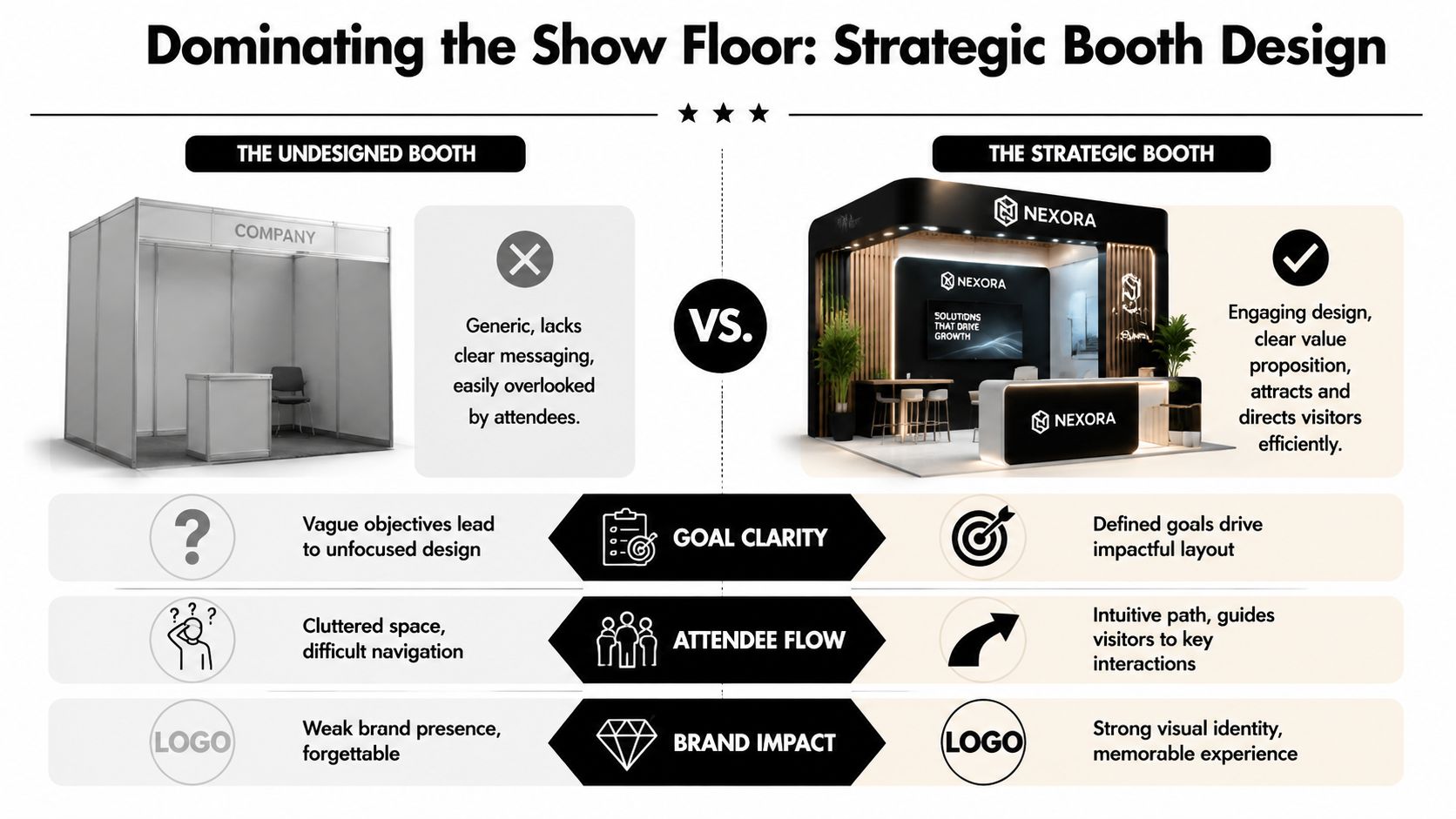
Your booth is your most powerful asset in trade shows marketing because it’s where strategy becomes visible. Buyers don’t experience your planning spreadsheet. They experience your space.
Too many booths look like temporary storage with graphics attached. They have no visual hierarchy, no stopping power, and no obvious next step. Attendees glance, keep walking, and remember nothing.
Design for movement, not decoration
A good booth should guide a visitor through three moments.
Awareness
This is the long-range job. Someone across the aisle needs to know what you do and why it matters. That means bold messaging, clean visuals, and content that reads instantly.
Engagement
Once someone slows down, the booth should reward that attention. Motion, demo prompts, visual proof, and interactive elements matter in this moment.
Conversation
The final layer is where selling happens. You need space for a real discussion that doesn’t feel cramped or chaotic.
A practical layout often includes:
- A stop zone: Open enough to invite a quick pause without blocking traffic
- A demo zone: Clear sight lines to product content or a guided presentation
- A conversation zone: Comfortable space for qualification and next-step planning
Sharp visuals change how your brand is perceived
Booth technology makes a real difference in this environment. Modern LED surfaces create one uninterrupted canvas instead of a patchwork of monitors, cables, bezels, and support hardware. That matters because buyers notice polish immediately.
Our approach uses continuous LED tiles with a 1.9 pixel pitch, while many competing setups use 2.5 pitch. The practical takeaway is simple. Your content appears sharper at closer viewing distances, which is exactly how people experience most booths. Fine text, product UI, motion graphics, and branded visuals all look cleaner.
That doesn’t just look nicer. It affects credibility. A dated display makes the entire brand feel dated.
Dwell time beats raw traffic
The industry is moving away from basic traffic counts. Seventy-two percent of destination marketing organizations now prioritize conversion and economic impact over simple foot traffic counts, as summarized in this analysis of trade show success metrics. That’s the right shift.
A booth that attracts the wrong crowd isn’t working. A booth that holds the right people long enough for a meaningful conversation is.
The strongest booth on the floor isn’t always the loudest one. It’s the one that gives the right buyer a reason to stay.
What works on modern LED booth surfaces
High-quality LED gives you more than a big screen. It lets the structure itself become the message. Walls, columns, arches, and counters can all carry motion and branding without visible breaks.
That opens up useful options:
- Full-environment storytelling: A product category story can wrap across the entire booth instead of living on one monitor
- Segmented messaging: One area can run brand visuals while another shows product workflows
- Live switching: You can change content based on daypart, audience type, or scheduled demos
- Cleaner architecture: Fewer exposed support elements means the booth reads as intentional, not assembled
If you’re planning a new exhibit or rethinking your layout, our trade show booth design examples and planning approach show how these structures can be built around message flow, not just footprint.
Common design mistakes that hurt results
A lot of underperforming booths share the same problems:
| Mistake | What happens |
|---|---|
| Too much text | Nobody reads it from the aisle |
| No focal point | Attendees don’t know where to look |
| Cluttered furniture | Traffic stalls and conversations feel awkward |
| Generic stock visuals | Brand memory disappears quickly |
| Static presentation | The booth fades into the background |
Booth design isn’t about adding more. It’s about making decisions that support selling. Every wall, screen, aisle opening, and demo station should help you attract, hold, and advance the right conversation.
Activating Your Space with Compelling Content and Staff
A strong booth without strong activation is wasted potential. In trade shows marketing, the space gets attention, but content and staff turn attention into action.
Build a content loop that does real work
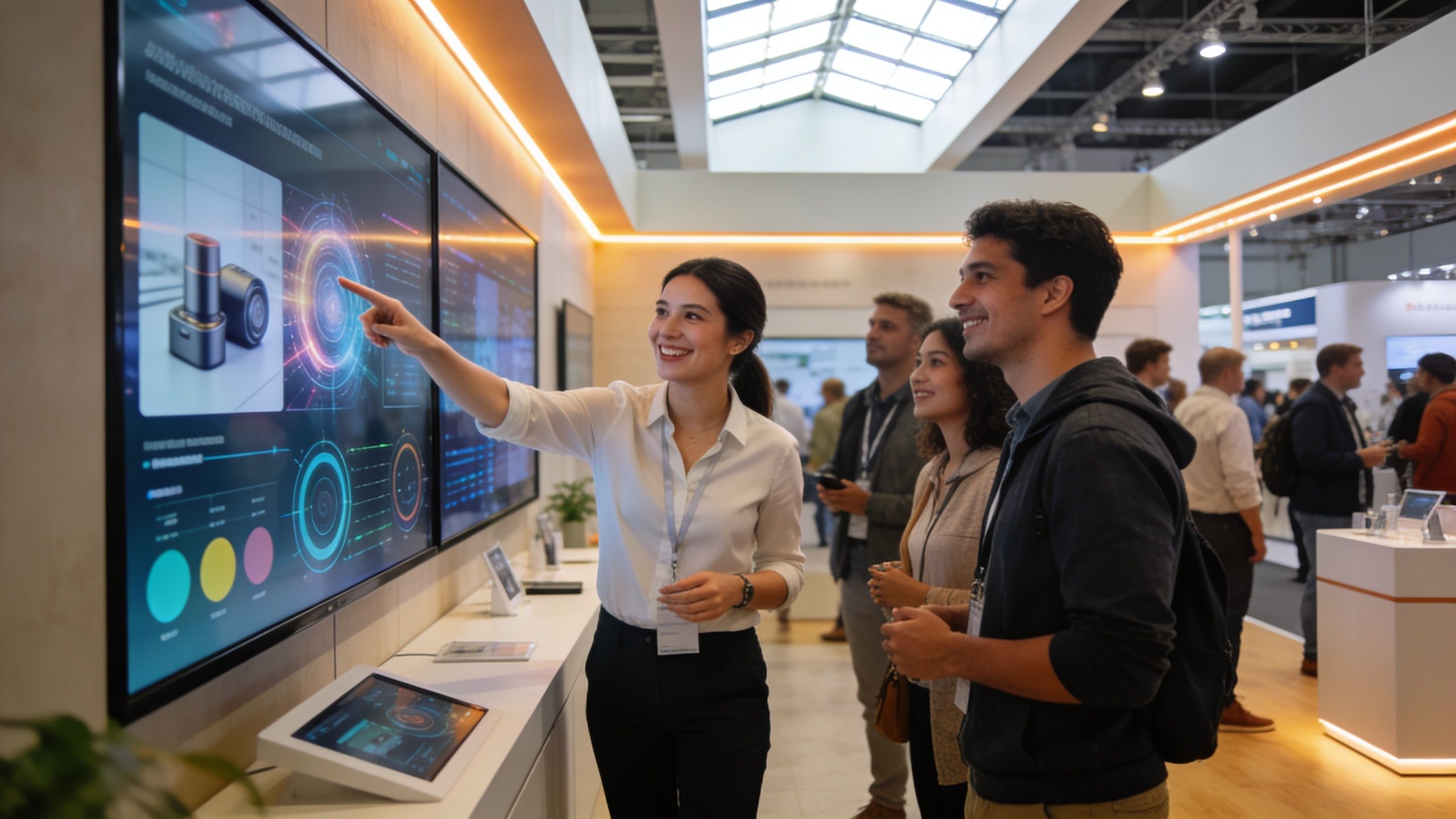
Your video wall content shouldn’t be one long brand reel. It should rotate through a purposeful loop that serves different stages of the interaction.
A practical loop usually includes:
- Ambient brand visuals: Motion graphics that establish category, tone, and visibility from a distance
- Problem-solution slides: Short sequences that show the pain point and your answer
- Product demo clips: Silent or lightly captioned workflows that make the offer concrete
- Proof assets: Testimonials, customer logos, use cases, or implementation snapshots
- Calls to action: Direct prompts like “Book a demo,” “Ask for a live walkthrough,” or “See the new release”
Keep every segment short enough to make sense when someone joins halfway through. On a show floor, people rarely watch from the beginning.
Train staff to work the booth, not just stand in it
Many teams send good employees to shows and assume that will be enough. It isn’t. Booth selling is a specific skill.
Your team needs a simple operating standard:
- Open naturally: Ask relevant, easy-entry questions instead of leading with a pitch
- Qualify early: Find out role, use case, urgency, and next step
- Use the screen: Point to visual proof instead of talking in abstractions
- Log context immediately: Notes matter more than badge volume
- Hand off cleanly: If a specialist needs to step in, do it without making the visitor repeat themselves
For teams refining their onsite interactions, these experiential marketing best practices are useful because they focus on how the environment and the conversation should support each other.
Staff should never ask, “Can I help you?” That’s an easy conversation to escape. Ask what brought them to the show or what they’re evaluating this quarter.
A practical pre-show training checklist
Run through this before anyone steps onto the floor:
-
Message alignment
Every staffer should know the core value proposition in plain English. -
Qualification questions
Decide which questions define a strong lead for your business. -
Demo rhythm
Know who gives the short version and who handles the deeper walkthrough. -
Lead routing
Assign ownership for hot leads, partner discussions, press, and customer check-ins. -
Behavior standards
No phone huddles. No eating in the booth. No sitting like you’re waiting for traffic.
Later in the day, content should support the live presentation instead of competing with it.
Script the interaction, but don’t make it robotic
A useful booth script is flexible. It gives your team a reliable opening and a clean transition into qualification.
Try this structure:
| Moment | Staff action |
|---|---|
| First contact | Ask what they’re looking for at the event |
| Relevance check | Connect their answer to one core use case |
| Visual proof | Show the matching content on screen |
| Qualification | Confirm role, fit, and interest level |
| Next step | Schedule the follow-up before they leave |
Good activation feels smooth because the team has practiced. Bad activation feels random because every staffer improvises a different approach.
Our Turnkey Service for Flawless Trade Shows Marketing
Most trade show stress doesn’t come from marketing strategy. It comes from fragmentation. One vendor handles structure, another handles graphics, another handles freight, another handles setup, another handles AV, and nobody owns the whole outcome.
That’s where exhibitors lose time and control.
The usual multi-vendor mess
When you split the booth across too many partners, common problems show up fast:
- A deadline slips and everyone blames someone else
- A graphic file doesn’t match the display format onsite
- Setup crews finish, leave, and the show opens with an issue unresolved
- Budget planning gets muddy because add-ons keep appearing
- Your team becomes the project manager instead of the exhibitor
None of that helps your sales team meet buyers.
What a turnkey model changes
We run trade shows marketing support as a white-glove, turnkey service because it’s the cleanest way to remove risk. We include everything in our price except the charges the show bills you directly, such as electricity and material handling. That means you aren’t trying to decode surprise costs for the booth itself after you’ve already committed.
More important, we handle the moving parts so you can focus on customer conversations. We coordinate the booth, the display system, logistics, setup, dismantle, and operational support as one package.
Here is the practical difference:
| Aspect | Our Turnkey Service | Typical Multi-Vendor Approach |
|---|---|---|
| Pricing clarity | One price for what we control, excluding only show-direct bills like electricity and material handling | Costs spread across vendors, with more room for surprises |
| Project management | One team owns the outcome | Client often coordinates vendors manually |
| Installation | Managed as part of the service | Depends on separate labor and setup coordination |
| AV support | Technician remains onsite while the show is open | Support may be offsite or unavailable once setup ends |
| Problem resolution | Call or text and get help at the booth quickly | Client tracks down the right vendor and waits |
| Exhibitor focus | Your team greets prospects and runs meetings | Your team gets pulled into operations |
The best service model at a trade show is the one that keeps your marketers and salespeople out of troubleshooting mode.
Why onsite support matters more than most exhibitors expect
AV problems don’t wait for a convenient time. They happen during the product launch, during the scheduled buyer walkthrough, or right when traffic peaks.
That’s why we leave an audiovisual technician onsite for the entire time the trade show is open. If something flickers, freezes, or fails to play correctly, you text or call and an AV technician is at the booth within minutes to fix it. That changes the exhibitor experience in a very real way because your team doesn’t need to diagnose hardware, chase labor, or stand in the aisle apologizing.
For brands comparing exhibit partners, our trade show display company overview lays out the service model in more detail.
The before and after
Before turnkey support, the exhibitor is juggling checklists, vendor contacts, service desks, install windows, and issue escalation.
After turnkey support, the exhibitor shows up prepared to sell.
That isn’t a luxury. At a trade show, every minute your team spends solving booth problems is a minute they aren’t meeting prospects, walking customers through the offer, or booking the next conversation.
Mastering Lead Capture and Post-Show Conversion
Most exhibitors put too much effort into attracting attention and not enough into capturing intent. That’s the leak. Trade shows marketing only creates revenue when booth conversations are documented, prioritized, and followed up with speed.
Industry guidance often underplays this stage, even though companies need a real post-show playbook because the majority of trade show ROI is realized during this phase, as discussed in this article on the missed post-show opportunity.
Capture context, not just contact details
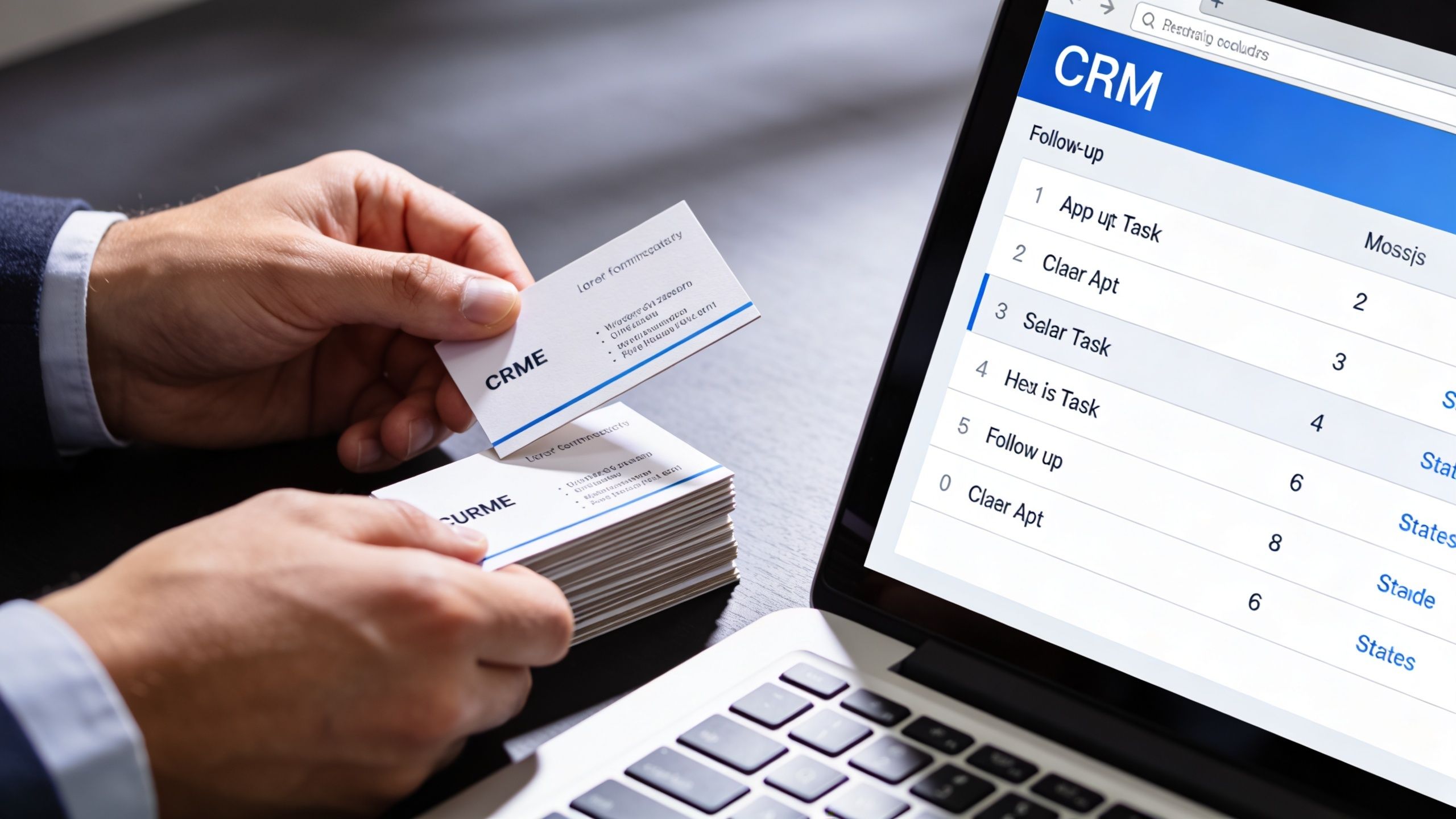
Badge scans are useful, but they aren’t enough. If your team scans a badge and records nothing else, sales gets a list, not an opportunity.
Every meaningful conversation should capture:
- Buyer role: Are they a decision-maker, influencer, evaluator, or partner prospect?
- Use case: What problem are they trying to solve?
- Interest signal: Did they ask for pricing, a demo, technical details, or a future check-in?
- Urgency: Is this active, exploratory, or long-term?
- Next step: What should happen next, and who owns it?
Booth process matters here. If the team can’t collect those details quickly, your follow-up will turn generic.
For teams looking to improve onsite interaction quality before the follow-up stage, these trade show booth engagement ideas can help you structure conversations that produce better lead notes.
A simple follow-up timeline that works
Don’t wait until everyone gets back to the office and “catches up.” The first outreach should already be moving.
Within 24 hours
Send a short, specific follow-up that references the booth conversation.
Example:
Great meeting you at the show. You mentioned you’re evaluating options for [use case]. I’ve included the material most relevant to that discussion. If it helps, we can schedule a focused walkthrough based on your team’s priorities.
Within 3 days
Segment by lead quality. Hot leads get a direct next-step ask. Mid-tier leads get targeted content. Early-stage leads get useful education, not pressure.
A practical split looks like this:
| Lead type | Best follow-up |
|---|---|
| Hot | Personal email plus calendar invite |
| Warm | Relevant demo clip, deck, or use-case summary |
| Early-stage | Educational resource tied to their challenge |
Within 1 week
If there’s still no reply, send a message with a reason to re-engage. Mention a specific problem discussed, a feature request they asked about, or a resource your technical team can share.
Fast follow-up wins because the prospect still remembers the conversation. Slow follow-up turns your booth into a forgotten interaction.
The handoff between marketing and sales
The cleanest systems use a shared standard. Marketing owns capture quality and segmentation. Sales owns response speed and next-step progression.
What breaks the process:
- Leads entered without notes
- No priority tags
- No owner assigned
- One generic email blast to every contact
- Waiting too long to personalize
What works is much simpler. Route each lead based on what happened in the booth.
If someone spent real time with your team, asked pointed questions, and requested a meeting, treat that differently from someone who paused for a quick look at the screen and moved on. The more your follow-up matches the booth conversation, the more credible your team sounds.
Calculating True ROI from Your Trade Shows Marketing
If leadership asks whether the event was worth it, booth traffic won’t save you. Neither will compliments about design. Trade shows marketing earns repeat budget when you can connect spend to qualified opportunities and downstream revenue.
Start with cost per qualified lead
The most useful baseline metric is Cost Per Qualified Lead, or CPL. The formula is straightforward:
Total event cost ÷ number of qualified leads = CPL
According to this trade show ROI calculation guide, a $10,000 event with 20 qualified leads yields a $500 CPL. The same source also notes that rigorous qualification can narrow engaged booth visitors down to about 34 actionable leads per event, which is exactly why sloppy lead counting creates false confidence.
What should count as a qualified lead
Many teams distort their own reporting at this stage. Not every scan belongs in the ROI model.
A lead should only count if it matches your real selling criteria. In practice, that usually includes fit, buying relevance, and a credible next step. If someone grabbed a giveaway, watched the screen for a moment, and moved on, that’s booth activity, not pipeline potential.
Here’s a useful distinction:
| Category | Include in CPL? | Why |
|---|---|---|
| Sales-qualified prospect | Yes | Fits target profile and has real follow-up value |
| Partner conversation | Separate bucket | Valuable, but not the same as a buyer lead |
| Existing customer visit | Track separately | Good for account growth, not net-new lead reporting |
| Casual passerby | No | Attention alone doesn’t justify counting it as a lead |
Track beyond the show week
Trade show ROI often appears later. If your CRM isn’t tagging event-sourced opportunities and tracking their progress, you’ll undercount the event’s value.
A practical measurement workflow looks like this:
- Tag every qualified lead by event name
- Assign an owner before the team leaves the show
- Track movement into meetings, pipeline, and closed business
- Review the event after enough time has passed for sales motion to happen
This is also where small tools can help tighten attribution. If your booth uses QR-driven content experiences, Eventoly’s guide to making video QR codes is a useful reference for connecting on-booth video engagement with cleaner follow-up paths.
Look at efficiency, not just volume
A booth can feel busy and still perform poorly. Another booth can have fewer total interactions but produce a much healthier sales outcome because the team qualified better, captured better notes, and moved faster afterward.
That’s why true evaluation should include:
- Qualified lead count
- CPL
- Meetings booked after the event
- Pipeline created from the event
- Closed revenue tied back to event-sourced opportunities
If you need a framework for building that reporting discipline, our guide to measuring trade show ROI breaks down the process in a way leadership teams can effectively use.
Good ROI reporting doesn’t make the event look better than it was. It makes the next decision easier.
When you measure this way, you stop arguing about vague exposure and start discussing business efficiency. That changes the conversation inside the company. Trade shows stop looking like a line item to defend and start looking like a channel you can improve, compare, and scale.
If you’re planning your next show and want a booth partner that can simplify logistics, support your team onsite, and help turn your exhibit into an integrated LED-driven environment, LED Exhibit Booths is worth a look. We handle the parts that usually create stress so you can stay focused on customers, demos, and qualified conversations.