

How to stand out at trade shows starts with a different mindset. Most exhibitors still treat shows like a build-and-hope exercise. They order graphics, approve a booth layout, book travel, and then cross their fingers that enough buyers walk in and care.
That approach is why so many expensive booths disappear into the background.
You already know the scene. The floor is loud. Booths blur together. Staff members stand around checking phones or repeating the same tired opener. Attendees move fast, overloaded by too many messages and too little time. If your booth doesn’t stop them, orient them, and give them a reason to stay, your investment turns into an expensive piece of furniture.
We don’t look at trade shows that way. We treat them like a system. A standout presence comes from decisions made before the show, reinforced by the booth itself, carried by content, and finished by disciplined lead capture and follow-up. When those parts work together, your booth stops being decoration and starts functioning like a revenue tool.
That matters because buyers don’t come to trade shows for vague brand awareness alone. They come to compare, shortlist, and move decisions forward. Your job is to make that easy.
Introduction The Path to a Standout Trade Show Presence
Most companies ask the wrong question. They ask how to get more foot traffic. The better question is how to build a booth experience that attracts the right people, keeps them engaged, and gives your team a clean path to qualify and follow up.
That shift changes everything.
An average booth tries to look presentable. A standout booth is built to communicate fast. It tells attendees what you do from the aisle, gives them something worth stopping for, and supports the conversation once they step in. If any one of those pieces is weak, the whole thing underperforms.
Practical rule: If attendees need a long explanation before they understand your value, your booth is doing too little work.
We’ve seen the same failure pattern over and over. Teams obsess over finishes, giveaways, and shipping checklists, but they spend too little time on targeting, messaging, staff readiness, and content flow. Then they wonder why the booth looked good but didn’t produce enough qualified opportunities.
A strong trade show presence has five parts:
- Pre-show strategy: Decide who you want to meet and why.
- Booth design: Build visual stopping power into the structure itself.
- Dynamic content: Keep attention after the first glance.
- Staff execution: Turn traffic into qualified conversations.
- Lead process: Capture, sort, and act on opportunities while momentum is fresh.
If you get these right, the show stops feeling chaotic. It becomes manageable. More importantly, it becomes measurable.
Rethink Your Pre-Show Strategy for How to Stand Out at Trade Shows
Most exhibitors put their energy in the wrong place. We’ve identified a critical insight: most companies allocate approximately 80% of their preparation effort toward booth design and only 20% toward strategy and execution, yet the data shows this ratio should be completely inverted according to DataOrigin’s trade show planning analysis.
That’s the first mistake to fix.
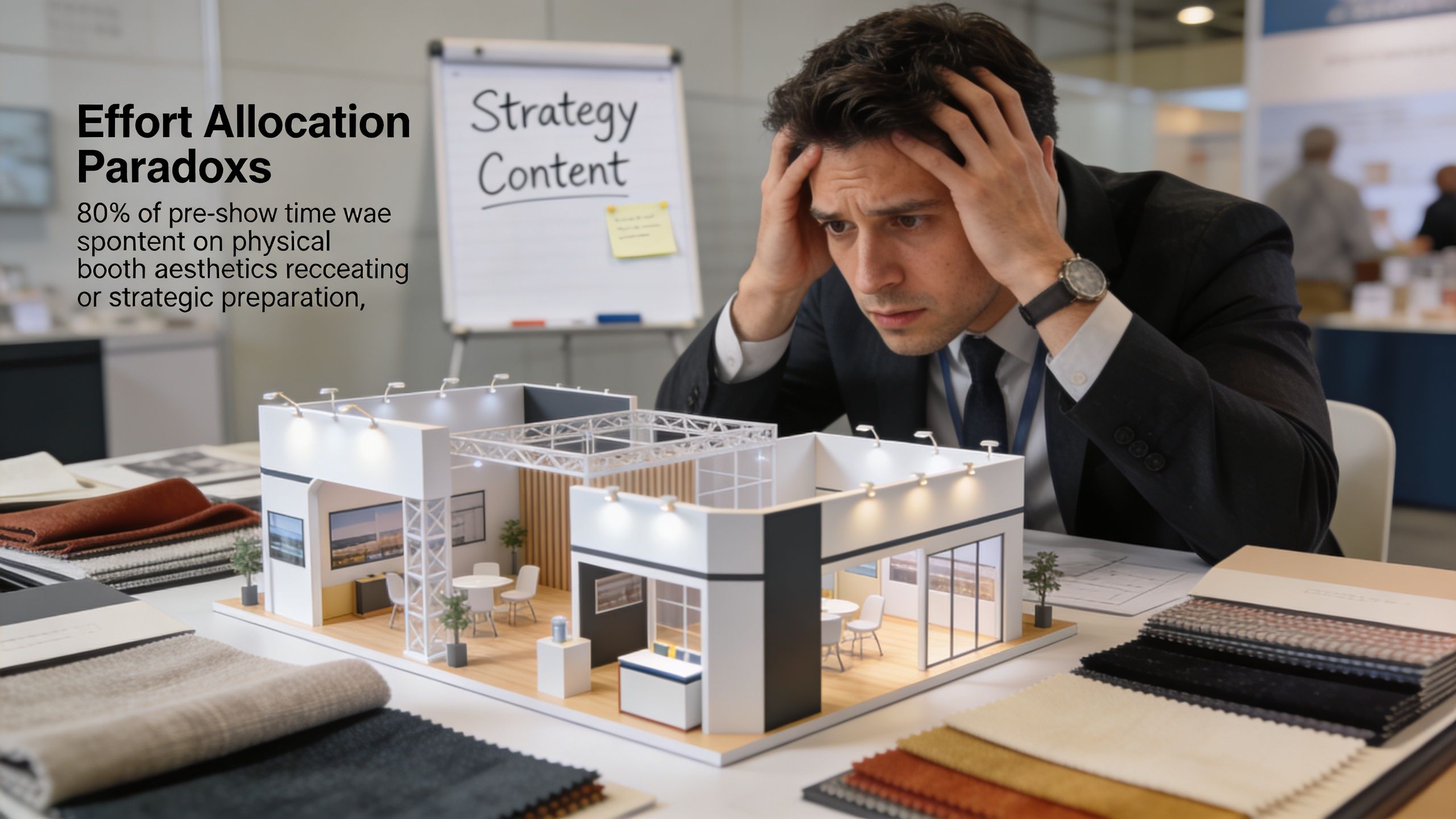
How to Stand Out at Trade Shows – Build the show around outcomes
If your goal is “get leads,” your team will collect names. That’s not enough. You need operational goals that tell your staff what success looks like in the booth.
Good goals are concrete and behavior-driven. Think booked demos, meetings with a defined buyer type, or a shortlist of target accounts you want to engage. We recommend setting those goals early, then aligning messaging, content, staffing, and lead capture around them.
A practical pre-show workflow looks like this:
- Define the audience first: Decide which attendee types matter most to your pipeline.
- Write a short value proposition: One message for the aisle, one for the first conversation.
- Map your desired actions: Demo request, consultation, scheduled follow-up, or product discussion.
- Pre-book traffic: Reach out before the event instead of waiting for walk-bys.
Stop treating pre-show marketing as optional
A crowded aisle rewards the brands that create intent before the doors open. That means email outreach, social posts, direct invitations, and partner amplification. It also means using physical touchpoints well.
Useful giveaways work better when they support the conversation instead of replacing it. For a simple example of how a basic item can reinforce visibility throughout an event, I like Logo Water’s branded bottled water insights. It’s not about swag for swag’s sake. It’s about placing your brand where attention and need already exist.
You should also tighten the broader event experience around your campaign. If you’re refining invitations, booth messaging, and experiential touchpoints, our own guide to experiential marketing best practices is a useful planning reference.
Don’t spend weeks debating booth finishes while your outreach list sits untouched.
How to Stand Out at Trade Shows – Prepare the team before the floor gets busy
A strong pre-show strategy also includes internal prep. Your staff needs to know the audience, the opening questions, the lead criteria, and the demo path. Without that, even a busy booth creates weak pipeline.
Here’s the blunt truth. Booth design matters, but strategy is what gives design a job to do. If you invert your effort allocation and make the weeks before the show count, you’ll show up with momentum instead of hoping traffic magically appears.
Design an Unforgettable Booth to Stand Out at Trade Shows
Visual impact still wins the first battle. According to exhibitor surveys, 48% of exhibitors identify an eye-catching stand as the most effective method for attracting attendees to their booth based on Conference Source trade show statistics.
That finding matches what we see on the floor. Attendees decide fast. Your booth either interrupts their pattern or it doesn’t.
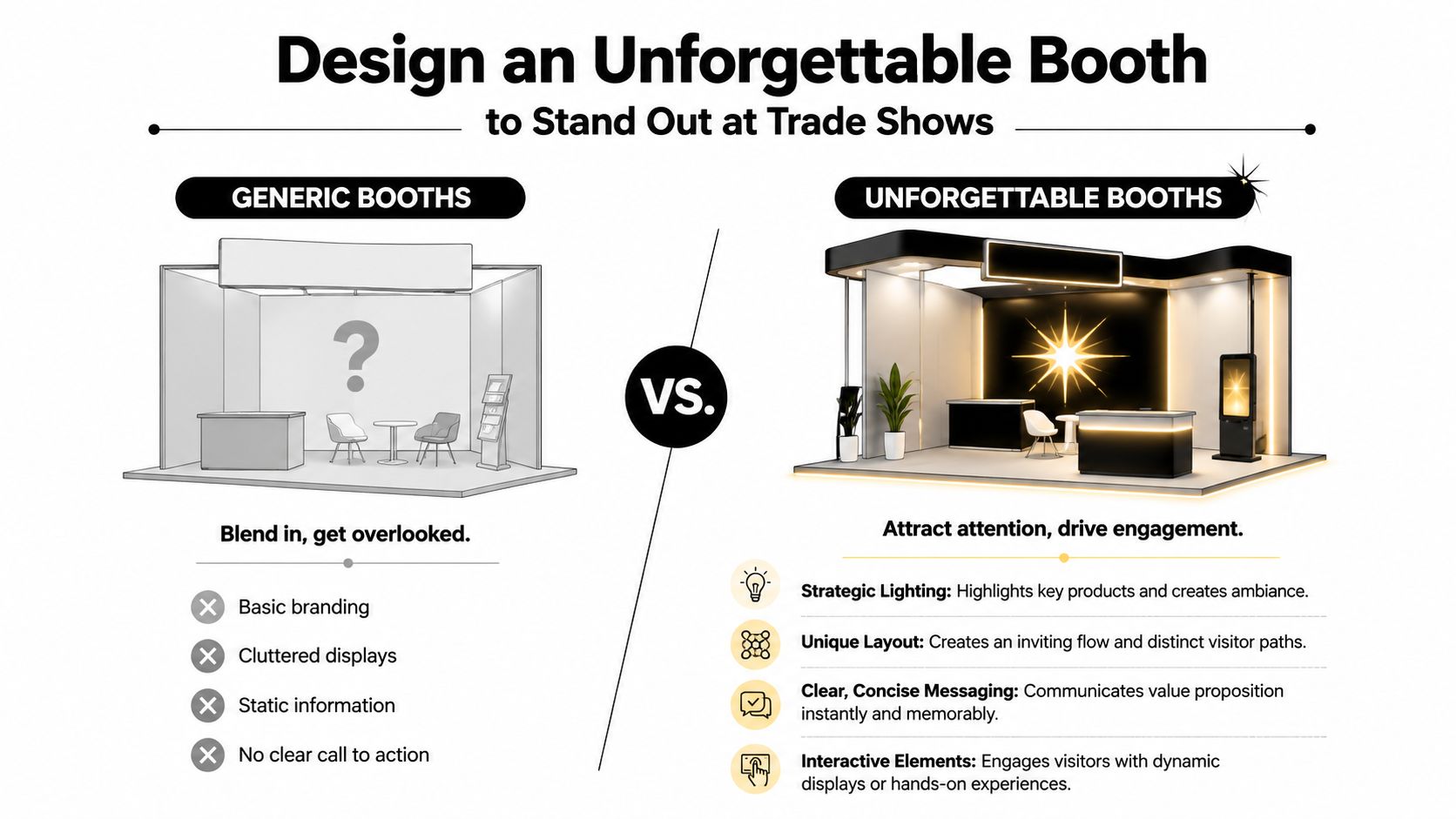
Generic booths lose before the conversation starts
Most booths still rely on the same tired setup. Printed back walls. A few mounted screens. Visible truss. Loose cables. Gaps between displays. Maybe a counter in front that blocks flow. It looks assembled, not designed.
That’s a problem because clutter signals friction. If your booth feels pieced together, attendees assume the experience inside will be the same.
A better booth does three things at once:
- Stops traffic: The structure has enough visual force to cut through aisle noise.
- Guides movement: Visitors can tell where to enter, where to look, and where a demo happens.
- Supports the sales story: The environment helps explain the offer instead of forcing your staff to do all the heavy lifting.
How to stand out at trade shows – Seamless LED changes the experience
This is where booth architecture matters. Instead of stacking separate monitors, we build the booth itself from LED video tiles so walls, columns, counters, and overhead elements become one visual system. If you want to compare formats and layouts, our trade show booth design examples show how that structure can be applied across different footprints.
The technical difference is simple. Our video walls have a pixel pitch of 1.9, while competitors mostly use 2.5. That means the pixels are closer together, so the image looks sharper at closer viewing distances. On a trade show floor, that matters. Attendees don’t just see your booth from across the aisle. They stand a few feet away, read text, watch motion graphics, and inspect product visuals up close.
Here’s the practical impact:
| Booth element | Old approach | Higher-resolution LED approach |
|---|---|---|
| Main wall | Printed graphic or separated screens | One continuous visual surface |
| Product storytelling | Static panels | Motion, demos, and scene changes |
| Close viewing | Pixelation or visible seams | Cleaner image from short distance |
| Setup look | Truss, cables, add-on screens | Integrated display architecture |
Design for action, not decoration
Good booth design isn’t just about aesthetics. It should make response easy. If you’re collecting leads on the floor, add a frictionless scan or form option. This guide to Google Forms QR code strategies for teams is a solid example of how to simplify signups, requests, and post-demo capture without forcing attendees into a long manual process.
A booth should answer three questions fast. What do you do, why should I care, and what should I do next?
That’s the standard we design around. Strong visuals attract attention. A clear layout keeps the booth usable. Better resolution lets your message survive close inspection. When those pieces work together, your booth stops blending in and starts pulling people toward the conversation you want to have.
Develop Dynamic Content That Captures and Holds Attention
A beautiful booth can still fail if the content goes stale. Research shows that static booth elements lose effectiveness within 15-20 minutes as attendees experience “banner blindness” and cognitive adaptation, as noted in Insurance Canopy’s trade show attention analysis.
That’s exactly why so many booths look strong in the morning and invisible by midday.
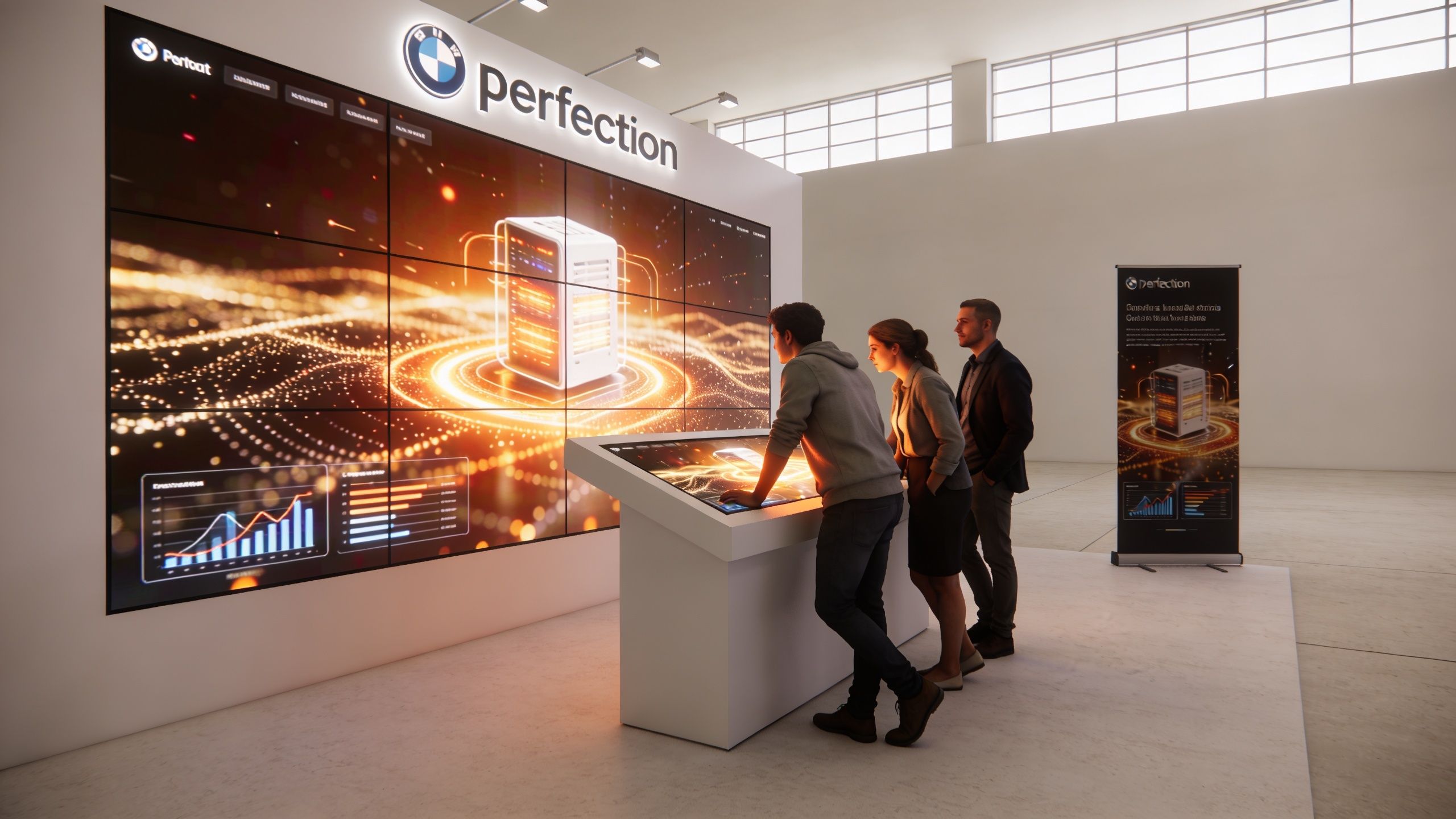
Static loops don’t hold attention
A logo on repeat isn’t content. Neither is a slide deck stretched across a wall. Attendees adapt fast. Once they’ve “seen” a static message, their brain filters it out and moves on.
Dynamic content fixes that because motion resets attention. But that only works if the content has a purpose. Random animation is just digital wallpaper.
We recommend three content modes inside one booth system:
- Attract loop: Short, bold visuals built for the aisle. Minimal text. Strong motion. Fast comprehension.
- Demo loop: Product-specific visuals that help staff explain features, use cases, or workflows.
- Brandscape mode: Ambient visuals that support the mood of the space when no active demo is happening.
How to stand out at trade shows – Tell one story in layers
Your aisle message should be broad and immediate. Your in-booth content should get more specific. That sequencing matters because people engage in stages. First they notice. Then they pause. Then they ask.
If you’re using a video display wall for trade shows, build content that matches those stages. Use motion to signal change, not to show off software tricks. Shift scenes with intention. Highlight one message at a time. Give your staff visual cues they can point to during conversation.
A simple pattern works well:
- Lead with a problem statement.
- Show the product or solution in context.
- End with a clear action prompt.
The video below gives a good visual reference for how motion and scale can shape the booth experience.
Change the screen when the conversation changes. That’s how content supports selling instead of distracting from it.
The strongest booths don’t just get noticed. They keep earning attention. Dynamic content is how you do that.
Train Your Staff and Perfect Your Lead Capture Process
Traffic is not the goal. Qualified conversations are. Many exhibitors often waste a strong booth. They attract people successfully, then fail to sort serious buyers from casual passersby.
That gap is expensive.
According to iCapture’s trade show ROI analysis, high-performing teams generate 2 to 3 Marketing Qualified Leads for every 7 people engaged, a 200-300% improvement over average teams, directly correlating with staff training and pre-qualification strategy.
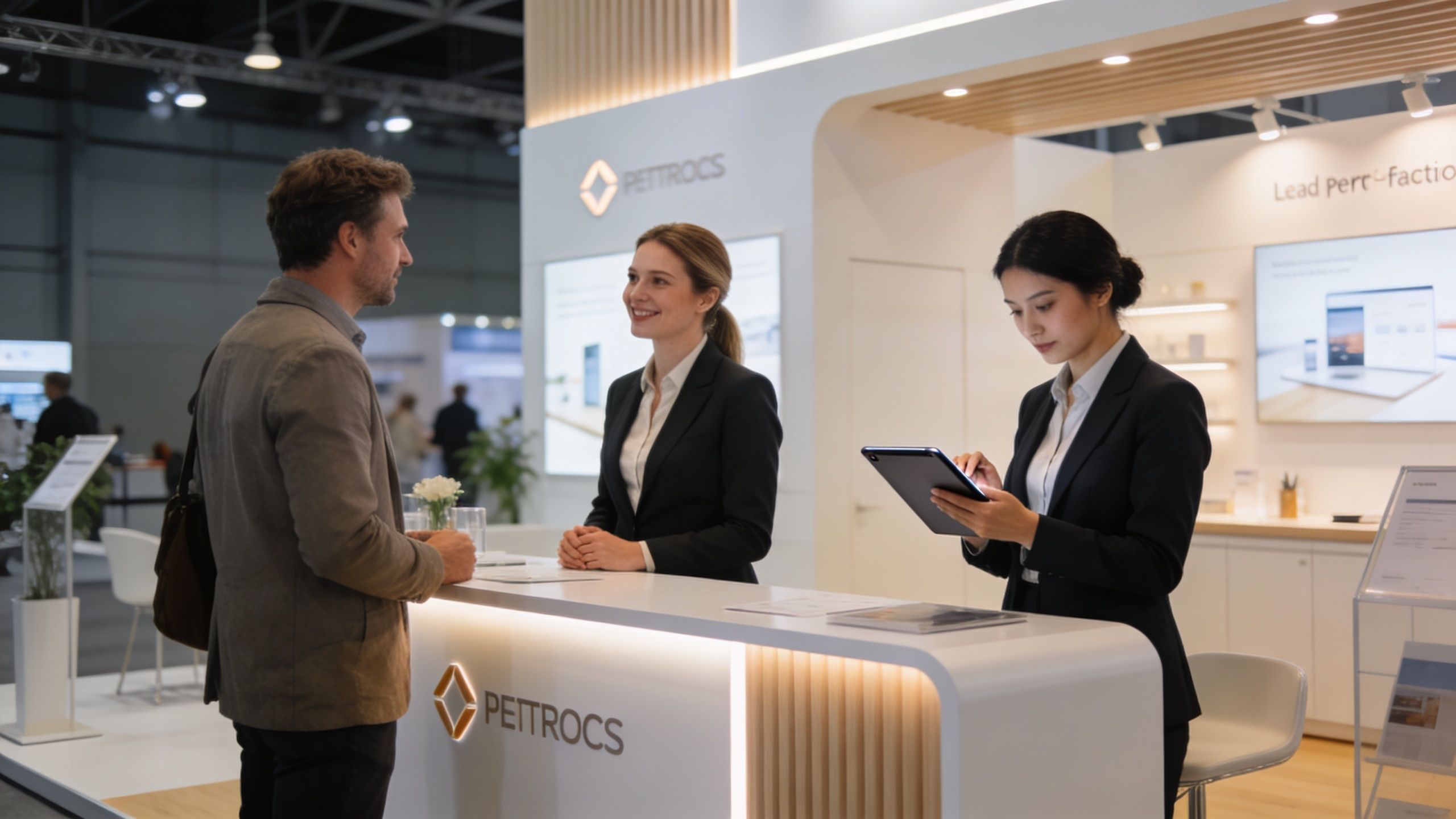
Train for conversations, not scripts
Your team doesn’t need canned speeches. They need a repeatable conversation model that helps them assess fit fast without sounding robotic.
A simple booth conversation should move through four steps:
| Step | What staff should do | What to avoid |
|---|---|---|
| Opening | Ask a direct, relevant question | “Can I help you?” |
| Discovery | Clarify role, need, and use case | Long product dump |
| Direction | Move to demo, expert, or capture | Wandering small talk |
| Logging | Record useful notes immediately | Collecting names with no context |
Good opening questions are situational. Ask what brought them to the show, what they’re evaluating, or what challenge they’re trying to solve. Those questions create movement. Generic greetings kill it.
Make lead capture part of the conversation
Don’t wait until the end to think about data capture. Build it into the interaction. If the person is a fit, your staff should know exactly what to collect and where to route the lead.
That often means pairing human conversation with the right booth tools. Interactive stations can help structure demos and intake without slowing the flow. For teams evaluating options, touch screen tables for exhibit environments can support guided product exploration and form capture in one place.
Use a qualification standard that your sales team will respect later. At minimum, your staff should know the attendee’s role, interest area, urgency, and next step. A badge scan with no notes is not a lead. It’s a maybe.
Protect your sales team from technical distractions
Turnkey execution matters more than most exhibitors realize. We take care of everything so you just greet customers. Our setup is white glove and turnkey, and we leave an audiovisual technician onsite the entire time the trade show is open. If anything goes wrong, your team texts or calls, and an AV technician is at the booth within minutes to fix it.
That changes booth performance in a very practical way.
Your salespeople should not be tracing a cable, rebooting a processor, or trying to troubleshoot a content issue while qualified buyers are standing there. They should stay in conversation. They should stay visible. They should stay focused on the next good lead.
We also keep pricing simple. Everything is included in our price except the charges billed directly by the show itself, such as electricity and material handling. That removes the usual guessing game around what is and isn’t covered.
The best lead capture process is the one your staff can execute without breaking the conversation.
When your team is trained, your qualification criteria are clear, and the technical side is fully supported, your booth works the way it should. Traffic turns into useful pipeline instead of a stack of business cards no one trusts.
Your Ultimate Checklist to Stand Out at Your Next Trade Show
Trade shows reward discipline. Data shows that 72% of exhibitors attend trade shows specifically to generate new leads, which is why an efficient lead capture and follow-up process matters so much according to The Trade Show Network’s event value roundup.
That’s the right lens to use for your next event. Not “Did the booth look nice?” Ask whether the entire system produced qualified opportunities and clear next steps.
The short version
If you want to know how to stand out at trade shows, do these five things well:
- Plan early: Define the audience, message, and meeting goals before the event.
- Design for visibility: Use the booth structure to stop traffic and support the sales story.
- Refresh attention: Replace static visuals with dynamic, layered content.
- Train your team: Give staff a qualification flow, not a generic greeting.
- Follow up fast: Don’t let strong conversations die in a spreadsheet.
For teams thinking beyond the booth and into automated response workflows, SupportGPT’s lead generation assistant is worth reviewing as one example of how companies are extending lead capture and follow-up systems.
If you’re tightening event operations, our guide to trade show set up planning can help align logistics with the customer experience instead of treating setup as a separate task.
Standout Exhibitor Checklist
| Phase | Task | Status |
|---|---|---|
| Pre-show | Define target attendee profiles and priority accounts | ☐ |
| Pre-show | Set specific meeting, demo, and follow-up goals | ☐ |
| Pre-show | Launch outreach to clients, prospects, and partners | ☐ |
| Booth design | Confirm clear aisle message and booth layout | ☐ |
| Booth design | Review visual assets for close-range readability | ☐ |
| Content | Build attract loop, demo loop, and ambient visuals | ☐ |
| Staffing | Train staff on opening questions and qualification | ☐ |
| Staffing | Assign lead capture roles and escalation paths | ☐ |
| Operations | Confirm onsite technical support responsibilities | ☐ |
| Show days | Log each qualified conversation with useful notes | ☐ |
| Post-show | Send follow-up based on lead priority and interest | ☐ |
| Post-show | Review what drove the strongest conversations | ☐ |
One final point matters more than is commonly anticipated. Budget clarity reduces stress and improves execution. Everything we’ve discussed is included in our price except the bills the show charges you directly, like electricity and material handling. Shipping, setup, dismantle, and onsite technician support are included. That’s how turnkey service should work. Fewer surprises, fewer handoffs, and fewer reasons for your team to get pulled away from selling.
If you want a booth that functions like a unified visual system instead of a pile of rented parts, talk with LED Exhibit Booths. We help exhibitors turn walls, counters, and structures into integrated video surfaces, handle the logistics, and keep technical support onsite so your team can stay focused on customers.