
When you hear the term hologram 3D display, you’re probably thinking of something straight out of a sci-fi movie. It’s an image that seems to float in mid-air, creating a serious “wow” factor that can stop trade show attendees in their tracks. For any exhibitor, that’s the goal: cut through the chaos on the show floor and create a moment that pulls people into your booth.
What Is a Hologram 3D Display and Why Does It Matter?
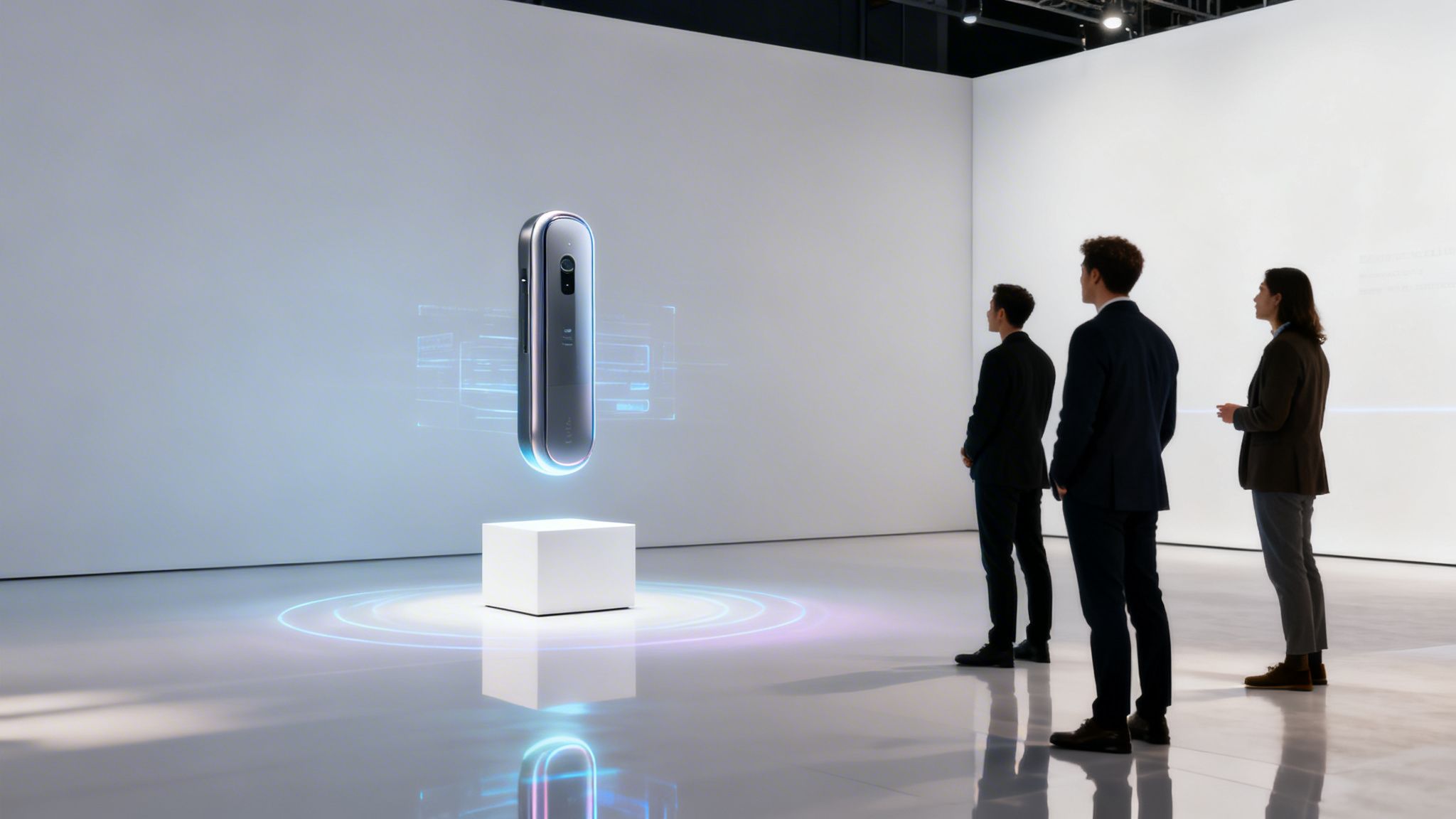
Let’s get one thing straight. The “holograms” you see at most events aren’t true holograms in the scientific sense. A true hologram, the kind that won a Nobel Prize for its inventor, is a complex recording of light fields that lets you see a 3D object from any angle, just like the real thing.
The displays we use at trade shows are actually very clever illusions. They usually use tech like rapidly spinning LED fans or special reflective screens to project a 2D video that looks three-dimensional and free-floating. While they aren’t technically holograms, they accomplish the exact same thing: creating an undeniable visual hook that grabs attention. On a busy show floor, that’s worth its weight in gold.
From Scientific Theory to Trade Show Floor With a Hologram 3D Display
The idea of holograms isn’t new. The science goes all the way back to 1947, when a scientist named Dennis Gabor came up with the concept. But it wasn’t until the laser was invented in 1960 that the technology had the right kind of light to actually work.
Throughout the 60s and 70s, the tech slowly moved from a lab experiment to something with real-world potential. This journey is a lot like how other event technologies, such as our seamless LED video walls, have evolved. What was once a futuristic dream is now a practical tool for telling a brand’s story.
Why Visual Impact Is Your Greatest Asset
At a trade show, you have maybe three seconds to make an impression before someone walks right past your booth. A boring banner or a simple TV monitor just fades into the background noise. A hologram-style display, on the other hand, shatters that pattern. It becomes a magnet for your booth.
Here’s why it works so well:
- It creates curiosity. A spinning, floating image of your new product is completely unexpected. People can’t help but stop to figure out what they’re seeing.
- It explains things instantly. You can show off a complicated product from every angle without saying a single word. This is perfect for complex machinery or technical demos.
- It makes you look like a leader. Using advanced visuals sends a clear message: your brand is modern, innovative, and at the top of its game.
Of course, the “wow” factor is only part of it. The technology has to be solid, the content has to look sharp, and the whole setup needs to be executed perfectly. It’s one piece of a much larger puzzle.
If you’re looking for other ways to create that same high-impact effect, you might want to look into other options. Check out our guide on interactive trade show displays for more ideas. The key is to find a solution that not only grabs eyeballs but actually helps you hit your event goals.
How Different Types of Holographic Displays Work
When you hear hologram 3D display for your trade show booth, you’re not actually talking about one single piece of tech. The term “hologram” gets thrown around a lot, but it’s really a catch-all for several different visual tricks. Knowing how they actually work is the key to picking the right one for your goals, your budget, and the chaos of a busy convention hall.
Not every “floating” image is made the same way. The displays you’ll see most often use a few common methods to create that wow factor. Let’s break down the magic behind the curtain in simple terms.
The Oldest Trick in the Book: Pepper’s Ghost
Ever looked at a window at night and seen a spooky reflection that looks like it’s floating outside? That’s the core idea behind Pepper’s Ghost. This technique has been around since the 1800s and is a surprisingly simple, yet very effective, illusion. It’s the same method used for the ghosts in theme park haunted houses and those famous “holographic” concerts you’ve seen online.
Here’s how it works:
- A bright screen, like an LED or LCD, is hidden from view, usually on the floor or in the ceiling.
- A special transparent film or piece of glass is set up at a 45-degree angle between your audience and the stage.
- The image from the hidden screen bounces off that angled film, making it look like a 3D object is floating in mid-air right in front of everyone.
It’s a lot like a teleprompter, where the text is only visible to the speaker. For a trade show, this is great for creating big, life-sized figures. However, it usually needs a large, controlled, and dark space to really pop, which can be tough to achieve under the bright lights of a convention center.
The leap from simple optical tricks to today’s displays happened fast. Early predictions and military funding helped push holographic 3D displays from a cool idea to a real tool for trade shows. It’s been such a big shift that it’s predicted 65% of Fortune 500 brands will have tried out holographic tech at expos by 2026.
The Spinning Wonder: Holographic LED Fans
One of the most common types of hologram 3D display you’ll see today is the holographic LED fan. When it’s off, it just looks like a fan. But once those blades start spinning at high speed, they create a jaw-dropping 3D illusion.
Each fan blade has a strip of tiny, programmable RGB LEDs. As the fan whirls around, the LEDs light up and change colors in a perfectly timed sequence. Your brain’s “persistence of vision”—the same thing that lets you see a movie as a moving picture instead of thousands of still photos—blends the lights into a single, floating image.
Because the hardware itself is minimal and the blades become almost invisible when they spin, the content looks like it’s just hanging in the air. This makes them fantastic for showing off logos, products, or quick, eye-catching animations. Of course, they do have fast-spinning blades, which is a safety consideration. The image can also get washed out in very bright light or look distorted from far-off angles.
Holographic Display Technologies at a Glance
To make it even clearer, here’s a quick rundown of the most common technologies you’ll encounter. Think of this as your cheat sheet for telling these illusions apart.
| Display Type | How It Works (Analogy) | Best For | Key Limitation |
|---|---|---|---|
| Pepper’s Ghost | Like a reflection in a window at night, bouncing an image off angled glass. | Large, life-sized figures and stage presentations. | Needs a dark, controlled environment; can be bulky. |
| Holographic LED Fan | A high-speed spinning fan with LEDs, like drawing a picture in the air with a sparkler. | Floating logos, product highlights, and dynamic animations. | Physical spinning blades are a safety factor; image can wash out. |
| True Holography | Like sculpting an object out of light itself, creating a real 3D light field. | Genuine 3D viewing from multiple angles without glasses. | Extremely expensive and often not bright enough for a trade show floor. |
Ultimately, both Pepper’s Ghost and LED fans are creating a 2D illusion of a 3D object. They do it incredibly well, but they aren’t true holograms in the strictest sense. True holography is still on the horizon for most event marketers.
The Future Is Now: True Hologram 3D Display
While they are much less common and far more complex, true holographic and volumetric displays are starting to appear. These systems don’t just create an illusion on a flat surface; they actually build an object out of light in a three-dimensional space. Think of it as sculpting with photons. These technologies use lasers and advanced optics to project points of light, creating an image you can literally walk around and view from different sides, just like a physical object.
The development of these systems has a long history, going back to early work in electroholography and even military projects. You can learn more about the deep history of holographic breakthroughs to see just how far the science has come. For most trade show booths today, these systems are simply too expensive or not bright enough for a bustling expo floor. But they give us a glimpse of what’s next.
No matter which display you choose, planning your content is what makes or breaks the effect. Understanding how to approach video production for large-scale displays is a good first step to creating visuals that will stop people in their tracks.
Hologram Displays vs Seamless LED Video Walls
When you’re planning for a trade show, you’ll eventually face a big decision: do you go with a mesmerizing hologram 3d display or a massive, seamless LED video wall? Holograms have that cool “floating image” factor that definitely gets people to stop and look, but you have to think past the initial “wow.” Exhibitors need to weigh the practical side of things, like visual impact, cost, and whether the thing will actually work when you need it to.
For most folks, the modern seamless LED video wall is simply the more versatile, immersive, and stress-free choice for creating a booth that truly dominates the show floor. It’s not just about playing a video; it’s about turning your entire exhibit into a living, breathing canvas.
This chart gives you an idea of the different “holographic-style” technologies you might see out there, from the classic Pepper’s Ghost illusion to newer laser-based systems.
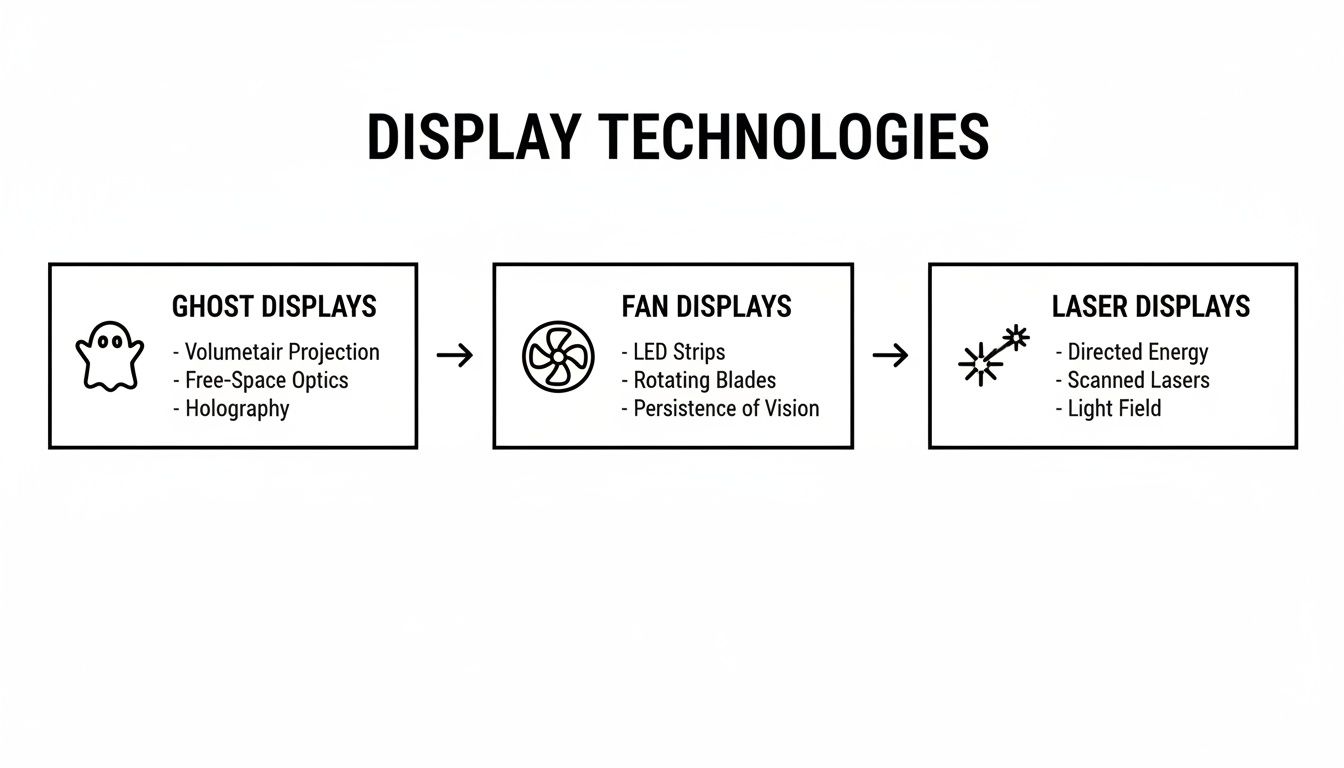
As you can see, while they all try to create a “holographic” look, how they work and what they’re good for varies a lot.
Visual Clarity That Makes an Impact
The first thing to compare is straight-up visual quality. Holograms can look amazing, but they often need very specific viewing angles and dark, controlled lighting to really pop. That’s a luxury you just don’t get on a bright, chaotic trade show floor. Their resolution can also be a real weak spot.
This is where a high-quality seamless LED wall just runs away with it. The key difference-maker is the pixel pitch—that’s the tiny distance between each individual LED bulb. A lot of competitors are still using panels with a 2.5mm pixel pitch, which is fine, but our video walls have a much higher resolution.
Our video walls all feature a tight 1.9mm pixel pitch. A smaller pitch means the pixels are packed in way tighter, giving you a much, much higher resolution than competitors who mostly have a 2.5mm pitch. For your booth, that means text is sharper, colors are richer, and the whole image looks incredible, even if someone is standing right up close.
That superior clarity means your product demos and brand messaging look professional and polished, making a much stronger impression. You can learn more about what makes a high-impact video display wall so powerful in our full guide.
Cost Certainty in an Unpredictable Environment
Budgeting for a trade show is a nightmare; there are always surprise fees popping up. Specialized tech like holographic displays can be the worst offenders, often coming with a long list of extra charges for things like custom content, expert installers, and dedicated technicians.
We believe in keeping things simple and completely transparent with our costs. That’s why our rental packages are genuinely all-inclusive. When we give you a price, that’s the price. We include everything in our price except the direct show bills for power and rigging that you get billed for directly.
Our pricing model covers:
- The LED video wall hardware.
- Transportation to and from the venue.
- Professional installation and dismantle labor.
- All the cabling and processing gear needed to make it run.
This takes all the guesswork and financial stress out of the equation. You can budget with confidence, knowing you’re getting a show-stopping centerpiece without the risk of hidden costs eating into your ROI.
White-Glove Service and Unmatched Reliability With Your Hologram 3D Display
What do you do when the main attraction of your booth—the display you built everything around—just dies in the middle of the show? With a complex holographic unit, a breakdown can be a total disaster. You’re often waiting for an off-site specialist to show up, leading to hours of embarrassing downtime and lost leads.
That’s a risk we will not let our clients take. We provide a true white-glove, turnkey service. From the moment you sign the contract, we take care of everything so you can just focus on greeting customers.
But our job isn’t done there. We take reliability to another level by stationing a dedicated audiovisual technician on-site for the entire time the trade show is open. If anything goes wrong—a flicker, a glitch, a loose cable—you just text or call. Within minutes, that AV technician is at your booth to resolve the problem. This on-demand support guarantees your display runs perfectly, giving you total peace of mind to focus on what really matters: connecting with prospects and growing your business.
Key Logistical Considerations For Immersive Displays
A fantastic-looking display is worthless if it’s a nightmare to get up and running. When you’re choosing between a hologram 3d display and a big LED video wall, you have to look past the cool visuals and think about the real-world headaches: content, setup, and what happens when something breaks. These details are what separate a show-stopping booth from a stressful mess on the convention floor.
One of the biggest differences is the content. For a hologram, you need very specific 3D animations made with a totally black background to get that floating effect. This isn’t your standard video production. It can get expensive fast, requires specialized animators, and can add weeks to your schedule. On the other hand, our modern LED video walls play just about any digital content you already have—product videos, presentations, you name it.
The True Cost Of Setup And Installation
Beyond the content, the actual physical setup and labor costs can be wildly different. Putting a holographic unit together is often a delicate, complicated job that you need trained specialists for. The gear can be fragile, and if it’s not perfectly aligned, it won’t work right. This means longer setup times and bigger labor bills from the show. For instance, putting together any kind of immersive projector setup shows just how many moving parts and logistical details you have to nail for a complex display to work.
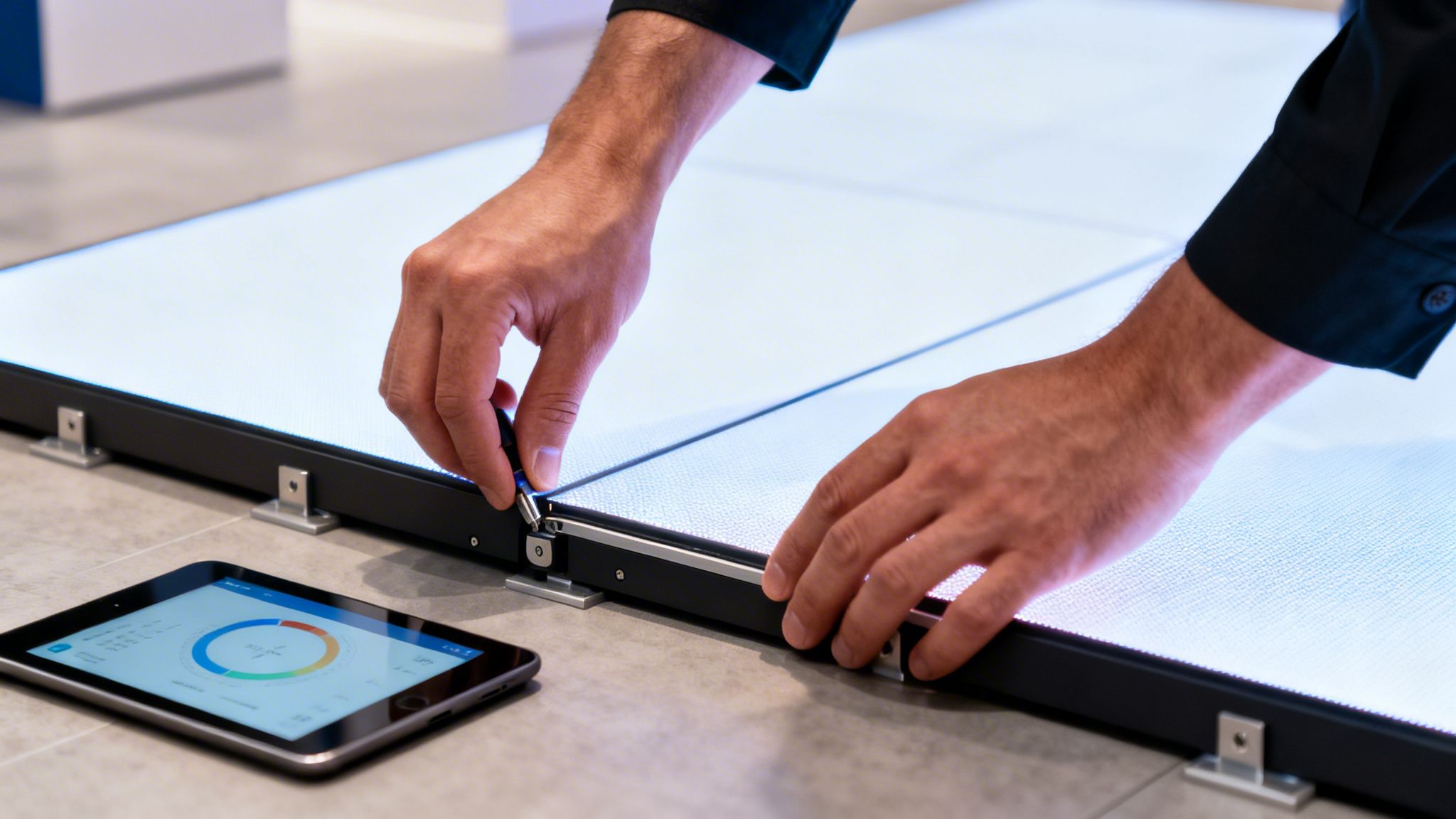
Our solution avoids all that. Our LED panels use a toolless, magnetic locking system that makes assembly incredibly simple and fast. This not only cuts down on setup time and the need for expensive, specialized labor, but it also lowers your drayage fees because the parts are lightweight and pack down small. You can see how this approach saves you money in our guide to trade show setup.
Guaranteed Reliability And Unmatched Service
Maybe the most important thing for any exhibitor is knowing your booth will actually work. What’s your plan if your main attraction dies during peak show hours? If a delicate hologram 3d display goes down, you could be dead in the water, waiting for some off-site expert to show up. That downtime means lost leads and makes your brand look bad.
We’ve built our entire business around getting rid of that worry. We offer a true white-glove, turnkey service. We handle every single logistic so all you have to do is show up and start talking to great customers.
Our promise doesn’t stop once the booth is built. We leave a dedicated audiovisual technician on-site for the entire time the trade show is open. If anything goes wrong with your display, you send a text or make a call, and our expert is at your booth fixing it within minutes.
This on-site support is your insurance policy. It guarantees your display runs perfectly from start to finish, giving you total peace of mind so your team can focus on what they do best: connecting with attendees.
Trade Show Display Comparison Hologram vs Seamless LED Wall
| Factor | Hologram 3D Display | Seamless LED Video Wall (Our Solution) |
|---|---|---|
| Content Creation | Requires specialized 3D animation with black backgrounds; less flexible. | Plays any standard digital content you already have; highly versatile. |
| Setup & Labor | Delicate, complex installation requiring expert technicians; higher labor costs. | Toolless, magnetic system for rapid setup; reduces labor and drayage fees. |
| Visual Quality | Needs controlled lighting; resolution can be limited. | Features a 1.9mm pixel pitch for superior, high-resolution clarity in any environment. |
| Cost Structure | Often involves hidden fees for content, setup, and specialized support. | Transparent, all-inclusive pricing covers everything except direct show bills. |
| On-Site Reliability | A malfunction can cause significant downtime waiting for an off-site specialist. | An on-site AV technician provides immediate support, ensuring zero downtime. |
As you can see, while holograms have a certain “wow” factor, the practical realities of content, setup, and reliability often make our seamless LED video walls a smarter, safer, and more flexible choice for a successful trade show.
How Immersive Visuals Drive Trade Show ROI
At the end of the day, your trade show booth has to generate business. While a stunning hologram 3d display is a fantastic way to draw a crowd, the real question is how those eyeballs translate into a measurable return on investment. An immersive display is more than just eye candy; it’s a magnet that directly boosts booth traffic, lead generation, and that all-important attendee dwell time.
The right visual strategy goes beyond just getting people to stop and stare. It lets you tell a compelling story about your brand or run dynamic product demos that will hold a prospect’s attention far longer than any static poster ever could. The goal isn’t just to be seen; it’s to be remembered.
From Visuals to Value
Your return on investment starts with superior visual quality. You’ll find plenty of competitors offering video walls with a 2.5mm pixel pitch, which is perfectly fine for many uses. However, when you’re aiming for a truly premium and immersive experience, our video walls have much higher resolution.
Our video walls feature a much tighter 1.9mm pixel pitch. This simply means the pixels are packed together more densely, creating a significantly higher resolution than the 2.5mm pitch our competitors mostly use. Your content looks sharper, crisper, and more professional, even when attendees are standing just a few feet away. That superior clarity makes sure your message is delivered with maximum impact.
The market for these displays is exploding, which tells you how effective they are. By 2025, the global holographic display market hit $2.5 billion and is projected to soar to $11.4 billion by 2030. In the US, which holds a 40% market share, events like CES have seen holographic demos boost attendee engagement by 45% compared to flat screens. You can discover more about the history and growth of hologram technology on holophile.com.
The Power of an All-Inclusive Partner
ROI isn’t just about the leads you gain; it’s also about managing your costs effectively. One of the biggest headaches at any trade show is the dreaded surprise bill at the end. Lots of vendors nickel-and-dime you for every little thing, making it impossible to stick to a budget.
We take a different approach. We believe in total transparency, which is why we include everything in our price except for the direct show bills for services like electrical and rigging. Our quotes are comprehensive, covering hardware, logistics, setup, and on-site support.
This all-inclusive model gives you cost certainty. You can plan your budget with confidence, without worrying about an avalanche of hidden fees when the show is over.
White-Glove Service That Protects Your Investment
Imagine this: it’s peak show hours, your booth is buzzing, and your main display suddenly goes dark. For many exhibitors, that’s a catastrophic failure that brings business to a dead stop. Our service model is designed to completely eliminate that risk and protect your investment.
We provide a true white-glove, turnkey service. We take care of everything so you can focus on what you do best: talking to great customers.
But our job isn’t done after setup. Here’s our promise to you:
- On-Site Technician: We leave a dedicated audiovisual technician on-site for the entire duration of the trade show.
- Instant Support: If anything goes wrong, you simply text or call.
- Rapid Resolution: Within minutes, our AV Technician will be at your booth to fix the problem, ensuring you have zero downtime.
This level of on-demand support is your guarantee that your booth will run flawlessly from open to close, letting you maximize every single minute of the show. To see more on this topic, learn more about how LED exhibit booths can increase ROI at trade shows in our detailed article.
Frequently Asked Questions About Event Display Technology
Picking the right display for your trade show booth can be tough. You’re trying to make a huge impact, but you also have to worry about your budget and the practical side of setting things up. This section cuts through the noise and answers the real questions we hear from event marketers comparing hologram 3d displays to our modern LED video walls.
We want to give you straightforward answers so you can feel confident you’re making the right call for your next big show.
Are Hologram 3D Displays Too Expensive For My Booth Budget?
That’s a question we get all the time. The short answer is: it’s tricky. While the rental price for a single holographic unit might look reasonable at first, the total cost can quickly spiral out of control once you factor in all the extras.
The real problem is that you never know what the final bill will be. Here’s where the hidden costs usually pop up:
- Custom Content: You can’t just play a normal video. Holograms need special 3D animations with black backgrounds, which means hiring expensive animators and adding weeks to your timeline.
- Specialist Technicians: These displays are fragile and complicated. You’ll need to pay a premium for a specialist to install and babysit the tech, assuming you can even find one.
- Surprise Fees: Extra charges for special shipping, power hookups, and on-site calibration can blow your budget before the show even starts.
For anyone who needs to know their costs upfront, our all-in-one seamless LED video wall rentals are a much safer bet. We give you one clear price that covers everything—shipping, setup, dismantle, and support. The only extra cost is what the show directly bills you for power and rigging. You get a massive, immersive display without the budget anxiety.
How Much Better Is a 1.9mm Pixel Pitch vs 2.5mm?
This gets right to the heart of image quality. Pixel pitch is just the distance between each little LED light on the screen. A smaller number means the lights are closer together, creating a much higher-resolution picture. Think of it like high-end bedsheets; a higher thread count feels smoother and more luxurious.
A lot of other companies use a 2.5mm pixel pitch. It’s fine, and it looks okay from far away. But all our video walls use a 1.9mm pixel pitch, and that tiny difference means our video walls have a much higher resolution.
Because our pixels are so much tighter, our video walls deliver a picture that is dramatically sharper, crisper, and more vibrant than what you get from competitors who mostly use a 2.5mm pitch. The clarity is absolutely incredible, even when someone is standing just a few feet from your booth.
For your brand, this means you look more professional and polished. Your product videos are flawless, your logos are sharp, and your message hits with maximum impact, cementing your status as a leader in your field.
What Happens If My Display Fails During the Show?
That’s the nightmare scenario for every exhibitor. A dead screen stops your booth in its tracks, costs you leads, and is frankly pretty embarrassing. With something as delicate as a hologram 3d display, a breakdown can be a complete disaster. You could be stuck waiting hours for an off-site technician to show up while your booth sits dark during the busiest part of the day.
We’ve designed our service to make sure that never happens. We know that uptime is everything.
Here’s our simple—and guaranteed—solution:
- White-Glove Service: We provide a turnkey service, taking care of everything so you can just focus on your customers.
- Dedicated On-Site Tech: We leave an audiovisual technician on-site for the entire time the trade show is open. They are there for you.
- Instant Contact: If you see so much as a flicker, you just text or call your dedicated tech directly.
- Minutes to Resolution: Within minutes, they will be standing in your booth, fixing the problem.
This white-glove service ensures your display runs perfectly from the opening bell to the final handshake. It gives you total peace of mind so your team can focus on what they do best: talking to customers and closing deals.
Is Creating Content for a Huge Video Wall Difficult?
It’s actually a whole lot easier than making content for a hologram. Like we mentioned, holograms need specially made 3D files with black backgrounds to pull off the floating effect. That process is often expensive, slow, and requires skills most marketing teams just don’t have in-house.
Our seamless LED video walls, on the other hand, are designed to be incredibly flexible. They work with the video content you probably already have.
Our displays can play just about anything:
- Standard brand videos and TV commercials
- Product demos and animated explainer videos
- PowerPoint or Keynote presentations
- Live social media feeds and interactive games
Because our LED walls are built to be a single, uninterrupted screen, you never have to worry about ugly bezels or gaps cutting through your image. This means you can easily reuse existing marketing videos or create new ones with standard software, saving you a ton of time and money. Our team can also help you plan out your content to make sure it grabs attention and helps you hit your event goals.
Ready to build a trade show booth that people can’t ignore? At LED Exhibit Booths, we give you more than just a screen; we deliver a complete, stress-free experience with transparent pricing and unbeatable on-site support.
Learn how our seamless LED video walls can transform your next event.