
Wholesale trade shows usually hit your calendar long before they hit your budget. First you reserve space. Then come freight questions, labor forms, graphics deadlines, power orders, product samples, staff schedules, lead capture, and the quiet worry that after all that work your booth might still look like everyone else’s.
That’s why wholesale trade shows reward operators, not just exhibitors. The brands that get results usually aren’t the ones with the biggest footprint. They’re the ones that choose the right event, build a booth around a clear sales goal, and remove enough on-site friction that their team can focus on conversations instead of troubleshooting.
What Are Wholesale Trade Shows and Why Do They Matter
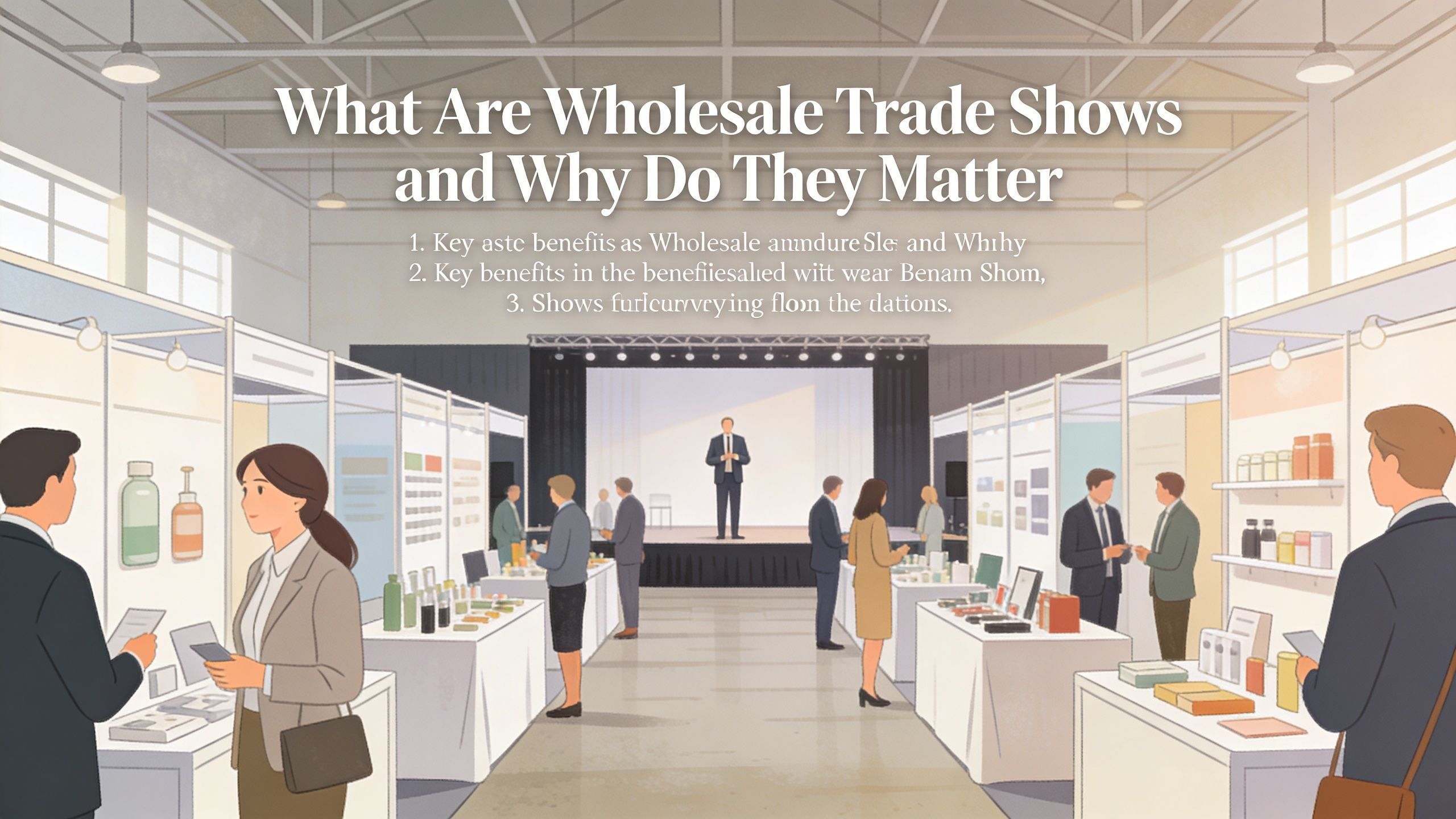
Wholesale trade shows are business-to-business buying events. They’re built for manufacturers, importers, distributors, retailers, and brand teams that need to place orders, source products, compare vendors, and build supply relationships. That makes them very different from consumer expos, where the goal is often awareness or direct retail sales.
A simple way to think about it is this. A consumer expo is like a storefront with foot traffic. A wholesale trade show is like a live marketplace for channel sales. The people walking the aisle aren’t casual browsers. They’re often there to evaluate lines, compare suppliers, and decide what goes into stores, catalogs, or distribution networks.
The scale matters. The global exhibitions industry generates an estimated $50.6 billion annually, and the U.S. B2B trade show market reached $15.8 billion in 2024 and is projected to exceed $17.3 billion by 2028. The same industry snapshot notes that 82% of attendees hold buying authority and spend an average of 8.3 hours on the show floor, which is why these events still matter even when digital sourcing is easier than ever. Those figures come from this history and market overview of trade shows.
Why face-to-face still wins in wholesale
Buyers can review catalogs online. They can schedule video calls. They can compare prices in a spreadsheet. What they can’t do online as well is assess product presentation, ask layered questions in real time, and judge whether your team looks prepared to support a wholesale account.
Practical rule: If your sales process depends on trust, product nuance, or channel fit, a live show compresses months of back-and-forth into one meeting.
That’s also why event selection matters so much. A crowded calendar isn’t a strategy. A targeted one is. If you’re mapping upcoming dates, cities, and venue cycles, a practical starting point is this Las Vegas trade shows calendar, especially if your team exhibits in multiple categories throughout the year.
Why exhibitors keep investing
Wholesale trade shows have been doing this job for a long time. The format has evolved, but the core reason they persist is simple. Buyers and suppliers want efficient, high-trust conversations in one place.
For brands launching products, entering new regions, or trying to open more accounts, few channels combine visibility, relationship building, and sales opportunity as efficiently.
How to Find the Right Wholesale Trade Shows for Your Brand
The wrong show can drain a budget fast. You can have a polished booth, solid messaging, and a good team, then still walk away with weak leads because the audience wasn’t right. That’s why show selection should start with buyer fit, not prestige.
A lot of exhibitors default to the biggest event in their category. That’s not always the smart move. Large national shows can give you volume and visibility, but they also bring more noise, more competition, and more pressure on booth execution.
Start with buyer intent, not event size
Build your shortlist around four filters:
- Channel fit: Are the attendees the kinds of buyers you sell to, such as distributors, specialty retail, mass retail, or regional chains?
- Product fit: Does the event have a clear category lane, or will your offer feel buried among unrelated exhibitors?
- Geographic fit: Are you trying to expand in a specific region, support reps in a territory, or meet national accounts?
- Sales cycle fit: Does your product need hands-on demos and in-person discussion, or can buyers evaluate it quickly?
Then look at prior exhibitor lists, attendee descriptions, floor plans, and educational sessions. Those details often tell you more than the event’s homepage.
Regional shows deserve a harder look
Many brands overlook regional markets because they assume bigger attendance means better outcomes. That’s often false for niche products.
According to this regional wholesale trade show analysis, over 50% of U.S. wholesale trade shows occur in tier 2 and 3 regional markets, and those smaller shows can yield 25% higher close rates for niche products because competition is lighter. For small and mid-sized exhibitors, that can be the difference between being one of many and being remembered.
If your product needs a conversation more than a spectacle, a regional floor can outperform a major show.
A practical way to qualify your shortlist
Don’t ask, “Is this a big show?” Ask these instead:
- Who writes orders there
- What competing brands already exhibit
- How crowded your category feels
- Whether your current booth format fits the venue and audience
- What success would look like after the show
That fifth point matters. If your goal is distributor recruitment, your target show list may look very different than if you’re launching a new product line or trying to deepen retail relationships.
For teams in the promotional products space, this PPAI trade shows overview is a useful example of how to evaluate category-specific events instead of relying on broad convention searches.
What usually works and what usually doesn’t
| Approach | What happens |
|---|---|
| Choose by buyer type | Better lead quality and clearer staff conversations |
| Choose by event reputation alone | Strong branding opportunity, but mixed sales outcomes |
| Target niche regional events | More focused meetings and less booth competition |
| Exhibit everywhere | Budget spreads thin and follow-up quality drops |
The best event is rarely the loudest one. It’s the one where your ideal buyer can understand your offer fast, and your team can have enough of the right conversations to justify the trip.
Your Planning Blueprint for Wholesale Trade Shows
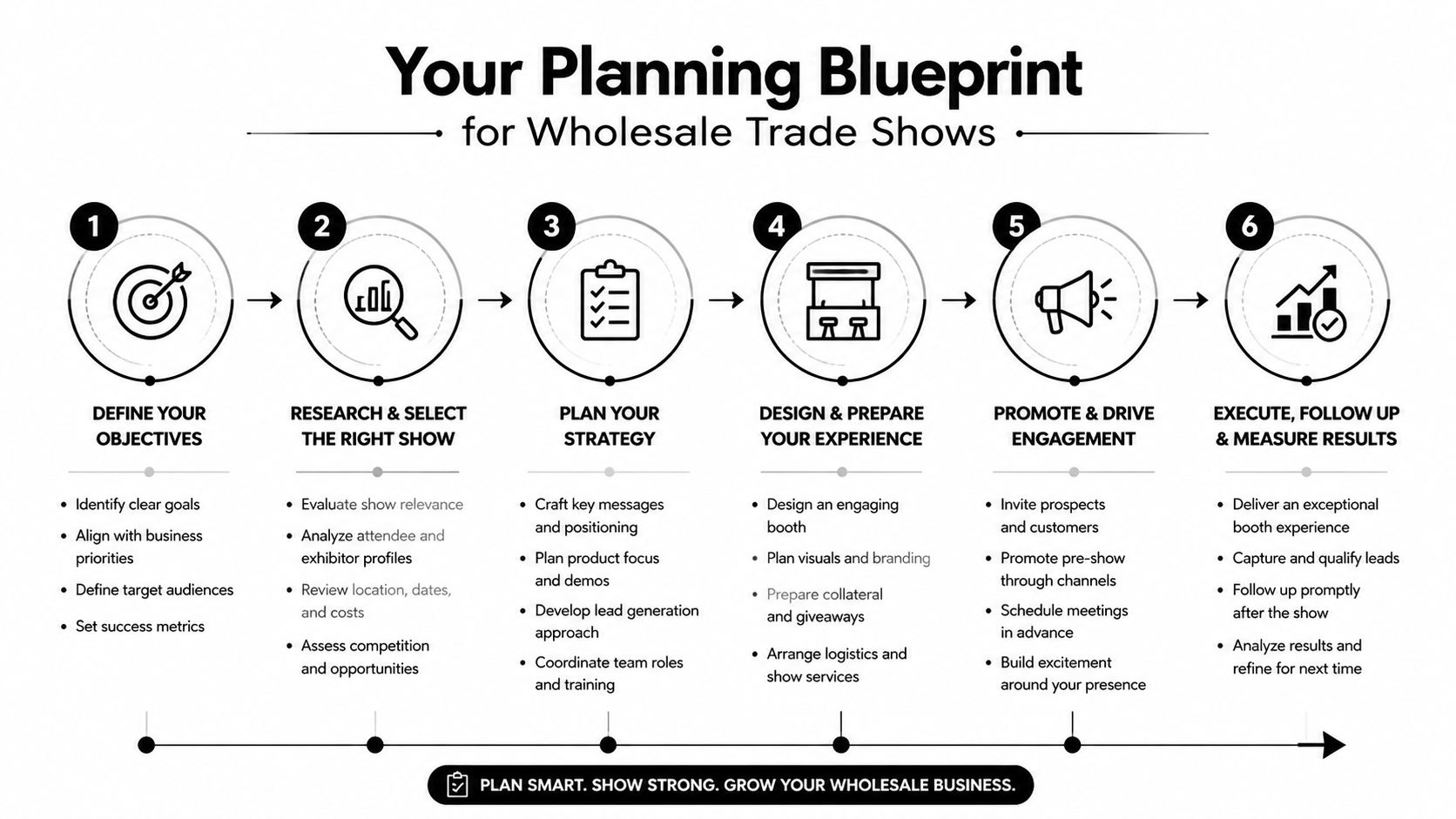
Most poor show results can be traced back to planning mistakes made long before move-in. The booth is only one part of the outcome. The rest comes from goal setting, budget control, logistics, staffing, and lead capture discipline.
At wholesale trade shows, 81% to 82% of attendees hold buying authority, and 92% are actively seeking new products. The same data set notes that 14% of Fortune 500 participants report a 5:1 ROI, and attendees spend an average of 5.5 to 8.3 hours on the show floor. That’s why structure matters. You’re not preparing for random traffic. You’re preparing for long, decision-oriented conversations with people who can buy. Those figures appear in this U.S. wholesale and trade show data reference.
Set one primary goal and two secondary ones
Exhibitors get into trouble when they try to make one event do everything. Decide what the show is really for.
Your primary goal might be:
- Open new wholesale accounts
- Launch a product line
- Meet current buyers in person
- Recruit distributors or reps
Then choose two secondary goals. Maybe you want press exposure, market feedback, or retailer education. That keeps your booth, staffing, and content aligned.
Build the budget from the floor up for wholesale trade shows
The line items that surprise newer exhibitors aren’t glamorous. They’re labor, drayage, electrical, installation timing, and freight handling. Those can reshape your economics faster than most branding decisions.
Use a budget with separate buckets for:
- Space costs
- Booth structure and graphics
- Shipping and material handling
- Electrical and show services
- Travel and staffing
- Samples, literature, and giveaways
- Lead capture and follow-up
If you’re sourcing branded handouts or leave-behinds for buyers, this guide to Dirt Cheap Product bulk buying tips is useful because it focuses on purchasing practical promotional items in volume instead of buying too many novelty pieces that won’t support follow-up.
Design for traffic flow, not just looks
A booth can be attractive and still fail. The usual reason is that it doesn’t help people move naturally from attention to conversation.
A practical layout includes:
- A clear visual hook: Buyers should understand what you sell within seconds.
- An open front edge: Don’t block entry with counters unless they serve a purpose.
- A demo or discussion zone: Keep selling interactions out of the aisle.
- A back-of-house plan: Samples, literature, chargers, and personal items need a hidden home.
The best booth layouts reduce decision fatigue. Buyers know where to look, where to stand, and who to talk to.
Train the team on booth behavior
Booth staff often know the product well and still underperform at shows. Usually the problem isn’t knowledge. It’s posture, timing, and qualification.
Train your team to:
- Greet quickly without pouncing.
- Ask what kind of buyer they are.
- Adjust the conversation based on channel and need.
- Record key details before the next conversation starts.
- End with a clear follow-up commitment.
A booth full of people staring at phones can sink a good event. So can a team that talks too long to low-fit visitors while qualified buyers pass by.
Treat shipping as part of strategy
Shipping mistakes create expensive on-site decisions. Late freight, poor packing, unlabeled crates, and missing setup instructions turn a normal install into a scramble.
That’s why exhibitors should decide early whether their booth system is labor-heavy or labor-light, modular or custom, and fragile or forgiving. This trade show shipping guide is helpful if you’re planning freight, timelines, and show-floor logistics with less guesswork.
Lead capture needs a plan before the show opens
Don’t rely on business cards in a fishbowl and memory after the event. Define the fields your team must capture, how leads will be scored, and what follow-up happens by segment.
A simple lead form should answer:
- Who is this person
- What do they want
- How soon are they buying
- What did they react to
- What next step was promised
That’s the difference between “we met a lot of people” and “we can work this list on Monday.”
Maximizing Booth Impact at Wholesale Trade Shows
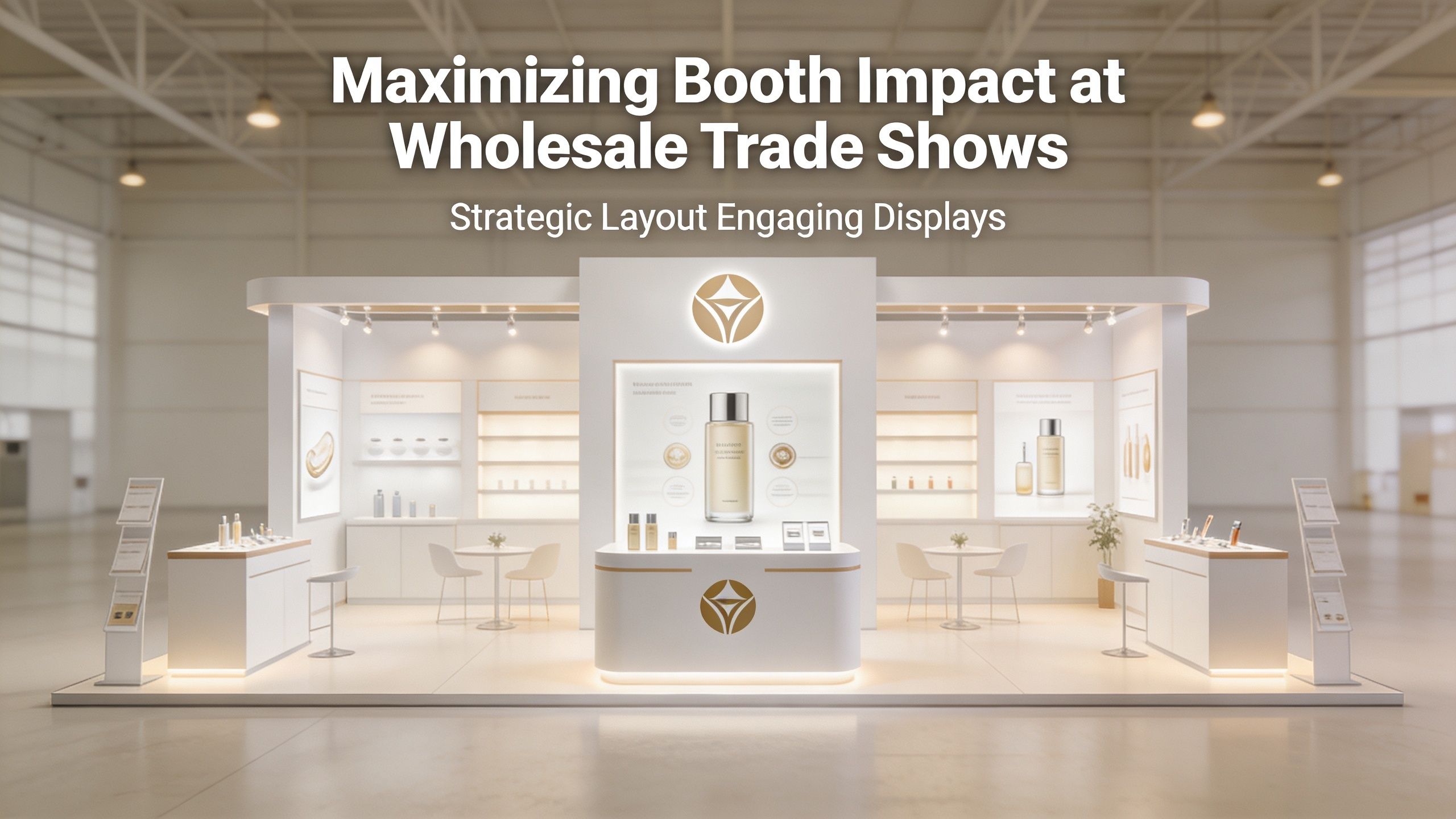
Most exhibitors don’t lose attention because their products are weak. They lose attention because the booth asks too much of the attendee. Static walls, cluttered graphics, seam-heavy monitor arrays, and awkward layouts make buyers work too hard to understand the offer.
That’s where immersive systems change the equation. According to this trade show technology overview, exhibitors using immersive elements such as uninterrupted video walls can increase engagement dwell time by up to 45%. The same source notes that AI-powered business card scanning exceeds 95% accuracy for major languages, and QR code interactions have grown 45% year over year. Done well, that combination helps exhibitors attract attention and qualify leads faster.
What works better than stacked screens
A common mistake is building a booth around multiple monitors and trying to fake immersion. The seams break the image. The cables complicate setup. The hardware starts dictating the design.
A purpose-built LED structure works differently. Walls, columns, counters, and arches can all become one visual system instead of separate pieces fighting each other.
What we’ve seen work on crowded floors:
- Motion with restraint: Short content loops beat long brand films.
- One dominant message: Buyers should know category, value, and use case fast.
- Integrated capture tools: QR codes and scan prompts should feel native to the display, not taped on as an afterthought.
- Space for conversation: Attention is only step one. The booth still needs room to sell.
The operational trade-off most buyers miss
Higher visual impact often brings more install complexity. That’s the trap. A booth can look advanced and still become a logistics problem if it requires too many parts, too much labor, or too much troubleshooting.
One option in this category is LED Exhibit Booths, which builds exhibit structures from LED video tiles rather than separate monitors. In practical terms, that means the booth itself becomes the display surface. Their systems use 1.9 pitch, while many competitors use 2.5 pitch, so the image appears sharper at close viewing distances. The pricing model also matters operationally. Everything is included except charges billed directly by the show, such as electricity and material handling. They also provide white-glove, turnkey service and keep an audiovisual technician onsite during open show hours so exhibitors can call or text for fast issue resolution.
A booth that looks impressive but needs constant babysitting is a staffing problem disguised as a design choice.
How to think about impact realistically
If your event strategy depends on demos, launch messaging, or high buyer throughput, immersive display systems can make sense. If your product needs tabletop explanation and low-volume meetings, a simpler booth may be enough.
The key is matching the booth system to the job:
- Need broad aisle visibility: Large-format motion and continuous surfaces help.
- Need detailed product explanation: Pair visuals with trained staff and concise demos.
- Need low-stress execution: Favor systems with fewer tools, fewer parts, and clear support.
- Need faster lead qualification: Connect display content to scanning, QR engagement, and immediate notes.
A better booth isn’t just more visible. It removes friction for the buyer and for your team.
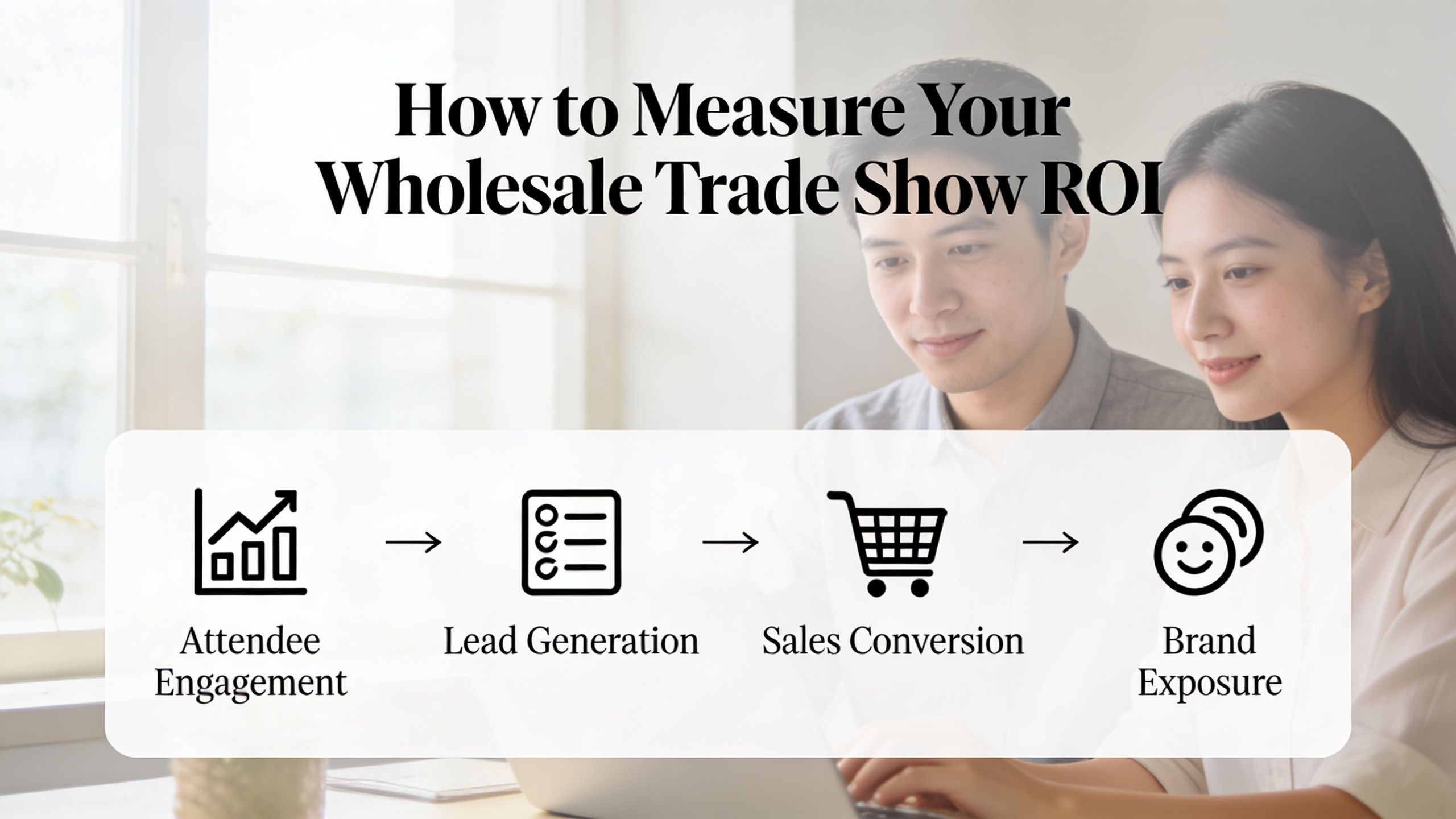
How to Measure Your Wholesale Trade Show ROI
If you can’t explain the return, the next show budget gets harder to defend. “We had great traffic” isn’t enough. Leadership wants to know what the event produced, what it cost, and whether the booth strategy improved the outcome.
The useful part of ROI measurement is that it forces honesty. It separates activity from contribution. It also exposes whether the booth worked as a sales tool or just as a backdrop.
Track the metrics that connect to revenue
Start with a small set of numbers your sales and marketing teams can use:
| KPI | What it tells you |
|---|---|
| Total qualified leads | Whether the show attracted the right buyers |
| Cost per qualified lead | How efficiently you converted spend into opportunities |
| Meetings held | Whether pre-show outreach and booth execution worked |
| Follow-up completion rate | Whether the team acted while interest was still fresh |
| Opportunities created | How many leads turned into real pipeline |
| Revenue influenced | What business can be tied back to the event |
That’s enough to evaluate most wholesale trade shows without drowning in vanity metrics.
Use a simple ROI formula
A practical formula is:
ROI = (Revenue influenced by the show – Total show cost) / Total show cost
If your team prefers a simpler view, calculate:
- total spend
- qualified leads
- opportunities created
- closed business tied to the event
That gives finance a clean story and gives marketing something they can improve next time.
Booth design affects both sides of the formula
Many exhibitors fail to understand a critical aspect: Booth choice impacts not only lead volume, but also lead quality and total event cost.
According to this analysis of visual technology and trade show ROI, exhibitors using integrated video walls and similar advanced visual systems see 45% higher attendee dwell time and 28% more qualified leads. The same source states that lightweight systems can reduce drayage and shipping costs by up to 50%. That means the booth can improve the numerator by helping create better opportunities and improve the denominator by reducing logistics spend.
Better ROI usually comes from two levers at once. More qualified conversations and less operational waste.
Don’t wait until after the show to measure
Post-show analysis is necessary, but on-site visibility matters too. Teams should know what they’re tracking before doors open, who owns lead review each day, and how they’ll flag high-priority prospects for immediate follow-up.
For a closer look at how booth format influences outcomes, this guide on how LED exhibit booths can increase ROI at trade shows is useful because it connects exhibit design choices to business results instead of treating the booth as a separate branding decision.
What a healthy review sounds like
A useful debrief sounds like this:
- We met the right buyer types.
- Our message landed fast.
- The booth supported demos instead of slowing them down.
- Our team captured usable notes.
- Follow-up happened while conversations were still fresh.
A weak debrief usually sounds like this:
- Traffic felt strong.
- People liked the booth.
- We need to sort the leads.
Only one of those is easy to turn into pipeline.
The Ultimate Wholesale Trade Show Checklist
The easiest way to miss something important is to keep the plan in five different documents. A single checklist keeps sales, marketing, operations, and booth vendors aligned.
Use this as a working document, not a one-time read. Assign names. Add deadlines. Update status every week as the show gets closer.
Exhibitor’s Wholesale Trade Show Checklist
| Timeline | Task | Status (To Do / In Progress / Complete) |
|---|---|---|
| 6 plus months out | Define the primary event goal and secondary goals | To Do / In Progress / Complete |
| 6 plus months out | Confirm target buyer profiles and success criteria | To Do / In Progress / Complete |
| 6 plus months out | Reserve booth space and review show rules | To Do / In Progress / Complete |
| 4 to 6 months out | Finalize booth concept, layout, and messaging | To Do / In Progress / Complete |
| 4 to 6 months out | Approve budget for booth, travel, freight, and show services | To Do / In Progress / Complete |
| 4 to 6 months out | Book hotels, flights, and staff schedules | To Do / In Progress / Complete |
| 3 months out | Plan product samples, literature, and giveaways | To Do / In Progress / Complete |
| 3 months out | Set lead capture fields, scoring rules, and follow-up workflow | To Do / In Progress / Complete |
| 2 months out | Train booth staff on greeting, qualifying, demos, and notes | To Do / In Progress / Complete |
| 1 month out | Confirm shipping deadlines, labels, and packing lists | To Do / In Progress / Complete |
| 1 month out | Launch pre-show outreach to buyers and existing accounts | To Do / In Progress / Complete |
| 2 weeks out | Reconfirm all vendor orders and on-site contacts | To Do / In Progress / Complete |
| Show week | Check install status, test content, and verify lead capture tools | To Do / In Progress / Complete |
| During show | Review lead quality daily and adjust staffing or messaging if needed | To Do / In Progress / Complete |
| Within 48 hours after show | Send follow-up by lead priority and promised next step | To Do / In Progress / Complete |
| Within 2 weeks after show | Review ROI, pipeline impact, and lessons for the next event | To Do / In Progress / Complete |
Three checklist items that deserve extra attention
- Ownership: Every task needs one owner. Shared ownership usually means no ownership.
- Deadlines: Internal deadlines should land before official deadlines. That gives you room for corrections.
- Setup planning: Don’t treat move-in as a surprise. Confirm labor assumptions, packing sequence, and install timing early. This trade show set up guide is a useful reference if your team wants a cleaner install process and fewer last-minute decisions.
Teams rarely fail because they forgot the big things. They fail because ten small tasks stayed unresolved until show week.
A tight checklist won’t make a weak strategy strong. It will make a strong strategy executable, and that’s what counts on a live show floor.
If you’re evaluating a video wall booth for upcoming wholesale trade shows, LED Exhibit Booths is worth reviewing for teams that want a turnkey exhibit structure built from continuous LED tiles instead of stacked monitors. The practical appeal is straightforward. The booth itself becomes the display surface, setup is designed to be simpler, and support stays close so your team can focus on buyers rather than booth issues.