
Conference Booths Displays: Let’s be honest. On a crowded trade show floor, your booth is your one and only chance to grab someone’s attention. If you’re still relying on the old-school setup of static banners and pop-up signs, you’re practically invisible. The game has changed, and modern displays use dynamic LED video walls to create a living, breathing brand experience that literally stops people in their tracks.
Why Conference Booths Displays Are Your Most Powerful Asset
Blending in at a packed convention is the kiss of death for your ROI. Your booth isn’t just a patch of rented carpet; it’s the single most important marketing tool you have on-site. Its job is to pull people in, tell your story fast, and turn a casual passerby into a hot lead. A printed sign can show your logo, sure, but it can’t run a product demo, create an emotional connection, or change its message on the fly. This is exactly where modern LED video walls make all the difference.
A dynamic LED wall transforms your booth from a passive, forgettable backdrop into an active brand magnet. Think of it as the difference between a magazine ad and a Super Bowl commercial. The seamless, high-resolution motion graphics catch eyes from clear across the aisle and get your main point across in seconds.
Turning Foot Traffic into Real Engagement
Conference booths displays have a direct impact on how many people walk into your booth and how long they stick around. When attendees are genuinely captivated by what they see, they’re far more likely to step inside, talk to your team, and actually remember you after the show.
- Build an Immersive World: You can wrap your entire space in visuals to create an atmosphere that screams your brand. Whether you’re going for a sleek, high-tech vibe or a vibrant, artistic feel, the video wall sets the stage.
- Tell a Story That Sells: Use motion graphics to walk visitors through a product journey, show off glowing customer testimonials, or hammer home your key selling points.
- Make Your Brand Unforgettable: People remember what they see and interact with. In fact, a whopping 70% of attendees report that they remember brands with interactive displays much more effectively than those with static ones.
This whole approach turns your booth from a simple “hello” into a powerful lead-generation machine. The market is screaming this trend, with the global Exhibition & Booth Design Market expected to jump from USD 10.62 billion in 2026 to USD 14.90 billion by 2032. This isn’t just random spending; it shows a clear shift where exhibitors are putting serious money into setups that demand attention and deliver real, measurable results. You can read more about the growth of the exhibition design industry and see how it’s completely reshaping event strategies.
The real goal is to get past just being seen. A great booth display starts the conversation before your team even says a word. It draws in the right people and gets them excited for a real discussion.
Static Banners vs. Dynamic LED Walls: A Performance Snapshot
When you break it down, the advantages of a modern LED setup become crystal clear. It’s not just about looking cool; it’s about performance across every important metric. Traditional banners just can’t compete.
| Metric | Traditional Displays (Banners, Pop-ups) | Modern LED Displays (Seamless Video Walls) |
|---|---|---|
| Attention-Grabbing Power | Low. Blends into the visual noise of the show floor. | High. Bright, dynamic motion captures attention from a distance. |
| Content Flexibility | None. A printed message is permanent for the entire show. | Total. Update content in real-time for different demos or times of day. |
| Attendee Engagement | Passive. Relies entirely on staff to initiate contact. | Active. Draws people in with video, interactive elements, and demos. |
| Brand Recall | Minimal. Easily forgotten among dozens of other booths. | Strong. Memorable, high-impact visuals create a lasting impression. |
| Storytelling Ability | Limited to static text and images. | Unlimited. Can show product animations, testimonials, and brand stories. |
As you can see, the choice is pretty stark. While a banner might fill a space, an LED wall fills a space with opportunity, turning your booth into a hub of activity and interest.
Planning Your High-Impact LED Booth Experience
A jaw-dropping booth that stops people in the aisles doesn’t just materialize out of thin air. It’s the product of serious planning that has to start months before the show floor even opens. This is where you take your marketing goals and turn them into a physical, three-dimensional experience that people won’t forget.
The very first thing you need to do is a practical, no-nonsense assessment of your booth space. Get a copy of the detailed floor plan and the exhibitor manual. This isn’t just about knowing you have a 20×20 space; it’s about finding out where the power drops are, what the rules are for rigging, and other critical details. Figuring this stuff out early on prevents expensive headaches and last-minute changes.
Aligning Conference Booths Displays Design With Marketing Goals
Once you have the technical specs handled, you can get to the fun part: designing the actual experience. You have to ask yourself: what’s the number one thing we want to accomplish with this booth? Are you launching a new product? Are you trying to generate a specific number of qualified leads? Or is this all about building brand awareness? Your answer will dictate the entire layout.
For instance, a fintech company rolling out new software will likely want a massive, central video wall for live demos. This puts the product right in the spotlight. A lifestyle brand, on the other hand, might go for elegant, curved LED columns to create an immersive vibe that sells a feeling, not a feature list.
This simple flow shows how an effective booth should work.
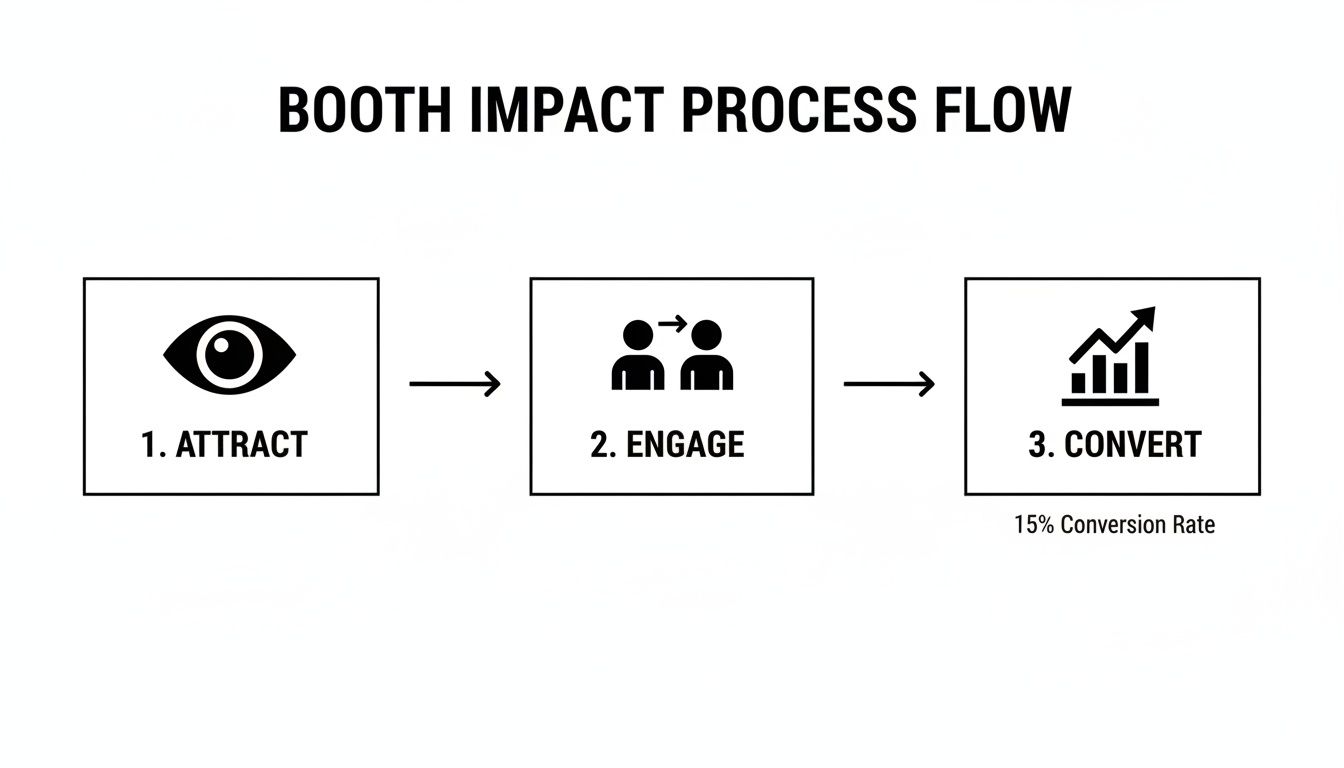
As you can see, every design decision you make should funnel attendees from being attracted to your booth, to engaging with your team, and finally, to converting.
Choosing the Right Configuration for Maximum Impact in Conference Booths Displays
How you configure your LED panels is your biggest tool for managing your booth’s footprint and directing how people move through your space. You’re not just hanging a TV; you’re building an architectural feature that tells your brand’s story.
- LED Video Walls: This is the go-to for a huge backdrop. It’s perfect for running brand videos, product demonstrations, or looping presentations.
- Curved Columns or Arches: These are great for creating a more intimate, enclosed feel. They invite people to literally step into your world.
- Interactive LED Floors: If you really want to stop the show, this is it. It adds a layer of fun and surprise that gets people to physically engage with your space.
We’ve seen that the clarity of your display is something you just can’t compromise on. That’s why our standard LED panels come with a 1.9mm pixel pitch. A lot of our competitors use a 2.5mm pitch, and while that doesn’t sound like a big difference, it’s huge in person. A lower pitch means our video walls have higher resolution, so your videos and graphics look unbelievably crisp, even when people are standing right up close.
Another big piece of the planning puzzle is your budget. For that reason, the last thing you want are financial surprises during a show. We make this simple by bundling everything—the LED hardware, the support structure, shipping, and labor—into our rental price. The only extra costs are what the show itself bills you for directly, like your electricity usage. This transparency makes your budget predictable. To see how this works, you might want to read our guide on turnkey LED video wall rentals for your next event.
Selecting Hardware That Makes Your Content Shine
The tech specs on your LED panels are what make the difference between a pro-level display and one that just looks cheap. Naturally, if you don’t get the hardware right, even the best content will fall flat. Consequently, understanding a few key terms is crucial to making sure your investment pays off with a stunning display that actually stops people in the aisles.
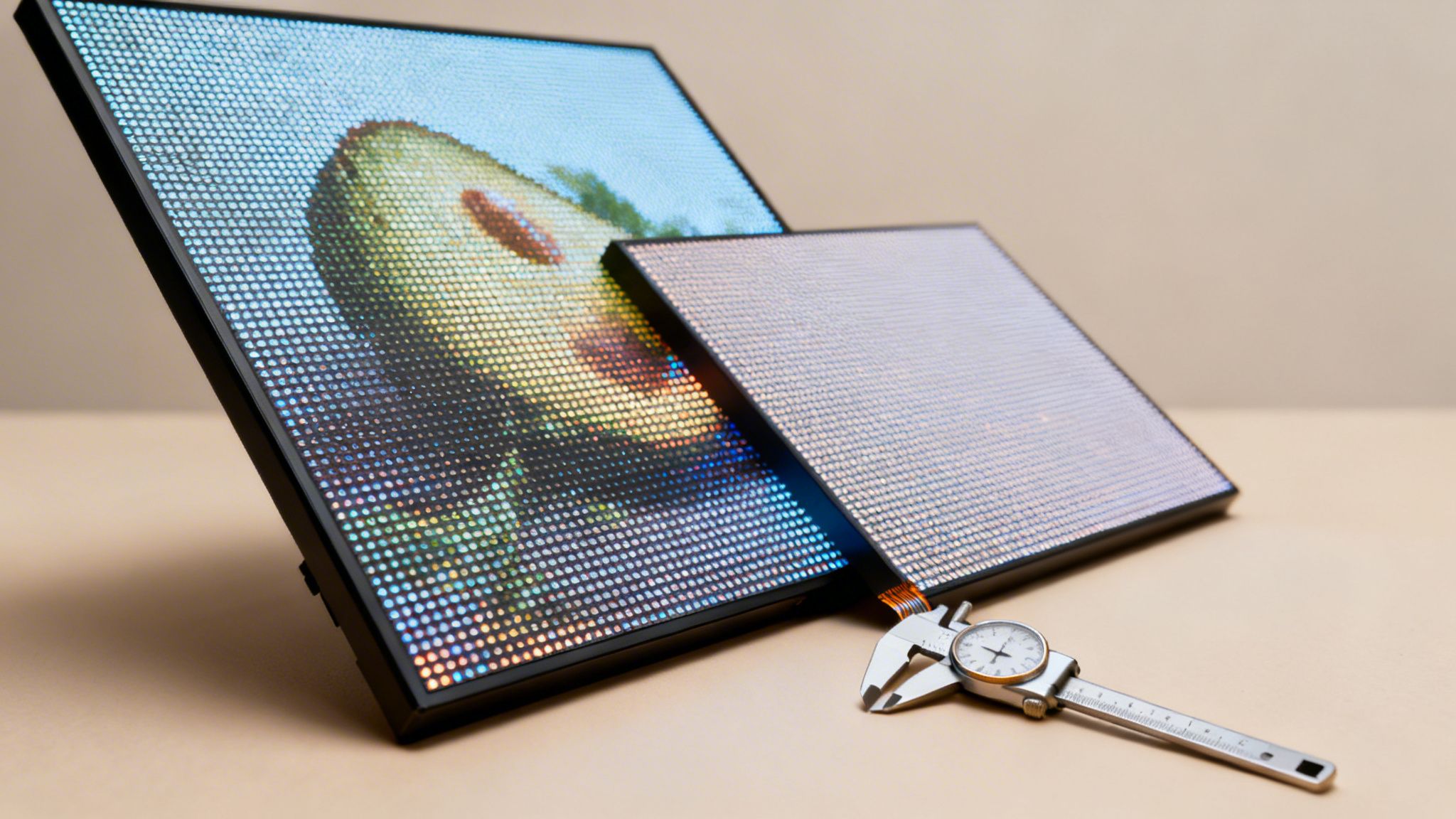
While you’ll hear people talk about brightness and refresh rates, the single most important factor for a trade show booth is pixel pitch. This is just the distance, in millimeters, between the center of one LED and the center of the one next to it. A smaller number means the pixels are packed tighter together, which gives you a much sharper, higher-resolution picture. Of course, this is important in conference booths displays.
Why Pixel Pitch Is So Important
Think about it. At a conference, people aren’t watching your screen from across a stadium. Obviously, they’re standing just a few feet away, right in your booth. This is where a low-quality pixel pitch becomes a huge problem. A bigger pitch might look okay from 30 feet back, but up close, the image looks blocky and pixelated. Bad conference booths displays completely undermine your brand’s image.
We’ve seen this happen way too many times, which is why we’ve standardized on a 1.9mm pixel pitch for our conference displays. You’ll find a lot of competitors using 2.5mm or even 3.9mm panels to cut costs. The 1.9mm pitch gives our video walls a significantly higher resolution.
A 1.9mm pitch gives you a smooth, crisp picture that looks like a high-def TV, even when someone is standing right next to it. It keeps your conference booths displays looking sharp and professional, which tells everyone you care about quality.
The entire industry is moving in this direction. The global LED display market was worth a massive USD 8.96 billion in 2023, growing by 12% in just one year. A huge part of that growth is from small pixel pitch LEDs (P2.5 and under), which saw shipments jump by 16.7% in 2023. As you can discover more insights about LED market trends, it’s obvious that higher resolution is the future. Additionally, we use this same equipment in our conference audiovisual rentals.
Making Smart Financial Decisions About Conference Booths Displays
Beyond the tech, you have to decide if renting or buying your LED wall makes more sense. The answer really just comes down to how many shows you do each year.
- Renting Makes Sense If: You’re only at one or two major events a year. Renting gets you the best and latest tech without a massive upfront cost. Plus, you don’t have to worry about where to store it, how to maintain it, or shipping it around.
- Purchasing Makes Sense If: You exhibit at four or more shows annually. The upfront investment starts to pay for itself pretty quickly, and you get total control over your display in the long run.
Another big piece of the puzzle is pricing. Our approach is to keep it simple with one all-inclusive price. That means the LED hardware, the support structure, shipping, and all the labor for setup and teardown are baked into one number. Our price includes everything except for what the show bills you for directly. This way, you can budget accurately without getting hit with surprise fees later.
Creating Content That Stops Attendees in Their Tracks
That incredible, high-resolution LED video wall is just an expensive black rectangle until you tell it what to do. Naturally, the screen is only as good as the content you put on it, so just looping your company logo isn’t going to cut it. For that reason, you need a real plan to turn people walking down the aisle into actual prospects in your booth.
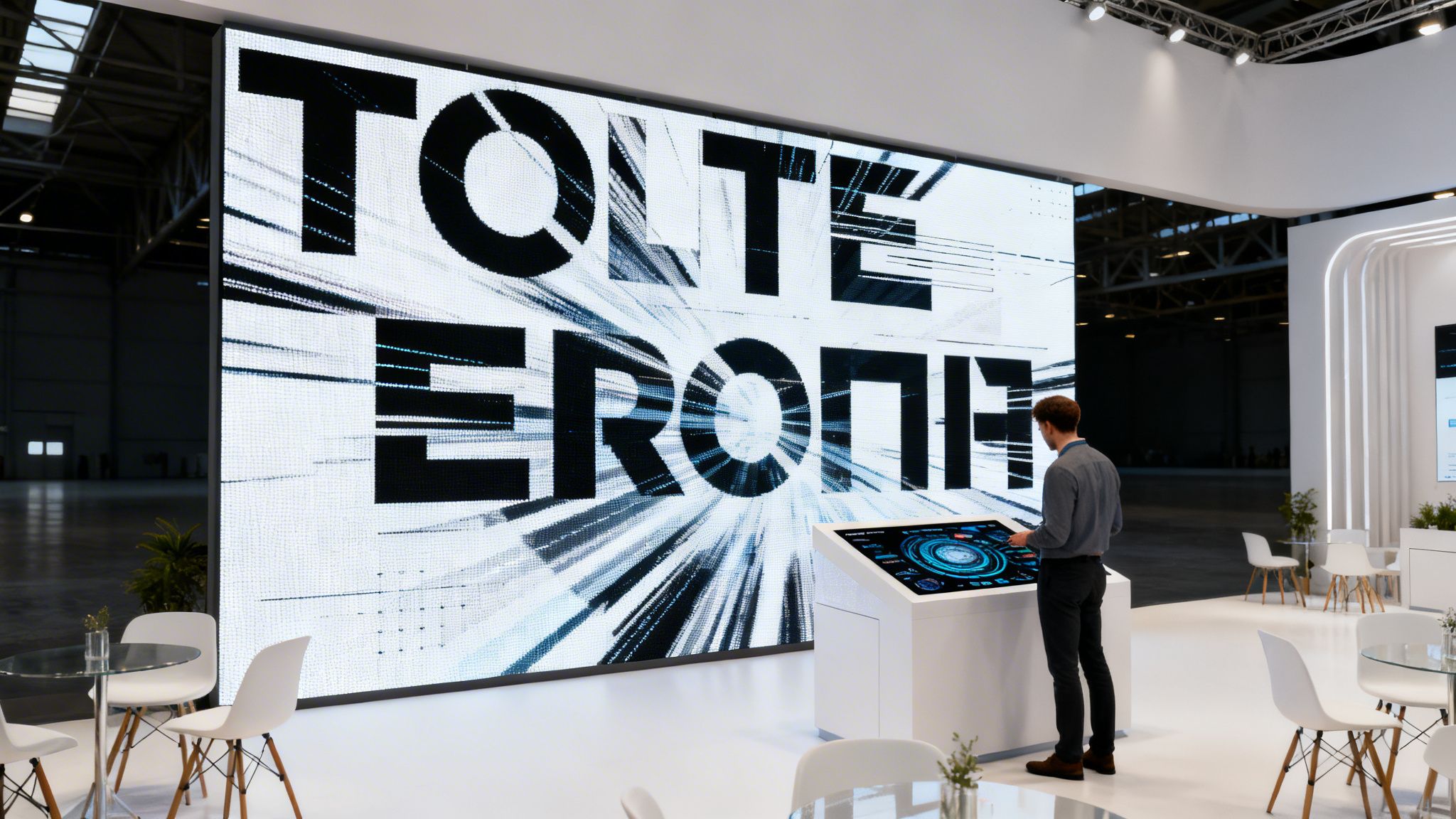
You have to think about two different audiences: people walking by from a distance, and the people who have already stepped into your space. Each one needs a totally different message to get them interested.
Attracting Attention from the Aisle
First, you have to break through the visual chaos of the trade show floor. This means your content needs to be designed to be seen from far away. Think big, bold, and high-contrast.
- Ambient Animations: Simple, abstract motion graphics using your brand colors are great for setting a mood. They create an inviting atmosphere without screaming for attention.
- Bold Typography: Your main tagline or what you do should be readable from across the hall. Use a big, clean font and keep the message short and sweet.
- High-Contrast Motion: Slow, deliberate movement works much better than fast, chaotic video. People’s eyes are naturally drawn to motion, so use that to your advantage.
The impact of dynamic content is no joke. A well-designed digital sign can increase brand recall by a staggering 83%. When you combine that with a modern LED wall, you’ve got a powerful tool. Some reports even show it can double the amount of time an attendee spends at your booth.
Engaging Visitors Inside the Conference Booths Displays
Once someone is in your booth, your content needs to change. It’s time to switch from attracting attention to educating them. You can even schedule different types of content to play at different times to keep things fresh.
A common mistake we see is people playing one long corporate video on a continuous loop. A much better way is to create a “content playlist” with a mix of different things, like ambient graphics, product demos, customer testimonials, or even a countdown to a live presentation.
For visitors who are up close, think about these types of content:
- Detailed Product Demos: Show exactly how your product works with close-up shots and feature call-outs.
- Expert Presentations: You can schedule short talks with your team and use the video wall for slides and visuals.
- Visual Brand Storytelling: A short, animated video that explains your company’s mission or the problem you solve can be very effective.
Creating this kind of professional content takes real expertise. If you don’t have a team for this in-house, looking into professional video production for your video wall is a smart move. It ensures your big investment in the screen actually pays off. Remember, the content is the fuel for your lead-generation engine at the show.
Navigating Booth Logistics Without the Headaches
The moment you start thinking about the actual logistics—shipping, drayage, installation labor, and show services—the excitement for your video wall can fade. It often feels like a mountain of paperwork and hidden costs. However, if you plan ahead with the right partner, this process can be surprisingly smooth.
A huge part of making logistics easier comes down to the hardware. Modern LED systems are designed to be lightweight and portable. This directly cuts down on two of the biggest budget killers: shipping and drayage (the fee to move your stuff from the loading dock to your booth space). Lighter, more compact panels mean lower costs. That leaves more money for what you actually care about—creating a jaw-dropping display.
Streamlining Setup and Slashing Labor Costs
It’s not just about weight; the assembly process is a massive factor. Older or cheaper display systems can require specialized tools and eat up a ton of time on the show floor, which sends your labor bill through the roof. Thankfully, new designs like toolless, magnetic locking mechanisms have completely changed how things are done.
Our panels are built to snap together quickly and securely. This gives you a few major wins:
- Faster Installation: Your booth is up and running in a fraction of the time, which means you pay for fewer labor hours.
- Fewer Errors: The simple locking system pretty much eliminates mistakes or damage during setup.
- Less Specialized Labor: The design is so intuitive that you often don’t need a huge, highly specialized crew to put your wall together.
We build this efficiency into our service because we want you on the show floor talking to customers, not stressing about the build.
One of the biggest fears for exhibitors is getting hit with a hidden fee. That’s why we’ve made our pricing model as transparent as we can. We include everything in our price except the services the show bills you for directly, like electricity and drayage. Your quote from us covers the hardware, transport, and labor—no last-minute surprises.
A Clearer Picture and A Clearer Price
Speaking of clarity, let’s talk visuals. Many competitors offer panels with a 2.5mm pixel pitch, but our standard for conference booths displays is a much sharper 1.9mm pitch. This isn’t just a number on a spec sheet. It means our video walls have a significantly higher resolution.
When your attendees are standing just a few feet from your screen, that difference is what makes your content look crisp and professional instead of pixelated and cheap. It’s the difference between looking high-end and looking like you cut corners.
This blend of top-tier visual quality and all-inclusive pricing gives you a real advantage. You get a display that truly reflects your brand’s quality without the budget nightmares that can ruin a trade show. It’s about getting a premium experience from the first quote all the way to the final tear-down. When you pick a partner that bundles all these critical logistics, you can plan your budget with confidence and put your energy where it belongs: connecting with your audience.
Budgeting Your Booth and Measuring True ROI
Let’s talk about the bottom line. A spectacular video wall booth is a fantastic investment, but it’s crucial to know what you’re actually paying for and how to tell if it was worth it.
The real cost of a trade show booth is never just the price of renting the hardware. You’ve got to think about creating the video content, shipping, labor for setup and teardown, and all the other show services. This is where a lot of exhibitors get tripped up by surprise fees that can wreck their budget.
No More Hidden Fees
We make this part simple. Our pricing is straightforward and transparent so you can budget without any guesswork. We include everything in our price except the show bills you for directly.
This all-in-one approach bundles all the major costs into a single, clear number. Here’s what’s included:
- LED Hardware: Every panel, processor, and cable needed for your video wall.
- Support Structure: The custom frame that holds everything together safely.
- Transportation: Shipping the whole system to the convention center and back.
- Labor: Our professional crew for both the installation and the dismantle.
This means your only other costs are the mandatory show services, like electricity and material handling (drayage). Those are always billed directly by the event organizer. You won’t get any surprise invoices from us. Ever. This kind of clarity is a huge advantage and lets you plan your spending with confidence.
One of the most important things we provide is superior visual quality. Many of our competitors use panels with a 2.5mm pixel pitch. Our standard, however, is 1.9mm. That smaller pitch means our video walls have a much higher resolution, so your videos and graphics look incredibly sharp and clear, even when people are standing right next to them.
Measuring Success: It’s More Than Just Badge Scans
So, the show’s over. How do you figure out if your investment paid off? Just counting the number of badges you scanned won’t give you the full picture. You need to look a little deeper to see the real impact on your business.
A better way to measure success is to look at the quality of your leads, not just the quantity. Track how many people who visited your booth actually scheduled a demo or a sales meeting afterward. You should also check social media for mentions, see if people posted photos of your booth, and look for spikes in your brand’s hashtags during the show.
For a more detailed breakdown, check out our guide on how LED exhibit booths increase ROI. When you connect these data points to your sales pipeline after the show, you’ll get a much clearer picture of what success really looked like.
Answering Your Top Questions About LED Booth Displays
Even if you’ve been exhibiting for years, jumping into the world of LED video walls can bring up a lot of questions. That’s perfectly normal. Getting straight answers is the only way to make a smart decision for your trade show program. We’ve heard just about every question there is, so let’s tackle a few of the most common ones.
What Is Pixel Pitch and Why Is Our 1.9mm a Big Deal?
You’ll hear the term “pixel pitch” thrown around a lot. It’s simply the distance between the center of one LED pixel and the center of the next, measured in millimeters. The smaller the number, the closer the pixels are packed together, and the sharper your image will be.
At a trade show, people are walking right up to your booth, sometimes standing just a few feet away. This is where pixel pitch becomes critical.
Our standard is a 1.9mm pitch. This ensures that even up close, your videos and graphics look incredibly crisp and seamless. A lot of providers still use a more common 2.5mm pitch, which might sound like a tiny difference, but it’s not. From close viewing distances, a 2.5mm wall can look grainy or pixelated, which can make your brand look cheap. Our 1.9mm pitch means our video walls have a much higher resolution.
What’s Actually in a “Turnkey” Rental Price for Conference Booths Displays?
We hate surprise fees as much as you do. That’s why our turnkey rental pricing is designed to be as all-inclusive as possible, giving you a predictable number for your budget.
We bundle everything into a single price except for the services that the show organizer bills you for directly. This typically includes just your electrical power drop and material handling (drayage).
When you get a price from us, here’s what’s already baked in:
- All LED Panels and Processors: The complete screen and the brains behind it.
- Custom Support Structure: The framing and rigging needed to safely build your wall.
- Round-Trip Transportation: We handle all the logistics of getting the gear to the convention center and back.
- Professional Labor: Our experienced crew manages the entire installation and teardown, so your team doesn’t have to lift a finger.
This approach means you have a clear financial picture right from the start, with no nasty surprises on the final invoice.
At LED Exhibit Booths, we deliver high-resolution displays and transparent pricing to make your booth the star of the show. transform your next event.